


Solitary Iceberg (2020), Sunlit Sky (2019), Whirlpool (2022), and After the Storm (2022) by Ooloosie Saila. Installed in inpatient client rooms at Casey House.
Casey House is thrilled to share that four artworks by Inuit artist Ooloosie Saila now adorn the walls of four inpatient rooms, thanks to generous support from Yabu Pushelberg. Casey House inpatient clients frequently spend several weeks here resting and healing; however, the focus isn’t just on physical health during an inpatient stay. We strive to foster overall well-being by creating a serene environment for healing. Given our longstanding connection to the art world, we are delighted to bring artwork into inpatient client rooms.
George Yabu and Glenn Pushelberg, renowned Canadian interior designers fell in love with Ooloosie Saila’s work when they bought Composition (Isolated Iceberg) at our annual art auction fundraiser, Art With Heart in 2019 and later saw Island Landscapes I in 2022. Saila is from Cape Dorset, Nunavut, and has had work in Art With Heart five times courtesy of Feheley Fine Arts gallery. Saila’s work left a lasting impression on George and Glenn; they are inspired by her use of colour and soaring landscapes. Moreover, as longtime Casey House supporters, they began to think deeply about how HIV disproportionately impacts Indigenous communities across Canada.
Yabu Pushelberg collaborated with RxArt, a nonprofit that integrates artwork into hospitals, to acquire four of Saila’s pieces for Casey House: Sunlit Sky (2019), Solitary Iceberg (2020), Whirlpool (2022), and After the Storm (2022). Installation began in August 2025 and great care was taken to reproduce the artwork with a material that could be regularly sanitized between admissions according to hospital standards. Meanwhile, we consulted our Indigenous Advisory committee throughout the acquisition process. They suggested that our clients, who span across all different racial, sexual, gender, and spiritual identities, may wish to see art personally relevant to them in the inpatient rooms. As a result, we installed these four with plans to add work from other artists to the remaining ten inpatient rooms.
The inclusion of artwork complements the intentional design of our inpatient client rooms. The 14 private rooms were designed by Hariri Pontarini Architects with the patient experience in mind. Creating a comfortable space that could act as a client’s “home away from home” was crucial for the Hariri Pontarini team. Each of the rooms includes a closet with hangers, cable television, windows with ample light, a seating area, wall-set wood panels that store bedside medical equipment when not in use, and private washrooms with accessible showers. While someone is admitted to our inpatient unit, doctors, nurses, a pharmacist, a physiotherapist, a occupational therapist, and social workers provide onsite support. Our kitchen services team provides three meals a day delivered to each client during their inpatient stay, so they can be nourished with delicious homecooked food while they heal. When a client is admitted to Casey House, we hope that they feel the warmth and ease that comes from our purposeful design and personalized care services.
With these new art installations, we are able to further elevate the inpatient experience to make our House feel even more like a home. Now, inpatient clients staying in these four rooms can enjoy beautiful landscapes from the comfort of their beds, even when the real skies are cloudy outside their window. Our thanks to George Yabu and Glenn Pushelberg for bringing this vision to light. We look forward to adding more artwork to the remaining ten inpatient rooms.
As the year wraps up and many of us reflect on the impact we are making, charitable giving naturally comes to mind. But did you know there’s a joyful way to amplify your generosity and increase your tax savings at the same time?
By donating appreciated stocks or mutual funds directly to Casey House, you can support compassionate health care in your community while taking advantage of one of Canada’s most tax-efficient ways to give.
Why gifts of securities are so powerful
You Get a Double Tax Advantage
Donating publicly traded securities offers two major benefits:
- No capital gains tax on the appreciated value
If you own publicly traded securities, stocks, bonds, or mutual funds, that have grown in value, donating them directly to Casey House means you don’t pay capital gains tax on that increase.
If instead, you sold the securities and donated the cash, you would owe tax on the capital gain. Direct donation = no capital gains tax at all.
- You receive a charitable tax receipt for the full value
You’ll receive a charitable donation receipt for the full fair market value of the securities on the day the gift is transferred. This amount can be claimed on your tax return, lowering your taxable income.
So, imagine you purchased shares for $5,000 and today they’re worth $10,000. If you sell them, you will pay tax on the $5,000 gain and have significantly less than $10,000 to donate. If you donate them directly, you avoid that tax entirely, receive a charitable tax receipt for $10,000 and Casey House benefits from a larger donation. More impact for Casey House. More tax efficiency for you.
What Can Be Donated
Most publicly traded securities qualify, including:
- Stocks
- Bonds
- Mutual funds
If you’re unsure, your financial advisor can help confirm eligibility
How to Make a Gift of Securities
Making this type of donation is quick and straightforward:
- Speak with your financial advisor to decide which securities to give.
- Complete the transfer form found on the Casey House website:
(Go to caseyhouse.ca → Support Us → Why Donate Securities) - Ask your broker to transfer the securities directly to Casey House.
- Notify Kulin Matchhar at kmatchhar@caseyhouse.ca so your gift can be processed and acknowledged promptly.
Your Gift Makes a Difference
When you donate securities, you’re helping Casey House to continue offering compassionate, judgment-free care to people living with and at risk of HIV. Your kindness fuels the programs, services, and community support that make a real difference every day.
Thank you for considering this meaningful way to give. Your generosity doesn’t just add up – it transforms lives.
Casey House’s outpatient recreational therapists lead a variety of activities and social support groups each week. Comforts of Home is a cooking workshop that builds skills, teaches nutrition education, and brings a diverse group together to share more than just a meal.
As one of the more popular rec therapy groups, the attendees represent a wide range of lived experiences. Their ethnicities, nationalities, ages, socioeconomic backgrounds, and interests fall across a large spectrum; some even have established backgrounds or careers in cooking. And, just as their pasts vary, their goals for the program do too. A newcomer to Canada may be seeking food support, a retired older client who worked as a line cook may be looking to make friends, or someone newly diagnosed with diabetes may be learning how to cook for their new chronic health condition.
Each week, one client is chosen to lead the group and select a recipe. Beyond sharing a recipe, participants share their cultures when they nominate a dish to the group. Cooking often goes global during these sessions, with past recipes originating from Mexico, Portugal, Jamaica, China, and more. Sometimes the group finds a recipe online to try something new, or a client brings in their own handwritten recipe passed down through generations in their family. Recreation therapist Kristen keeps each copy in a large folder that contains two years’ worth of recipes, which she hopes one day to create into a booklet for clients and others to enjoy.
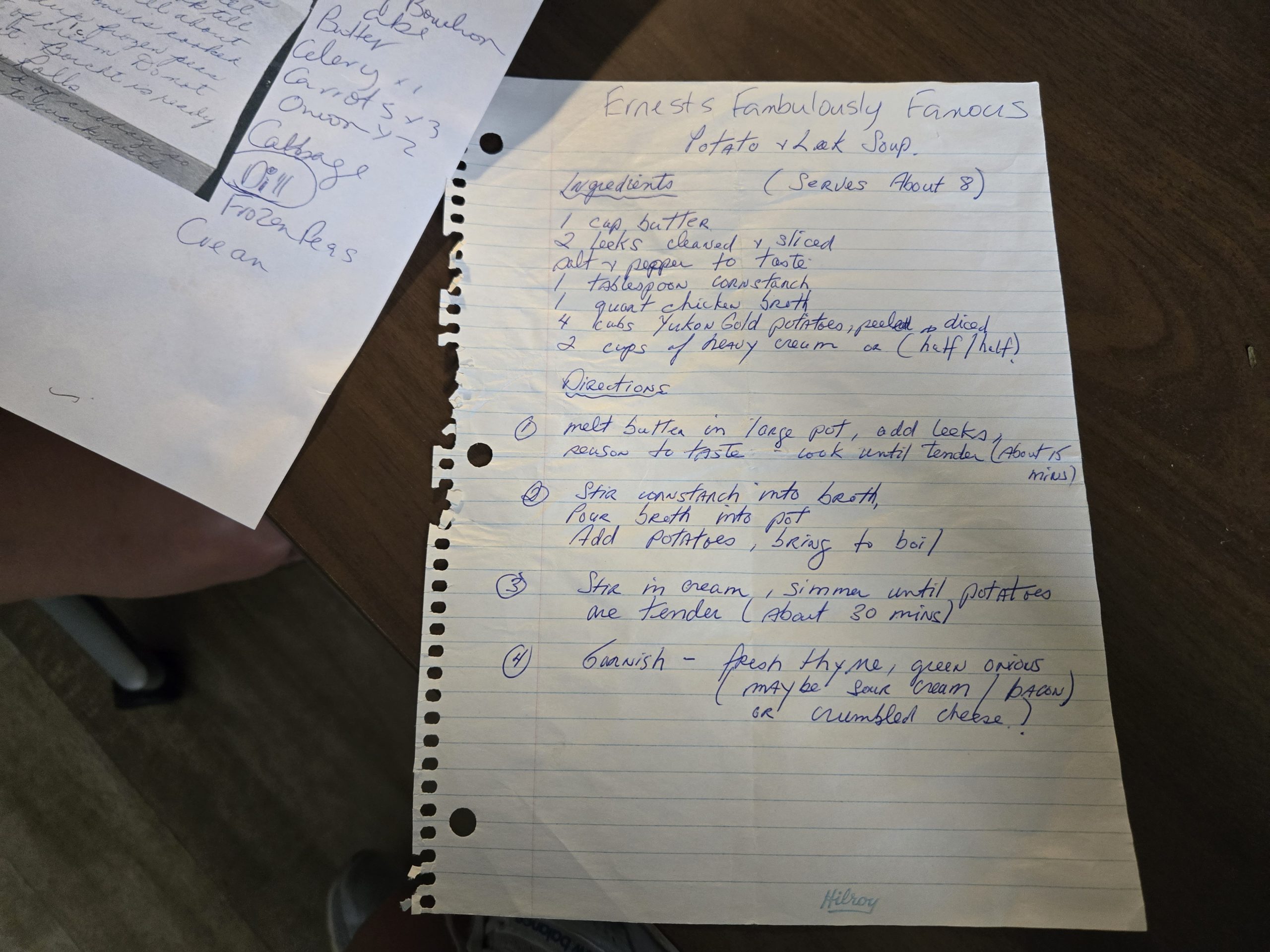
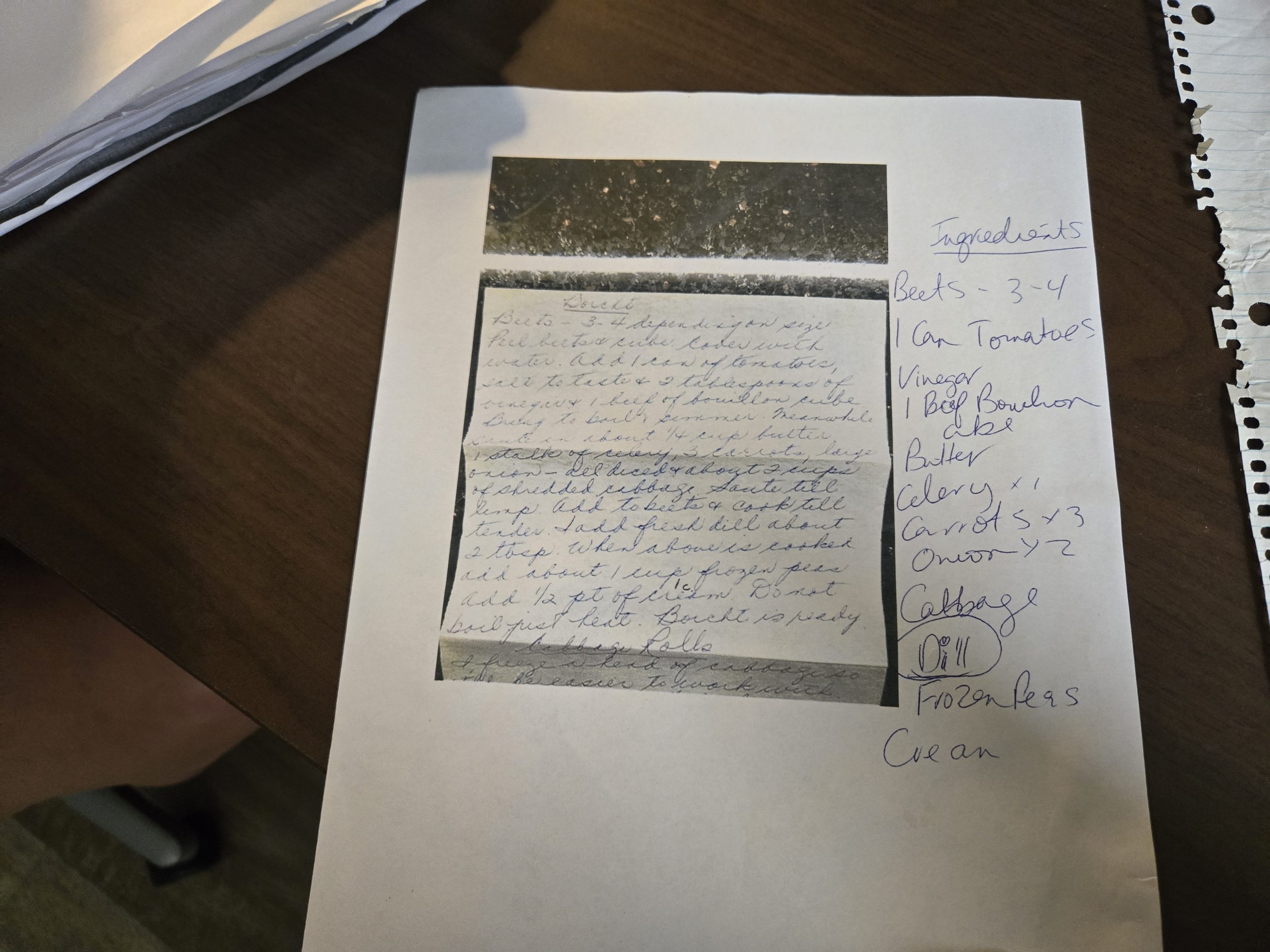
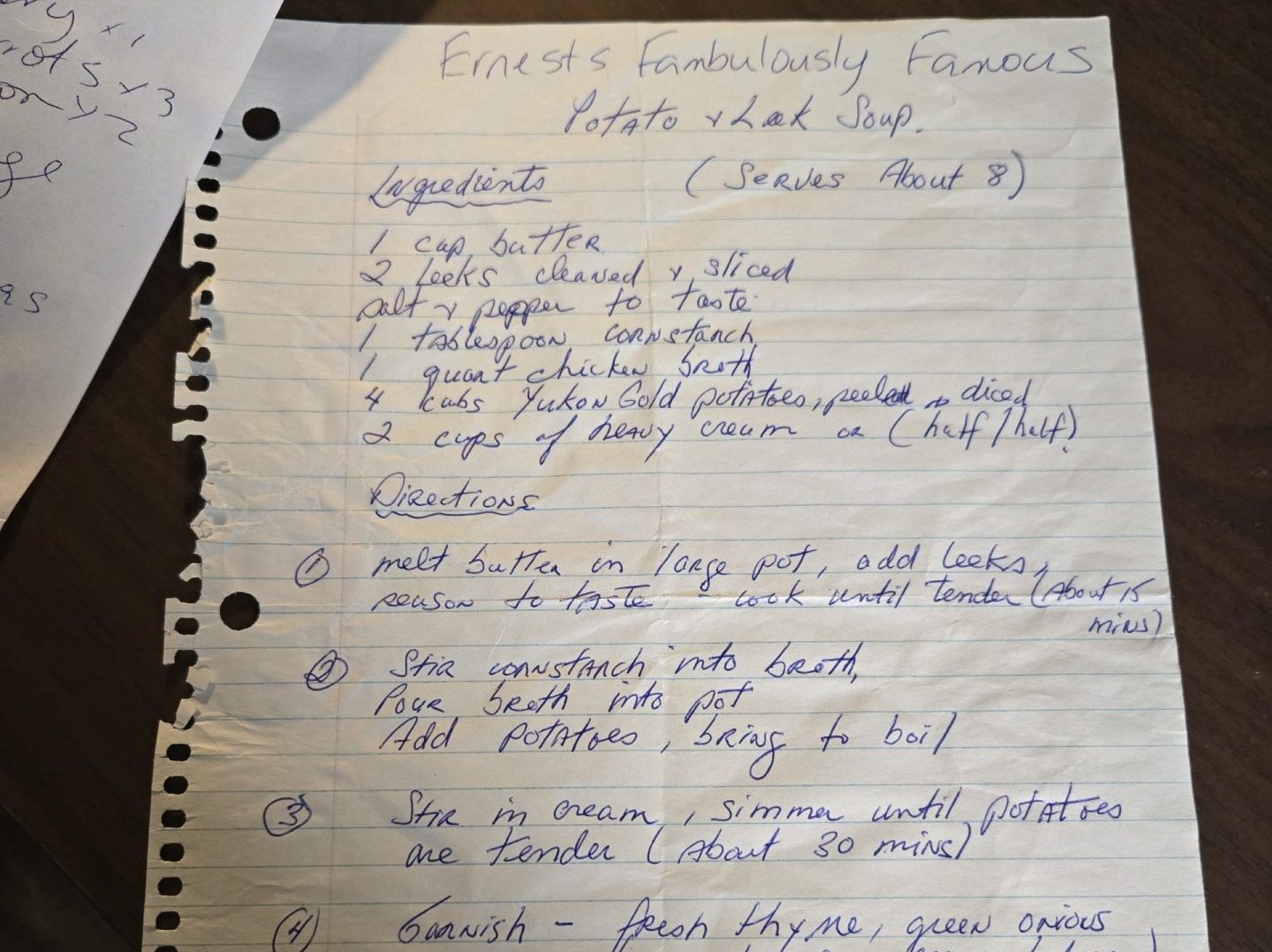
Handwritten recipes from participants
Kristen prepares for the workshop with a trip to the grocery store and a $45 budget for the entire group, which can range anywhere from 10 to 16 participants. The goal is to replicate a typical food bank hamper with a few additional fresh products to round out the canned or dried goods. The final plated portion often costs well below $5 per serving. During the workshop, the client-lead delegates tasks to each attendee and the group works together to prepare the meal. Once it’s ready, they eat together and discuss all manner of topics.
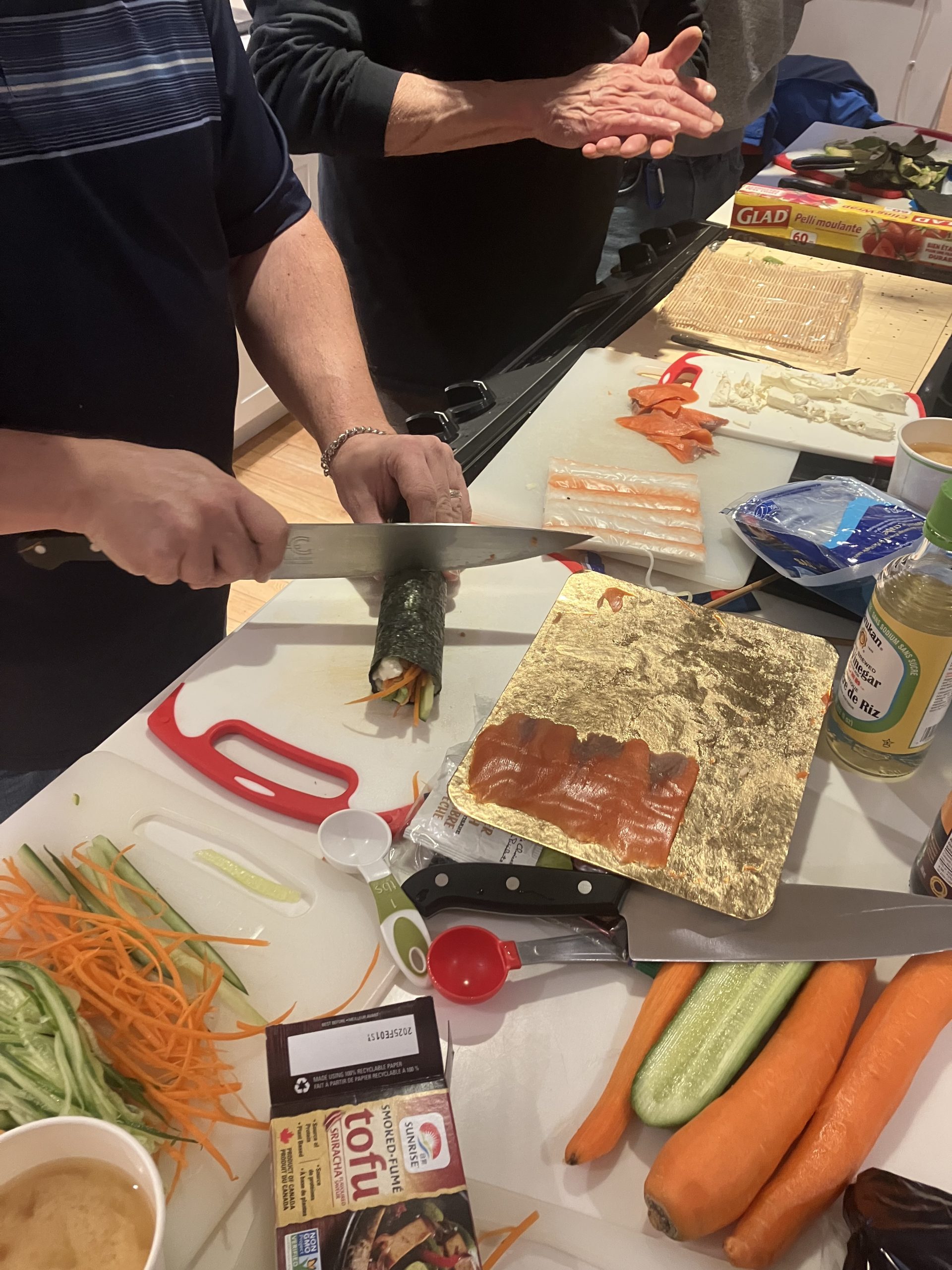
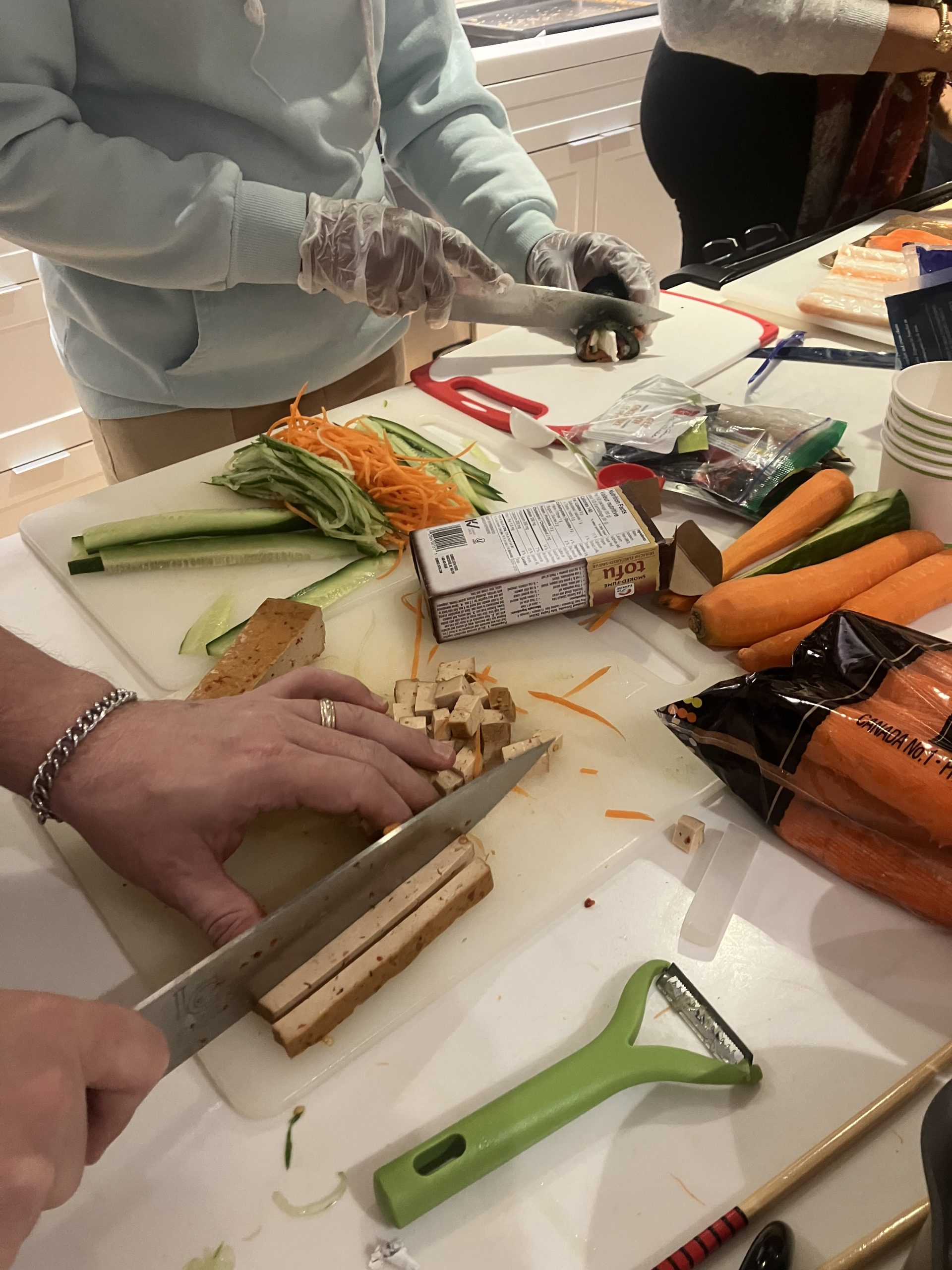
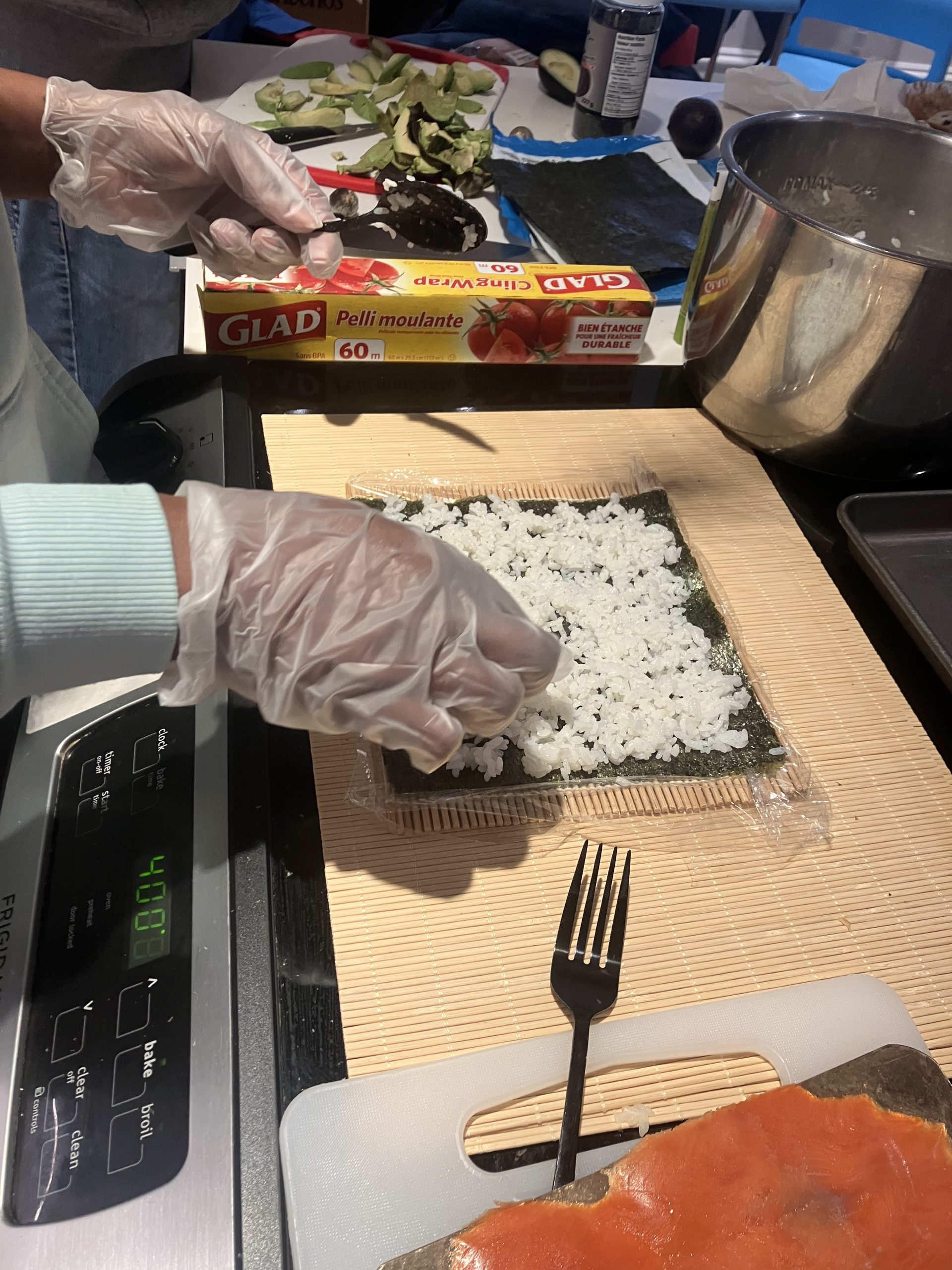
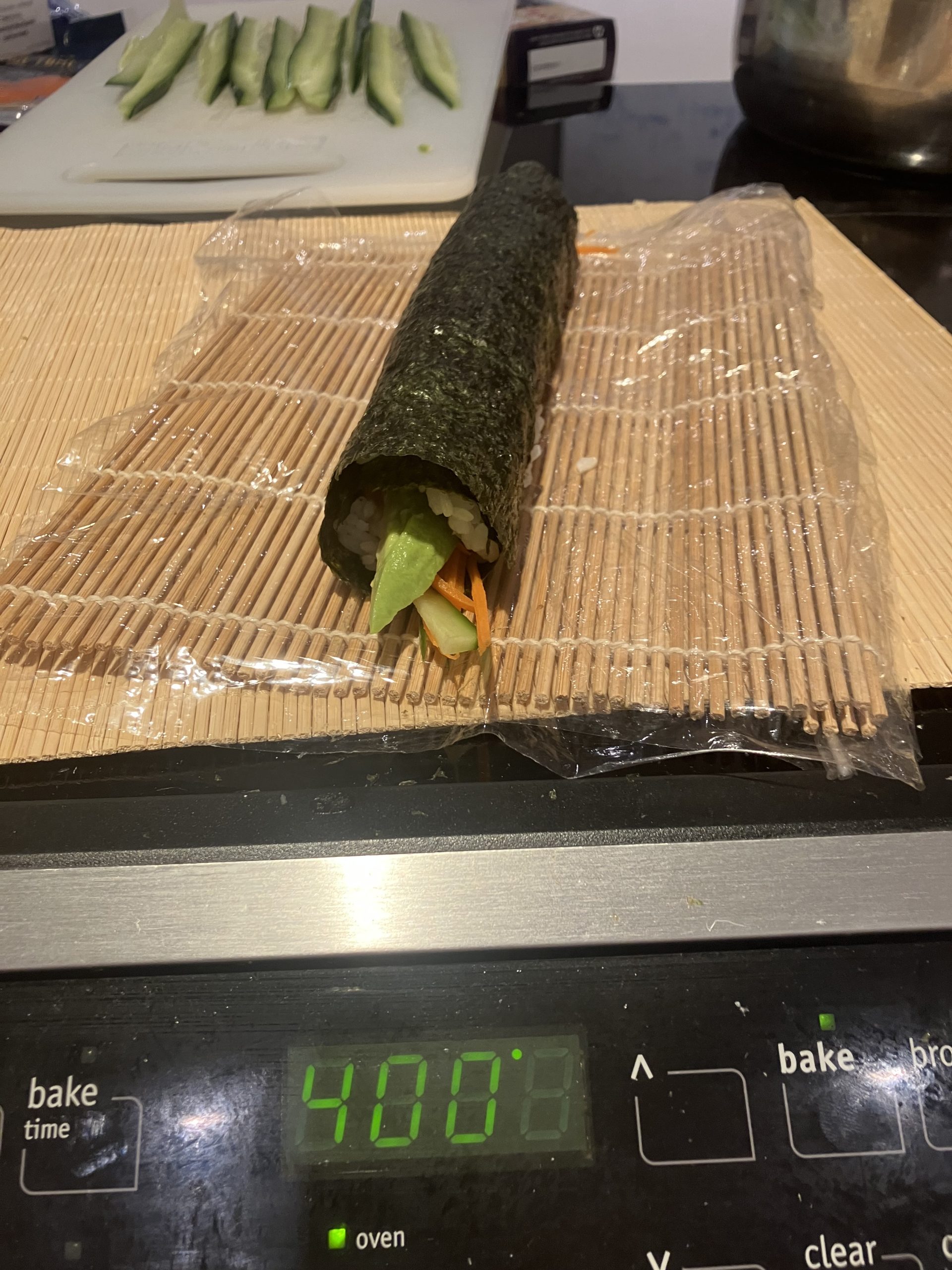
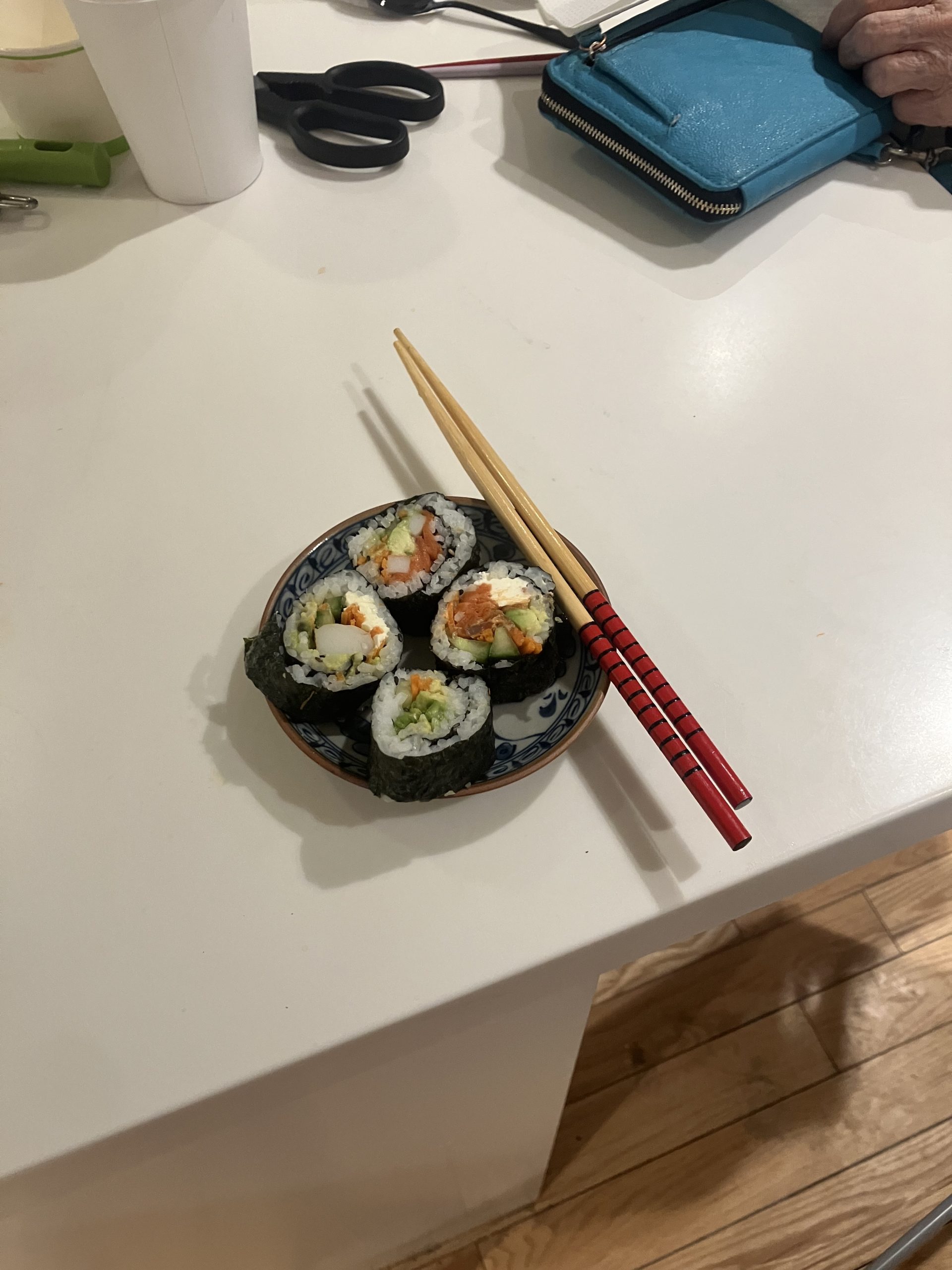
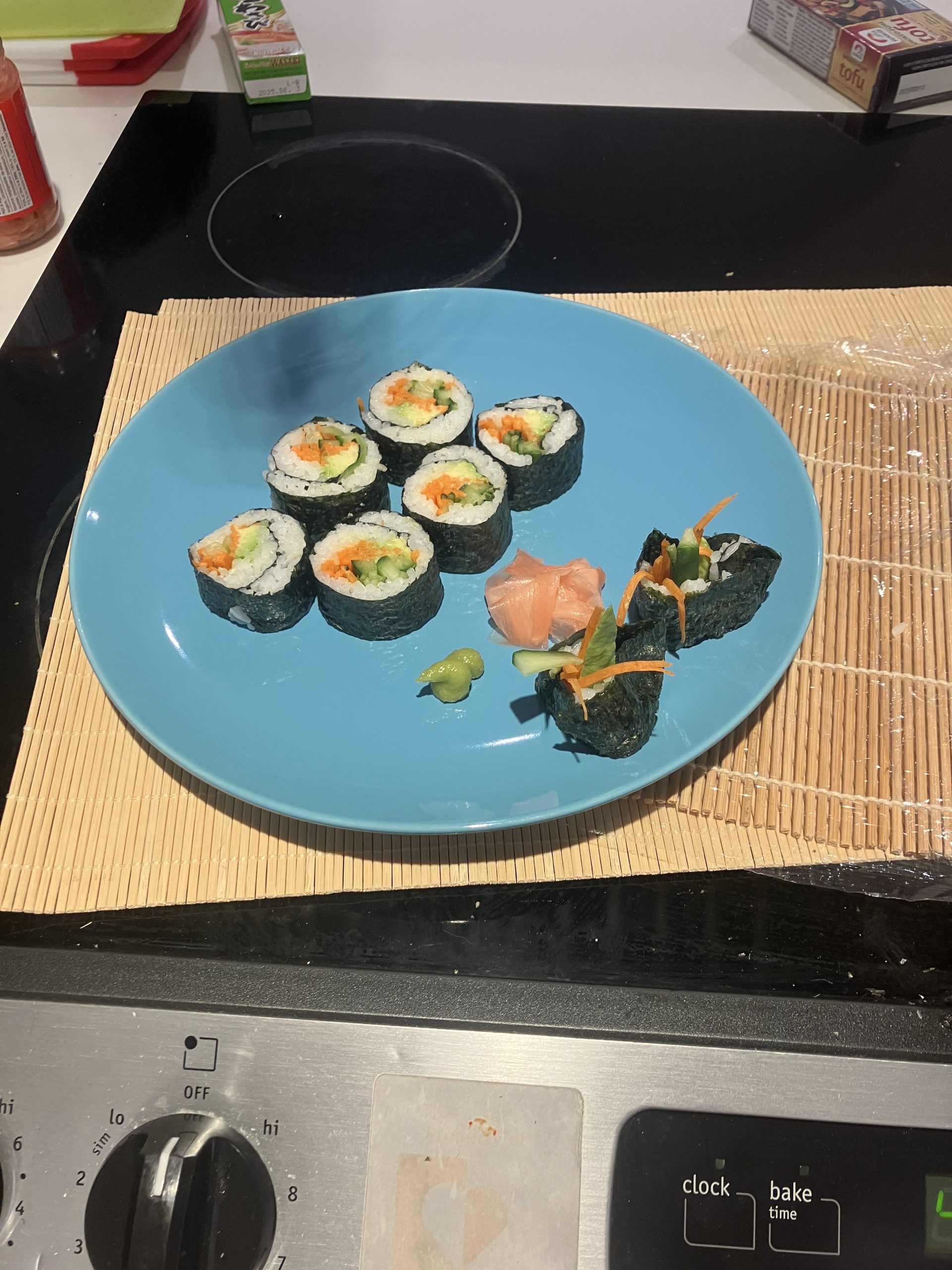
Learning new skills and exploring new uses for simple ingredients while making sushi
A particular interest that persists throughout the sessions is learning how to host social gatherings. Our organization’s food philosophy believes that food can be a foundation for meaningful connections. In the cooking workshops, clients empower each other to overcome the obstacles in their lives – costs, skills, or otherwise– and use their newly learned skills to enjoy food with others. They may even imagine or roleplay how to organize gatherings like birthdays or holiday parties. With a bit of creativity, seemingly humble ingredients like canned tuna and cucumbers are transformed into sushi rolls or chicken and rice into paella.
Open discussion is a key component of the classes. As a hospital, many of our clients are experiencing multiple chronic health challenges that are impacted by their ability to access food. While clients learn more about nutrition, they also spend time unlearning and debunking misconceptions they may have—for example, that eating fresh produce “cancels out” eating processed foods. Kristen hopes that in the future the program can include collaboration from a dietitian to answer clients’ nutrition questions. Until then, outpatient nurses make guest appearances to share broader suggestions about healthy eating.
The group works together to provide social support too. Conversations about budgeting at the store can develop into larger discussions about the importance of budgeting for essentials – shelter, food, utilities, and clothing – before splurging on vices. Casting their differences aside, participants provide sympathy and advice to their peers who may encounter external triggers to maladaptive behaviour or have experienced trauma in their past. For many clients, this weekly meet-up adds security and comfort to their lives.
Just as a recipe has a medley of ingredients working together, the Comforts of Home workshop invites participants to shine with their own unique expertise. As more clients join the group, we look forward to seeing how future installments take the program to new heights.
In keeping with our commitment to transparency and following privacy legislation, Casey House is informing clients of an incident that occurred during the implementation of our new electronic health record (EHR) system.
On July 11, 2025, a software issue caused limited personal health information of Casey House clients to be inadvertently included in an upload to medical database software developed by the Ministry of Health, Ontario Health and a small group of trusted third-party vendors that support the use our new EHR system. This was identified July 14, 2025 and Casey House was made aware of it July 15.
The information disclosed was limited to clients’ name, date of birth, sex, health card number, mailing address and telephone number.
Importantly, there was no clinical, diagnostic, or treatment-related information uploaded, such as medical history or HIV status. Further, nothing connected those in the dataset to Casey House. No financial information or social insurance numbers were exposed.
This information was uploaded to third-party medical database software, but their front-users did not or could not access it.
Upon discovery of this error, we acted quickly, and an investigation was launched to determine what happened. The Ministry of Health, Ontario Health, and the third-party vendors involved cooperated fully with the investigation. They have already taken or are taking steps to permanently delete the information from their systems. In other words, we have removed the information from anywhere it is not supposed to be.
At Casey House, we take the privacy of our clients’ information seriously and we are sorry this happened. We are taking all necessary steps to prevent a similar incident from happening again, including conducting a thorough review of our systems and processes with partners.
We do not believe this incident poses any real risk to you or requires any action on your part.
In conjunction with Mackenzie Health, we reported the matter to the Information and Privacy Commissioner of Ontario (IPC). As a Casey House client impacted by this situation, you are entitled to make an individual complaint to the IPC (visit ipc.on.ca).
If you have any questions or concerns or would like to speak with someone directly, please contact our privacy officer Rosemary Feeney at privacy@caseyhouse.ca
We appreciate your understanding and continued trust.
At any given moment at Casey House, the kitchen is alive and churning with activity. Here, the kitchen services team are working diligently each day to prepare hundreds of in-house cooked meals from scratch for our clients – a Herculean task for our team of five.
Prep work
Menu planning
Setting the menu is a great responsibility at Casey House. Each client has their own palates, preferences, culinary upbringings, allergies, dietary limitations, and other medical considerations to keep in mind at a hospital setting.
Outpatient and inpatient menus are the same for lunch, though inpatient clients also receive breakfast and dinner delivered to their rooms. Upon admission, our kitchen services team is notified about any dietary needs or restrictions. Oftentimes, these are multilayered, a client may be lactose intolerant and require a puree-only diet. Or perhaps they were prescribed a low sodium diet that’s gluten-free. It is a puzzle for our kitchen team to solve– how do they can adapt to the existing meal or create a substitute to accommodate each person?
Our kitchen supervisor Leonie prefers to select menus the traditional way – by asking clients and staff for their suggestions. In the serving line for lunch, she asks all the important questions: “What’s something you haven’t had in a while? What would you like to eat?” Listening to client feedback is crucial. For the nearly 300 people who dine with us each weekday, Leonie considers it 300 opportunities to make someone feel special through the options her team prepares– as though it was selected just for them.
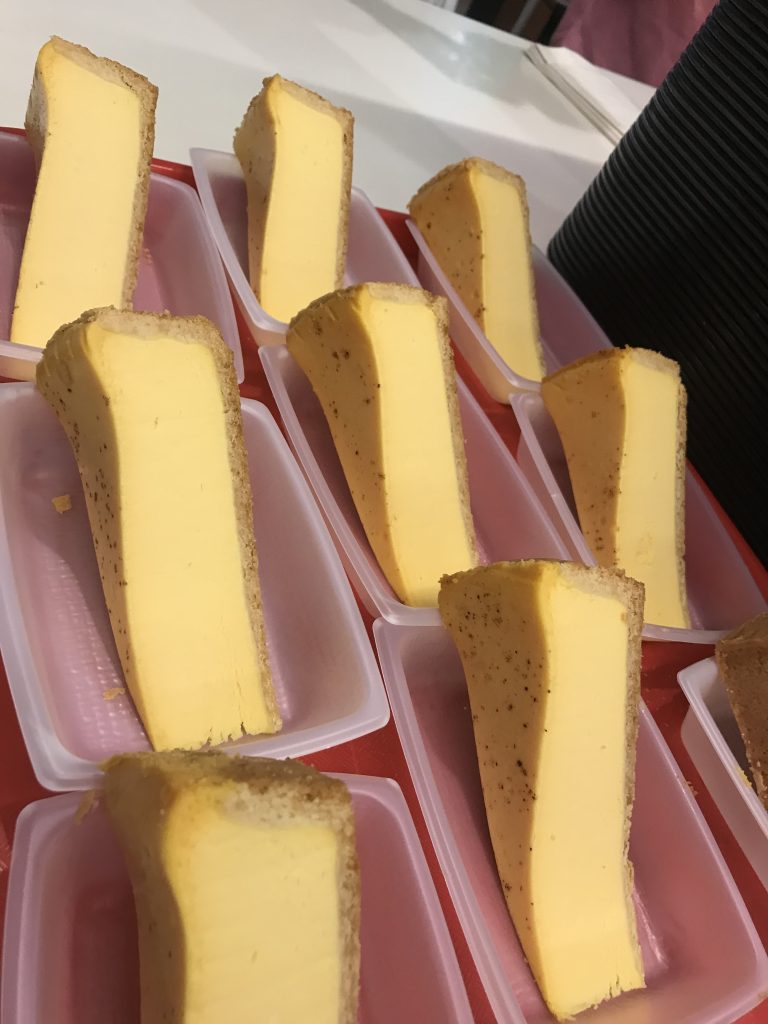
Plus, there’s always room for dessert to be sprinkled onto the menu throughout the month. The team enjoys conceptualizing what treats would make someone’s day. While a nutritious entrée may be the main event, the pleasure of eating is also a valuable part of the lunch experience at Casey House.
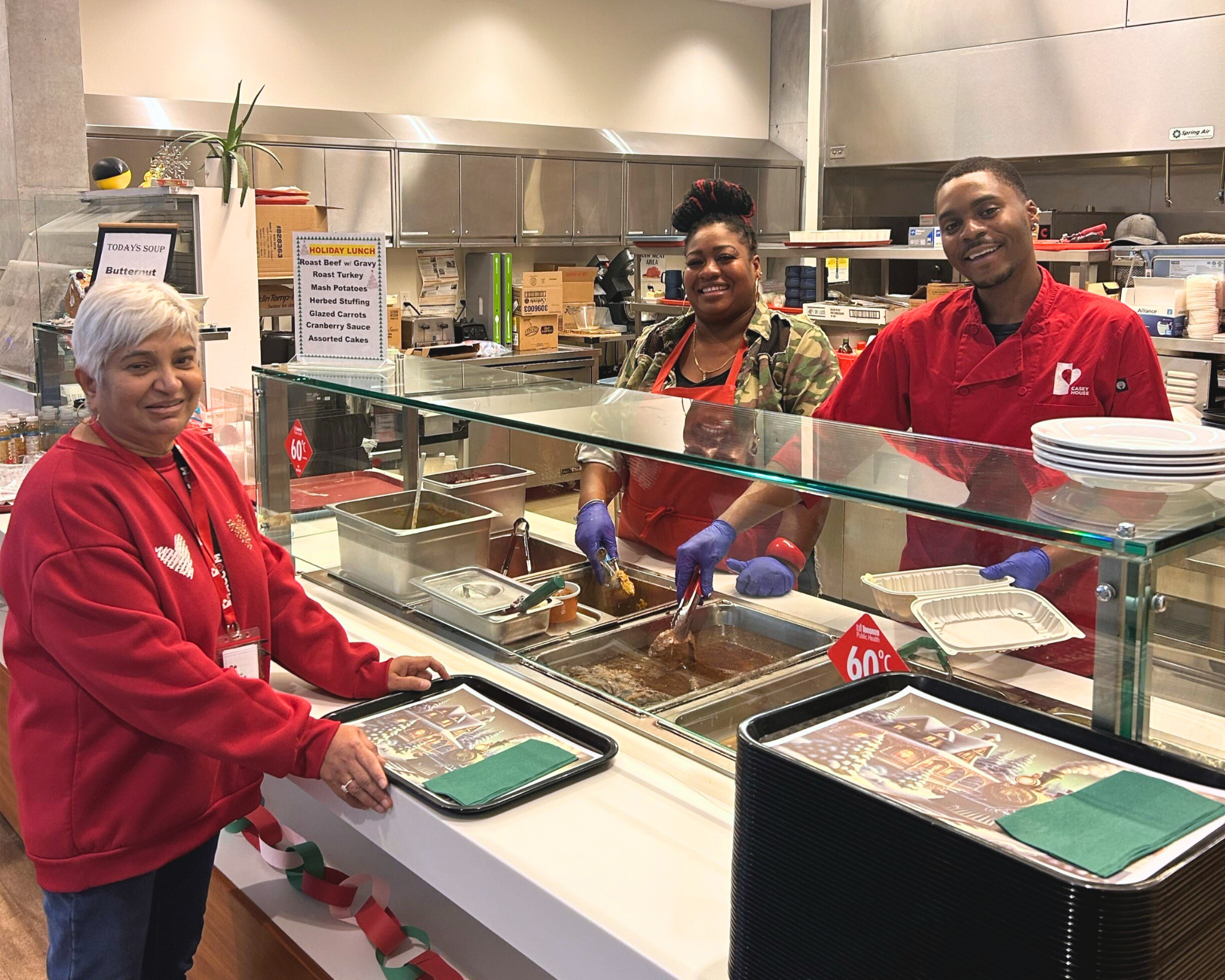
Menu planning is often a collaborative process between clients and the kitchen staff, influenced by conversations in the serving line.
Ordering food
The volume of food ordered at Casey House has greatly increased over the past year. Deliveries are completed with a weekly schedule in mind, but oftentimes ingredients are used up before the next shipment arrives. When planning for lunch, the team orders around 300 units per item per day. For example, if today’s menu featured pork chops with steamed vegetables and rice, the team procures 300 pork chops, 300 scoops of vegetables, and 300 servings of rice. Furthermore, we offer two lunch options daily, which requires another 300 servings of a main protein as well. That’s just for one day out of the five-day week.
In addition to meal ingredients, clients can also grab fruits during lunch. After the transforming lunch changes were enacted, the kitchen team doubled their orders to 4-5 crates of oranges, bananas, and clementines each week. Oftentimes the demand for food is so high that they must order more near the end of the week to replenish the fruit.
Even with the manufacturer’s listed volumes on the packages, Leonie uses her expertise to gauge how much of the ingredient the team will actually need. She also considers client trends and the timing of the month to predict how many clients may come each day.
Morning
Inventory
Deliveries to our loading dock occur in the mornings. The kitchen staff hustle to transport everything inside, especially cold and frozen products. This can be especially challenging when external factors like traffic delay the arrival and sneak into prime cooking and serving time. An impressive amount of food can fit into the tight spaces of the storage areas. While the shipments are abundant, the team runs through the ingredients at such a high volume that available space fluctuates during the week. Formal inventory audits happen quarterly, but most of the recordkeeping comes from periodically checking the pantries and fridges to ensure that there are no ingredients being left unused.
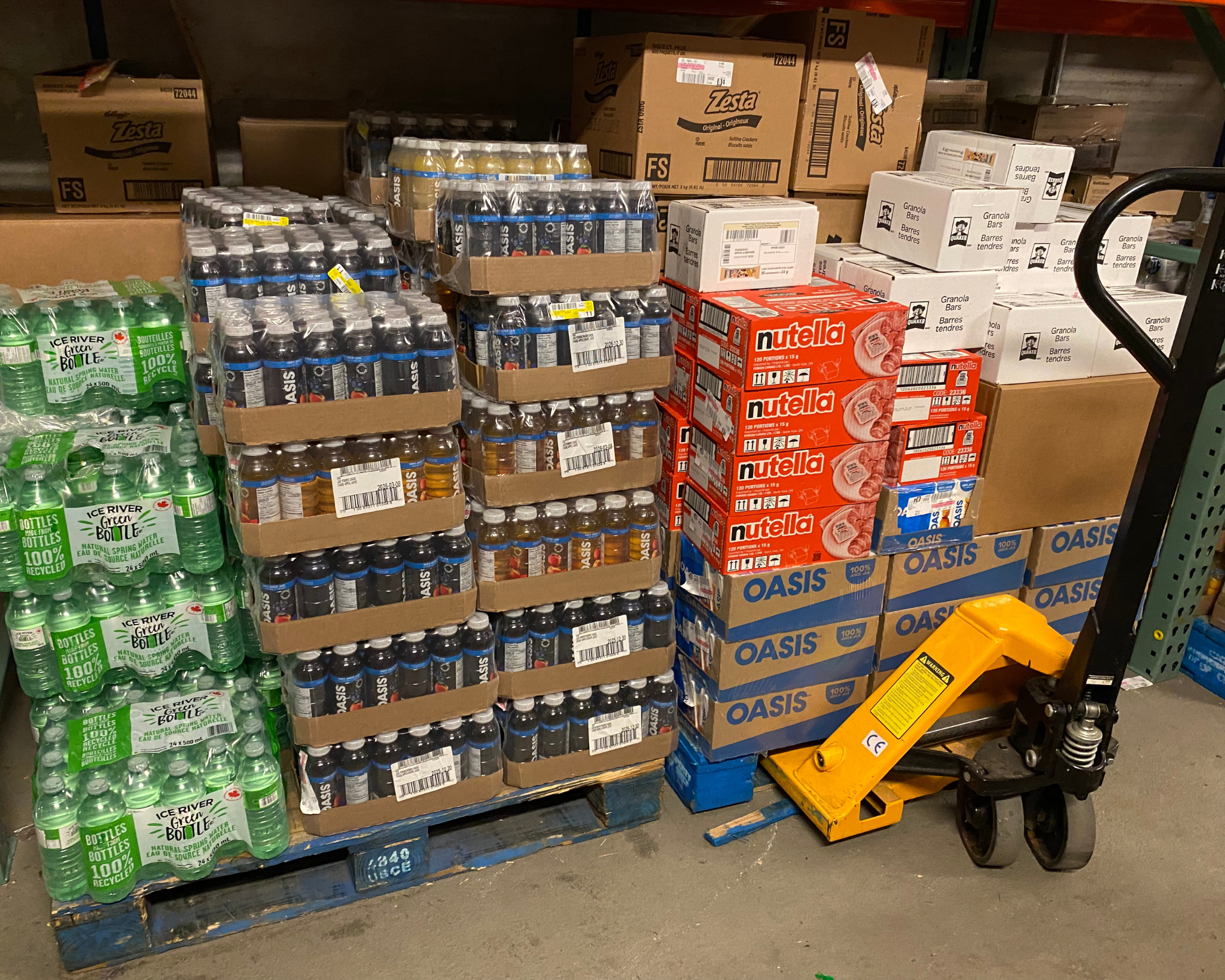
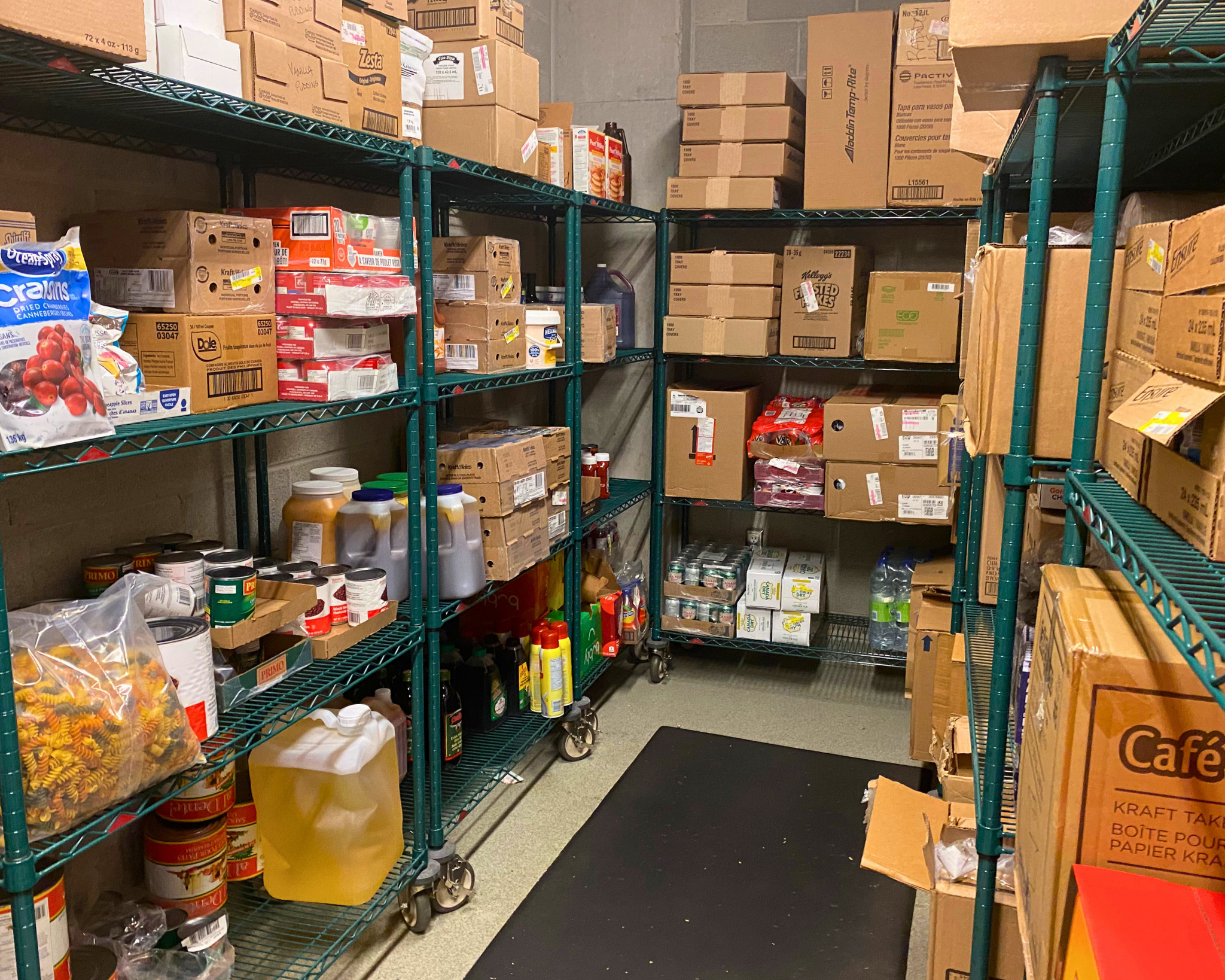
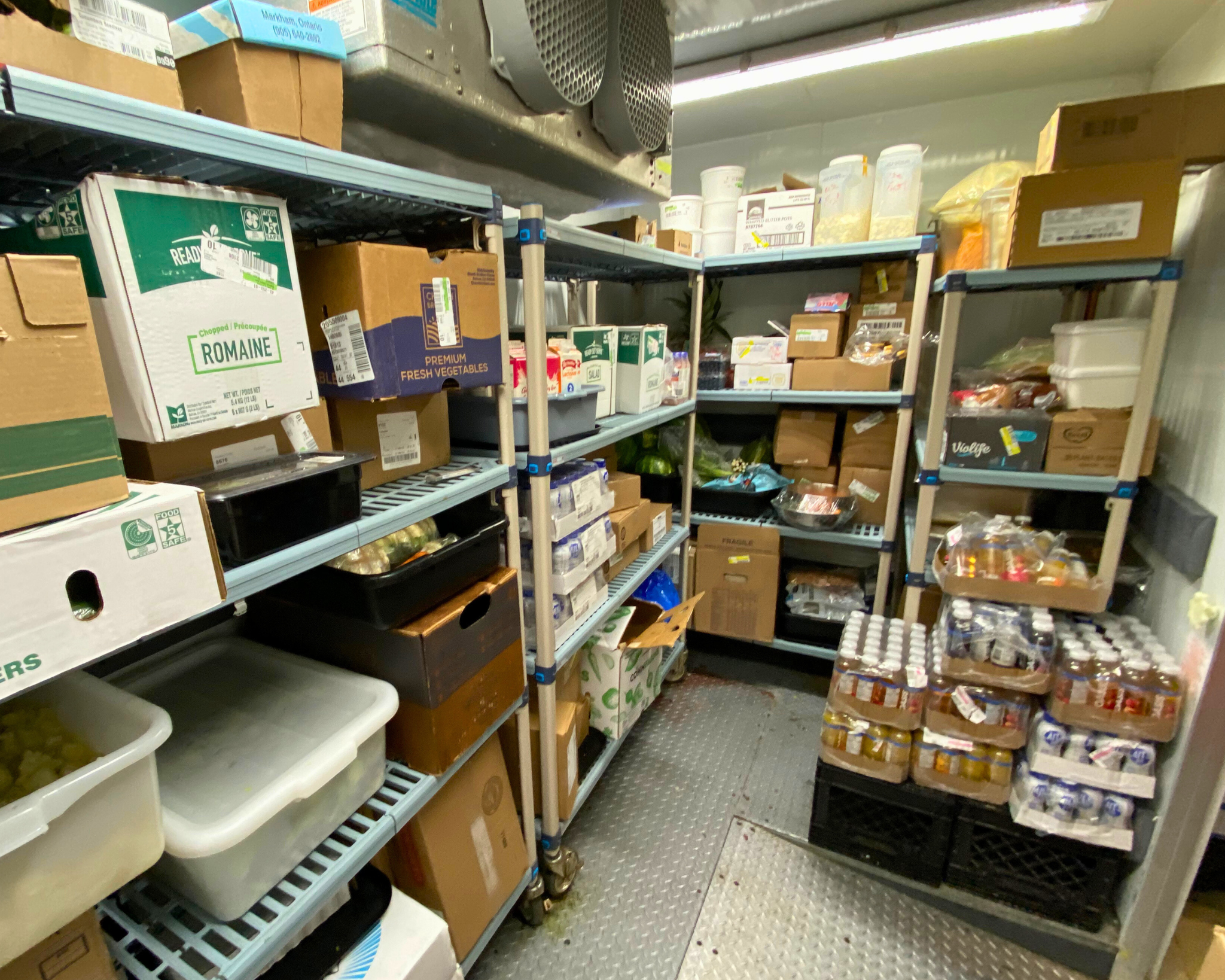
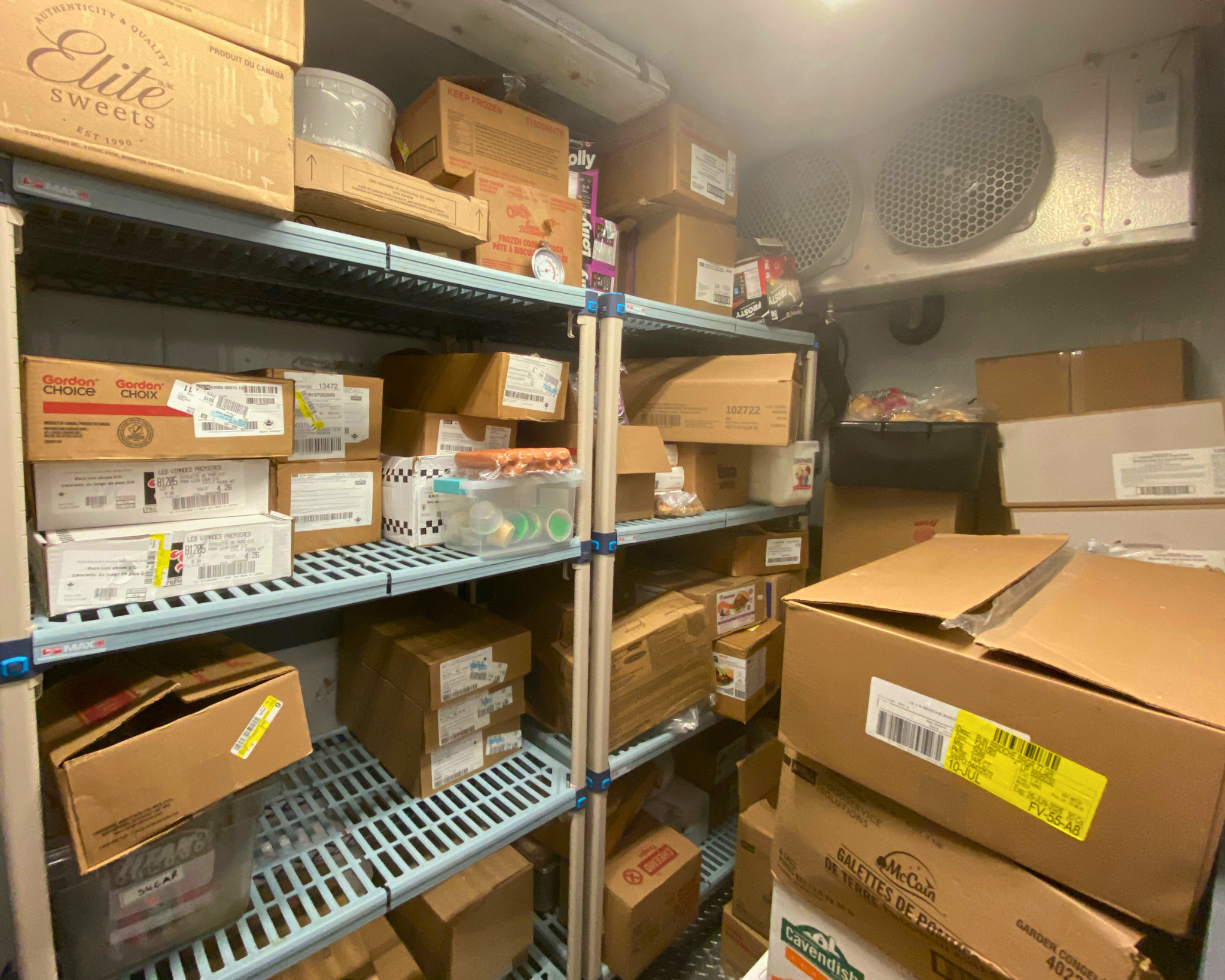
Deliveries from the loading bay are quickly moved to the dry storage room, fridge, or freezer.
Prep
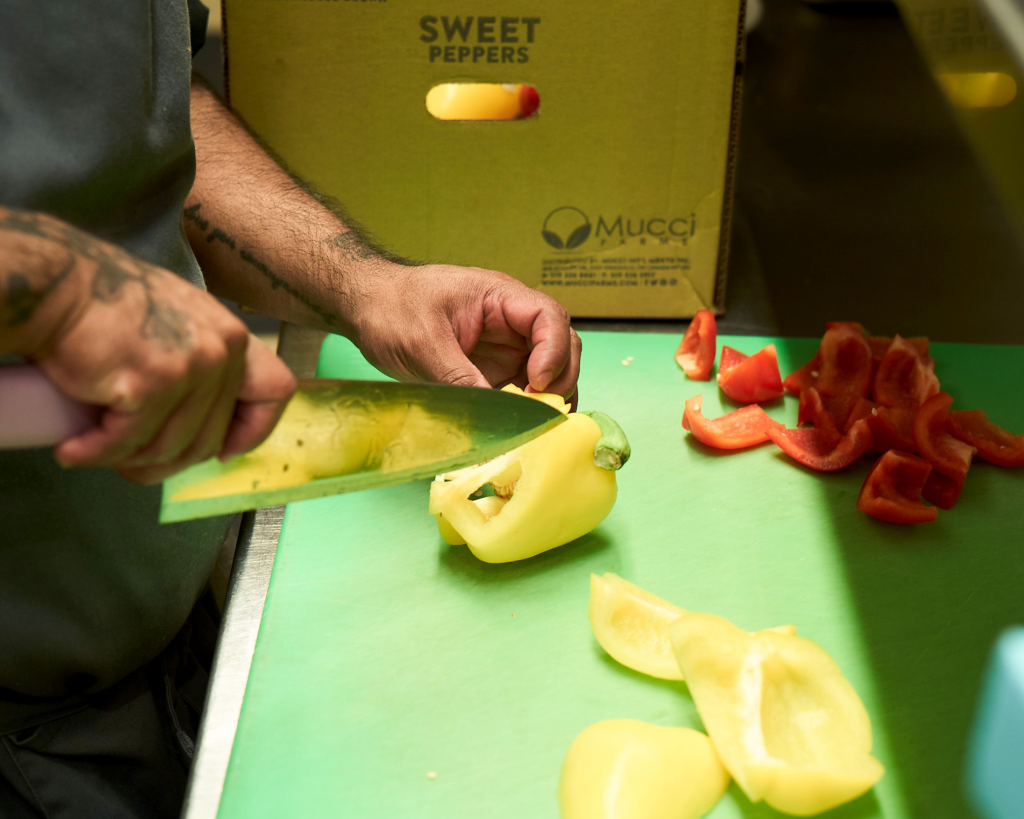
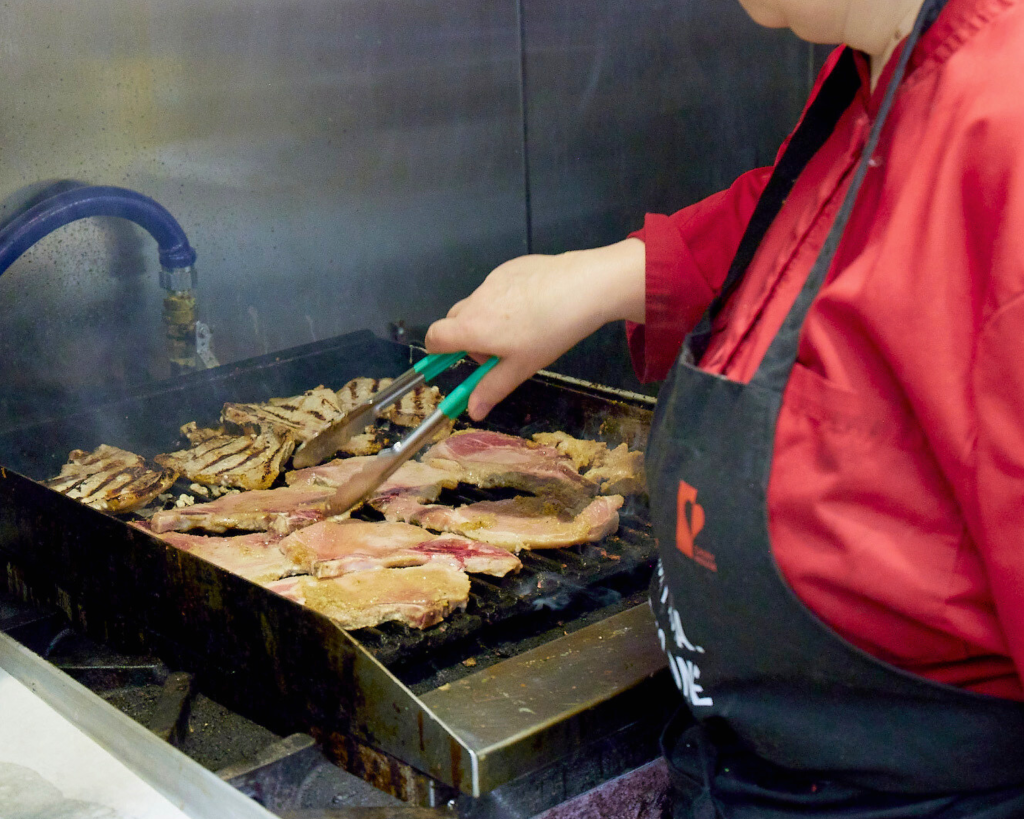
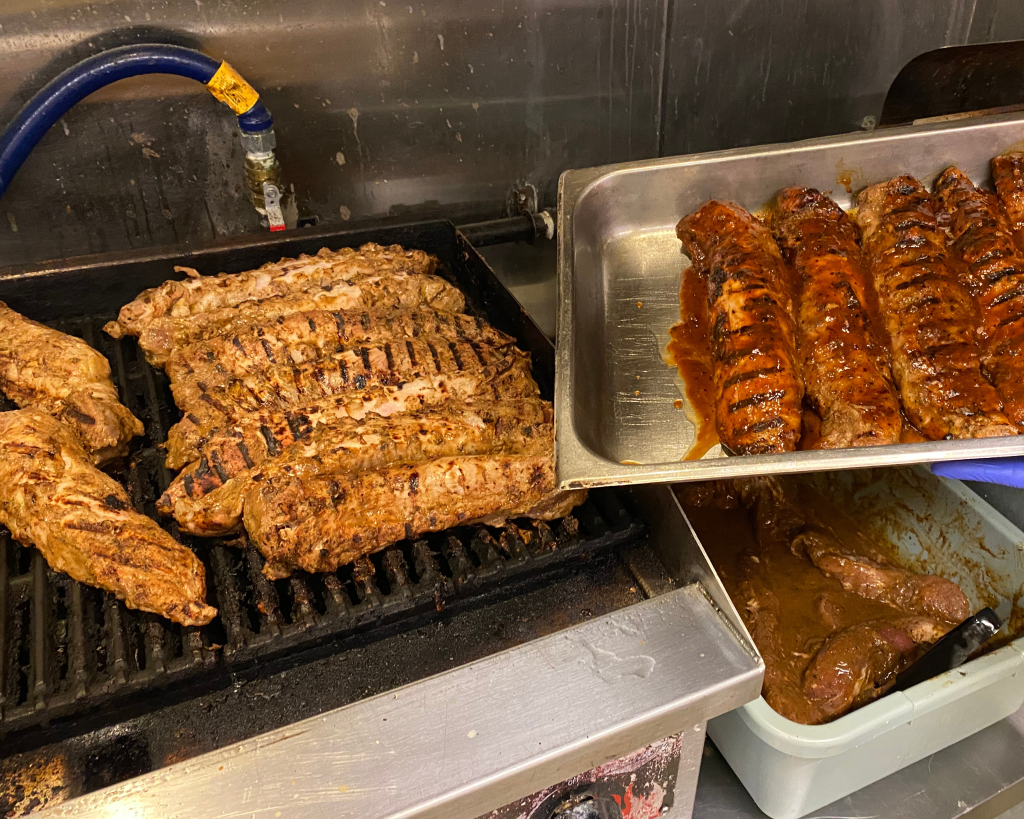
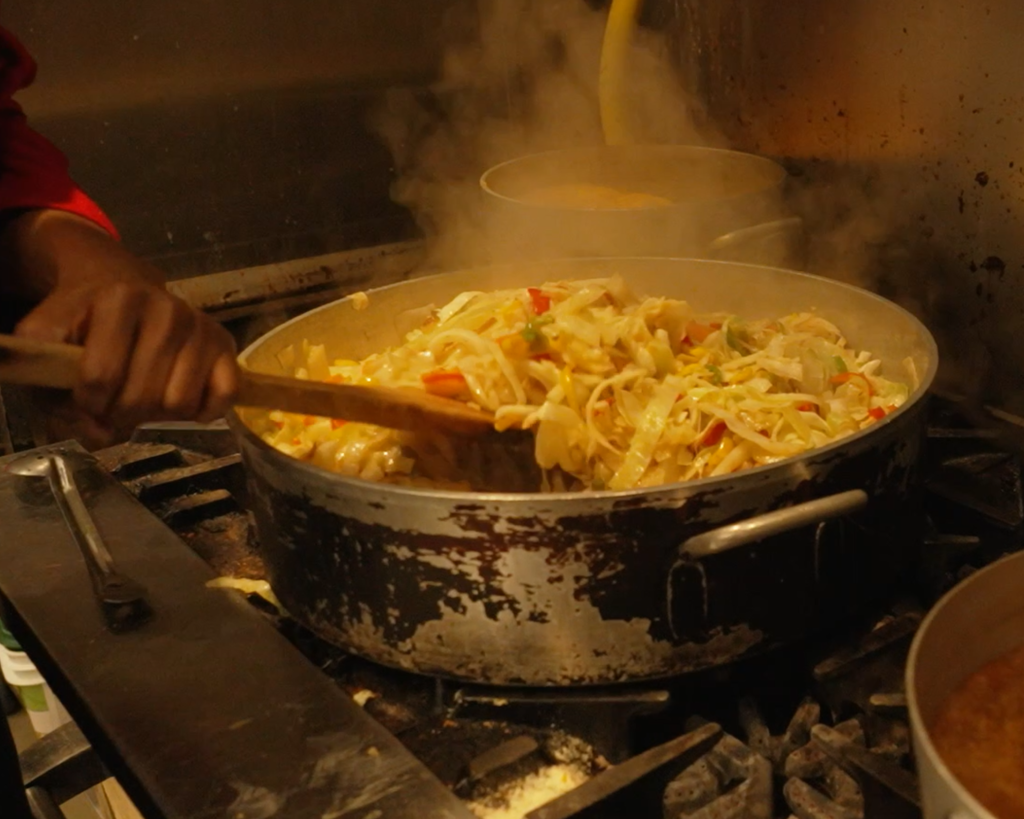
After breakfast has been delivered to inpatient clients, the work begins for the lunch service. This can span from washing, chopping, marinating, cooking, and even outdoor grilling during the summer months. All engines are pumping ahead of service time at noon.
Afternoon
Lunch service
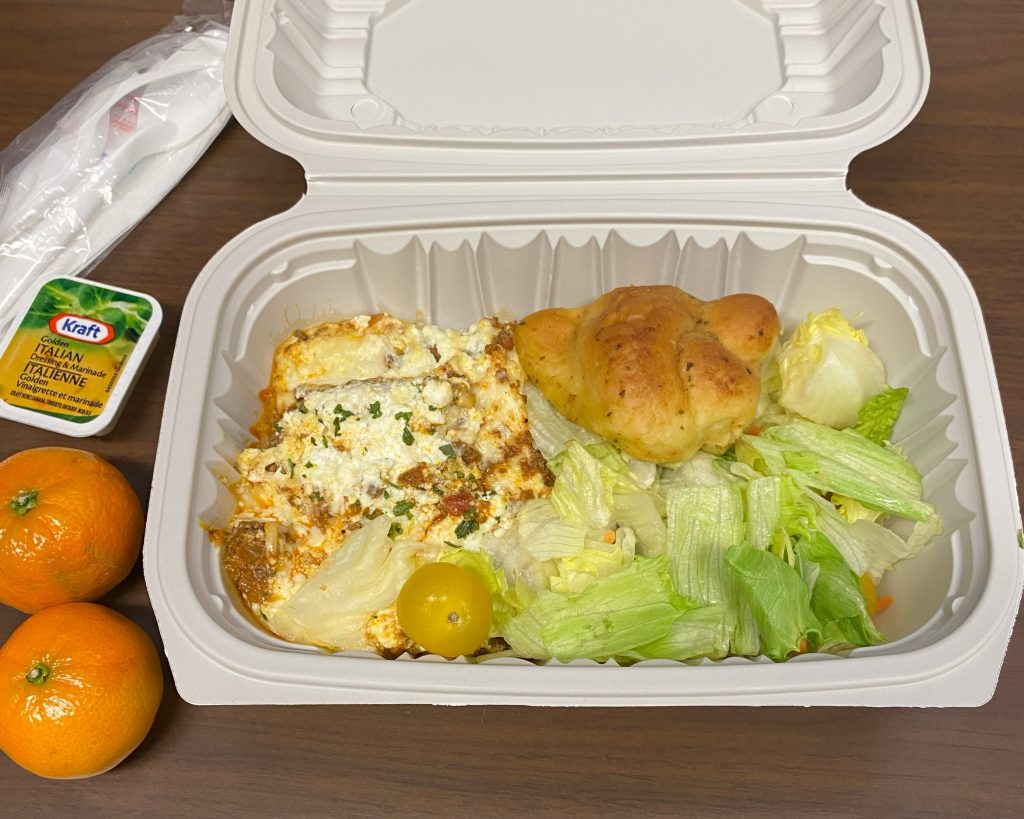
By 11:30 a.m., the team is ready to start, hurriedly packing around one hundred perfectly portioned takeout meals for the lunch service volunteers to hand out to clients. Moreover, these volunteers assist to set up fruit and beverages at the takeout table. By noon, clients come to the servery where kitchen staff will plate their meal and interact with each one. For some, a simple food order suffices, and others elect to chat about their lives with the kitchen staff or provide a compliment. Time moves quickly during the lunch rush, with hundreds of meals being scooped, plated, and served in just two hours. The kitchen staff team go above and beyond to try their best to ensure that no one leaves hungry. By 1:30 p.m. the dust begins to settle, the inpatient lunches are delivered, and the final portions are packed to-go.
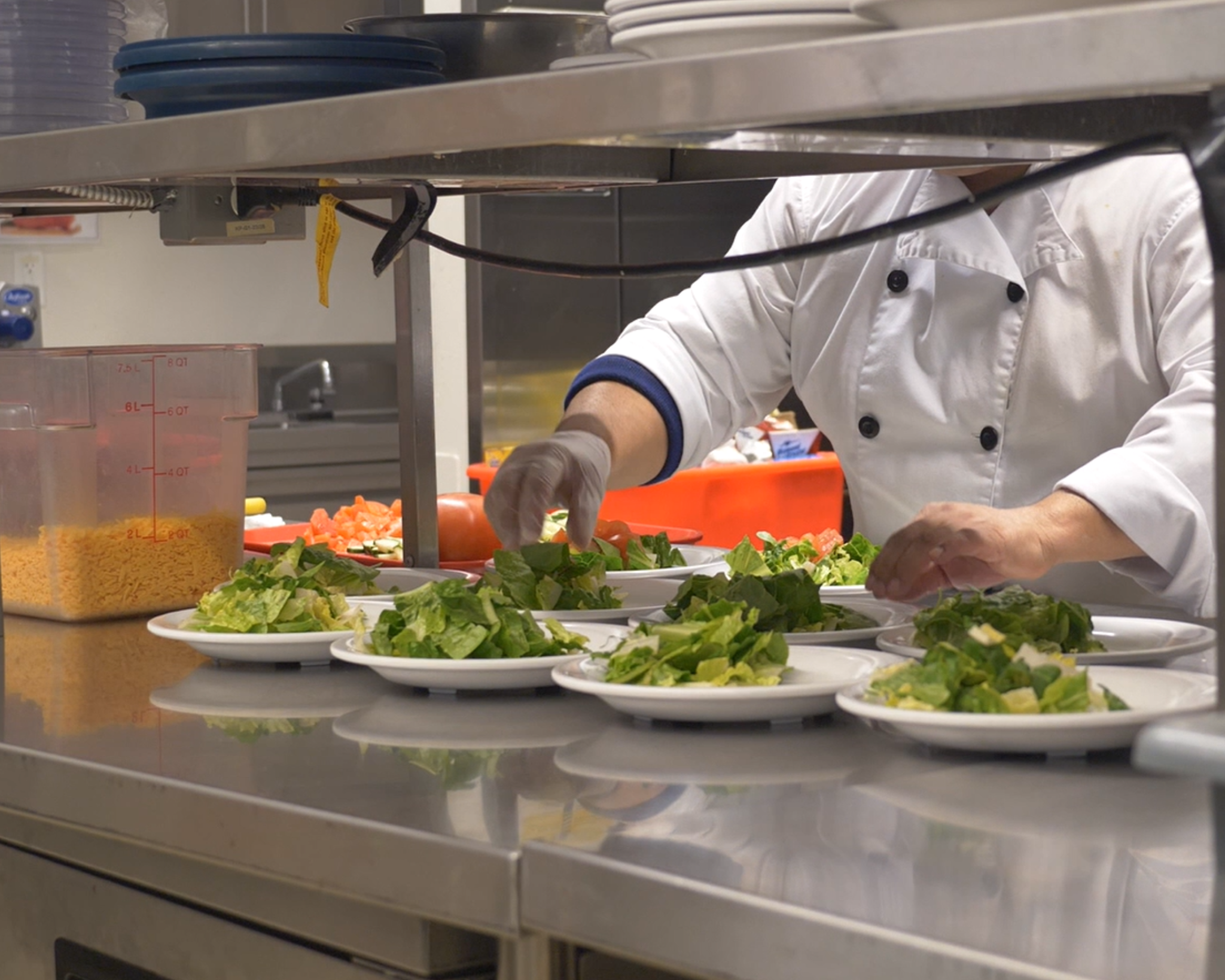
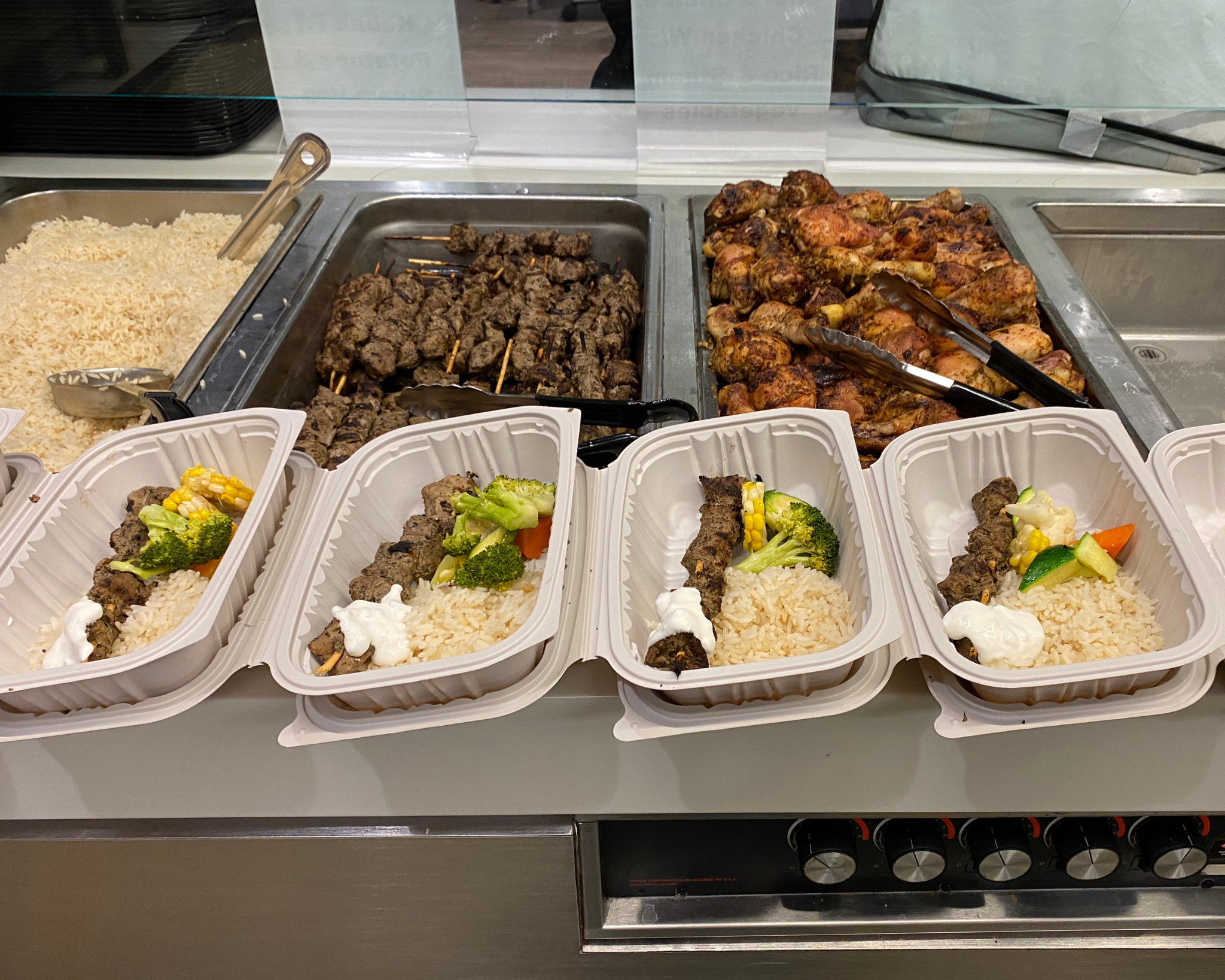
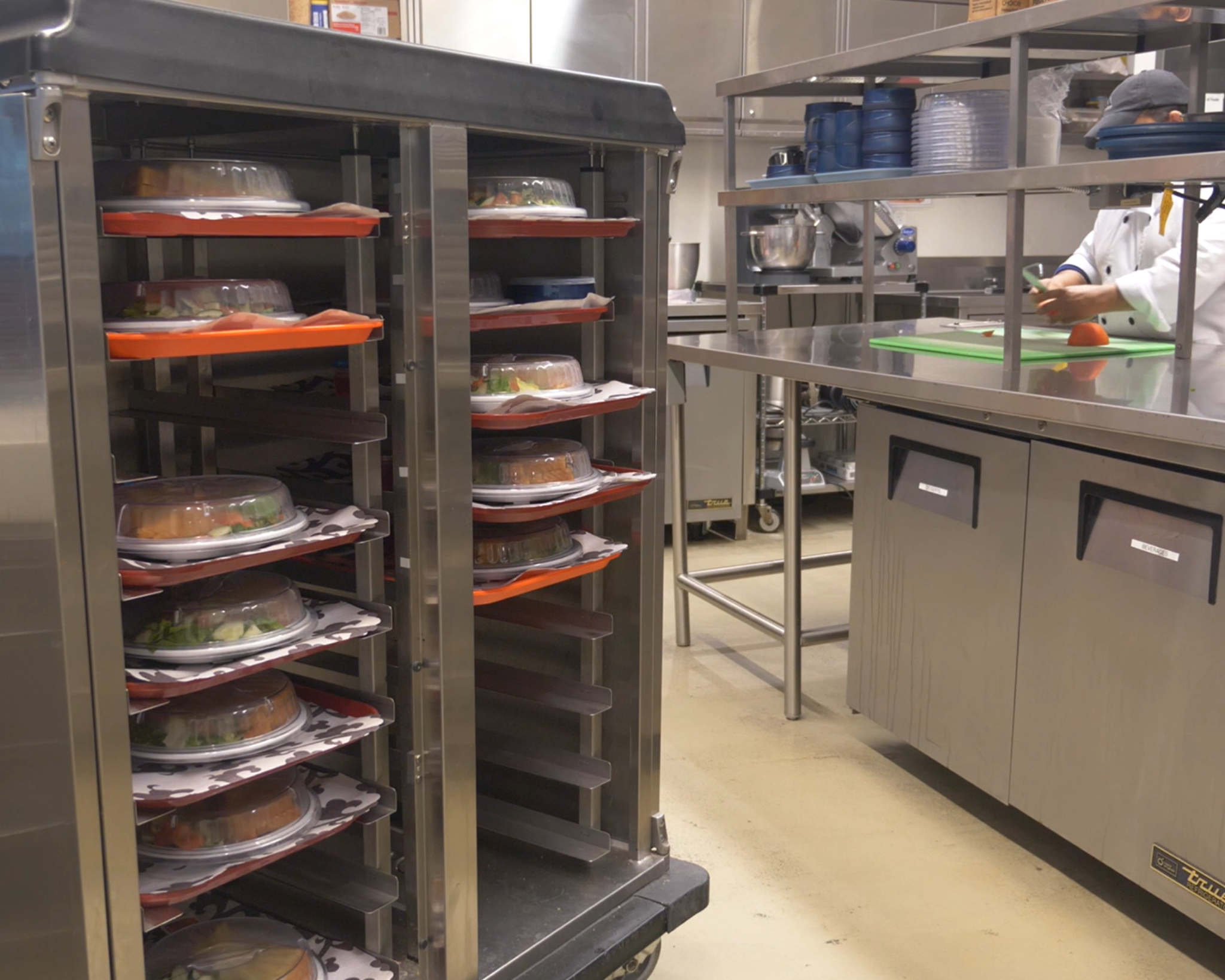
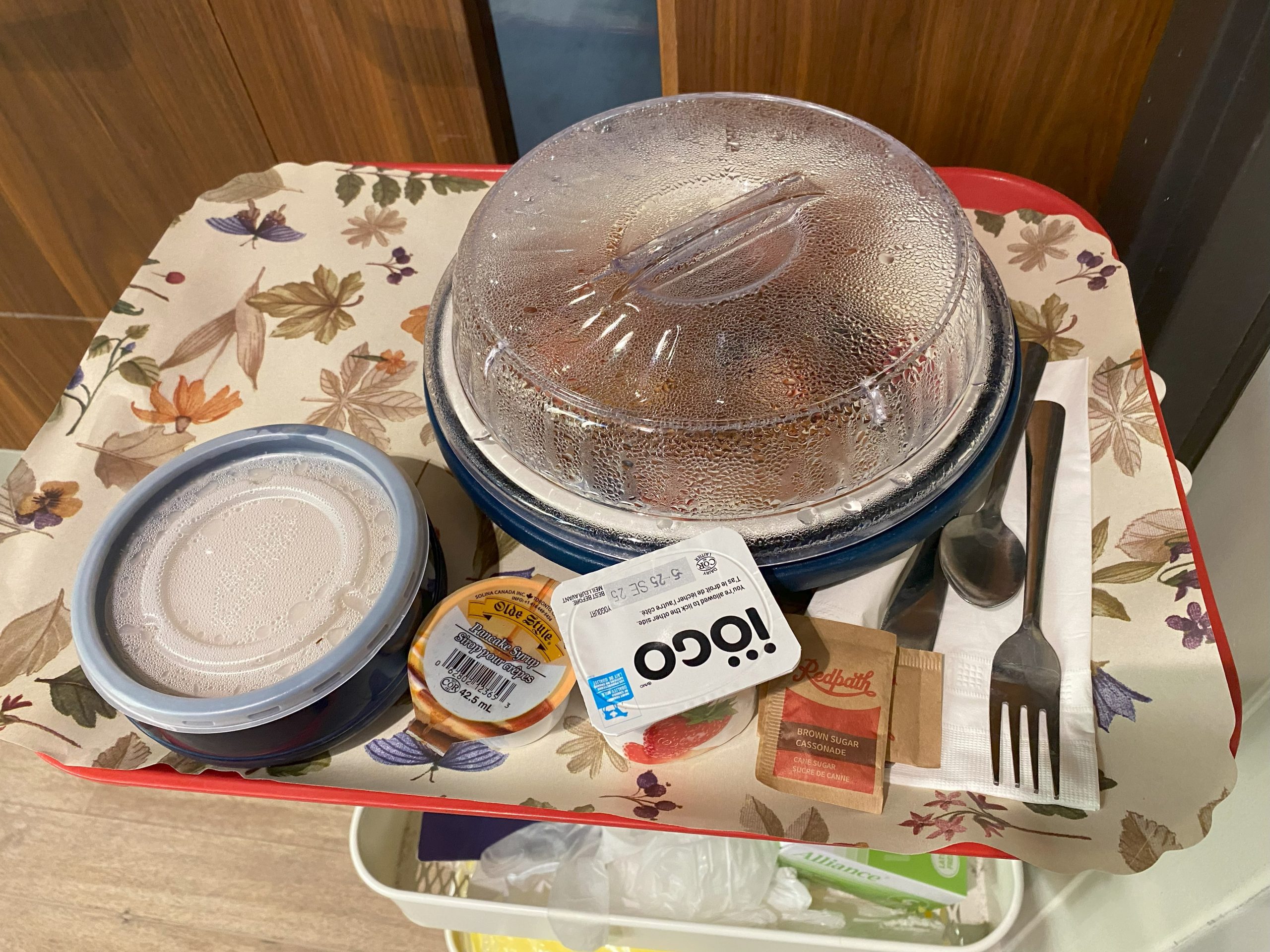
Outpatient meals are served on plates for dine-in or packed in containers for to-go. Inpatient meals are plated and delivered to their rooms.
Cleaning and handover
When the dining room closes for cleaning at 2 p.m. there is a moment of reprieve. The kitchen team begin to clean and prepare for a much lighter load of preparing the inpatient dinner service. This is also an opportunity to prepare for the following day as well
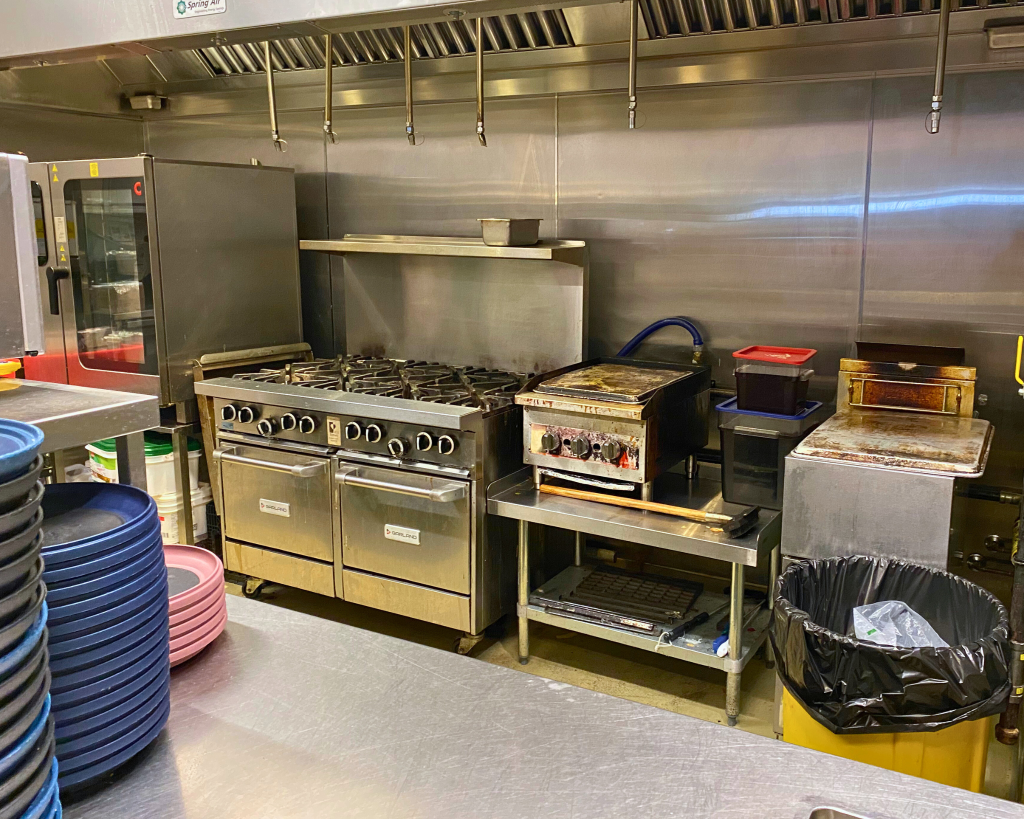
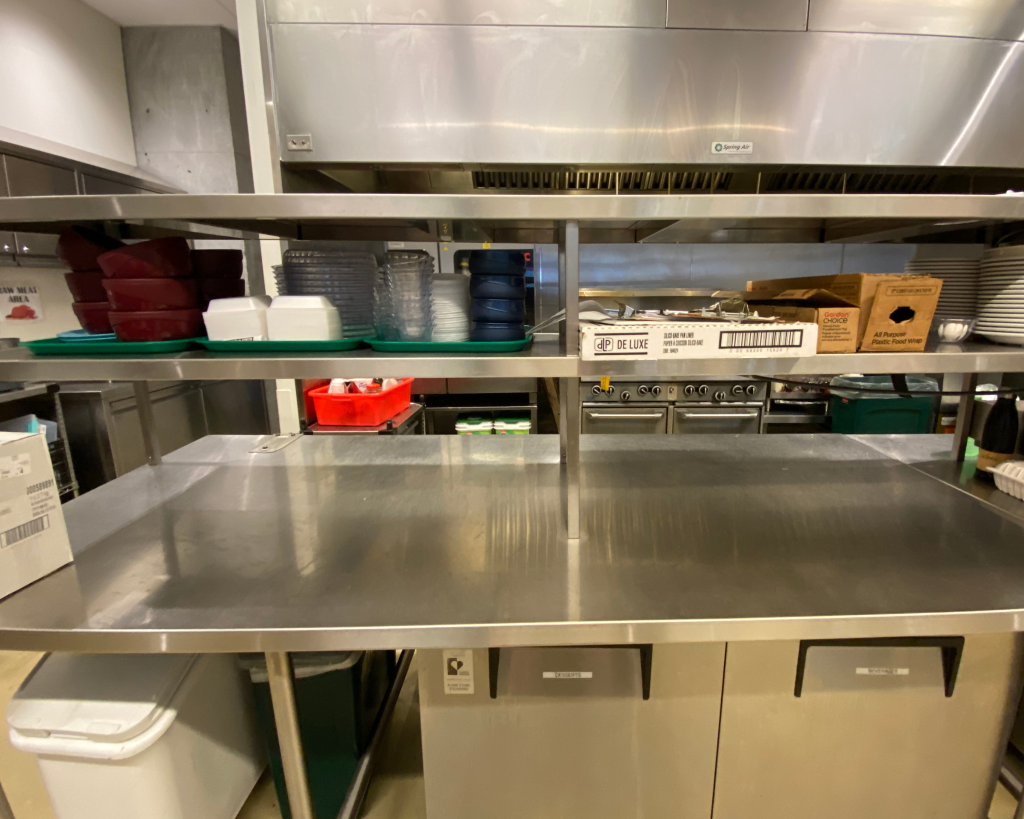
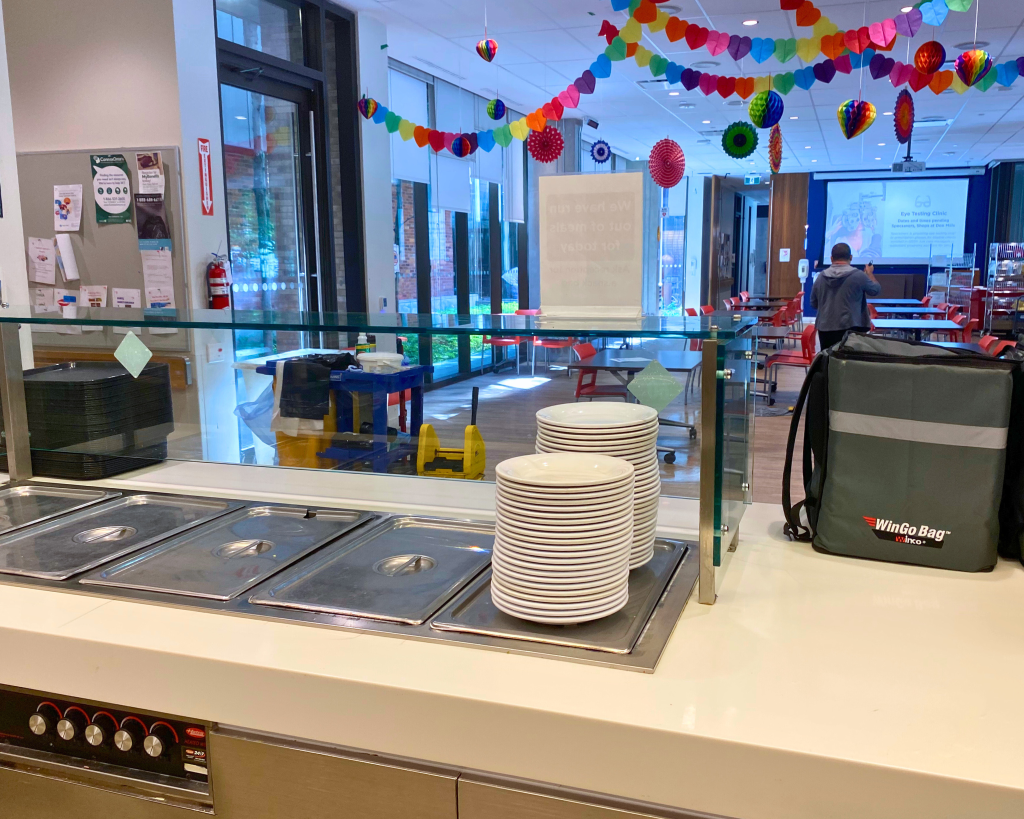
The kitchen services team at Casey House are a force to be reckoned with at our hospital. Not only do they feed clients, they provide nourishment in their own culinary language that speaks to the heart. Day after day, this reliable team beckons the hungry to come for a meal, be assured that they have a seat at the table, and a place to call home.
The Love Family Healing Garden cuts through to the sky atop Casey House’s fourth floor, serving as a place for healing, community, and rest. Established for more than five years, the garden has already cycled through nearly 20 seasons.
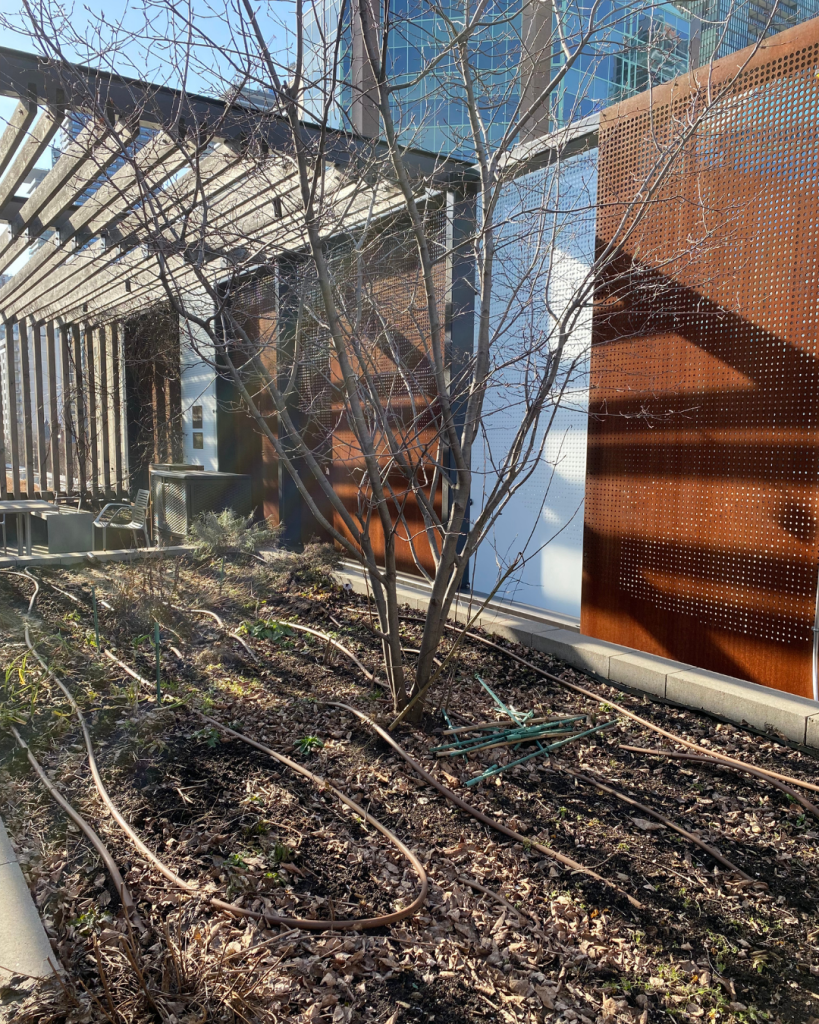
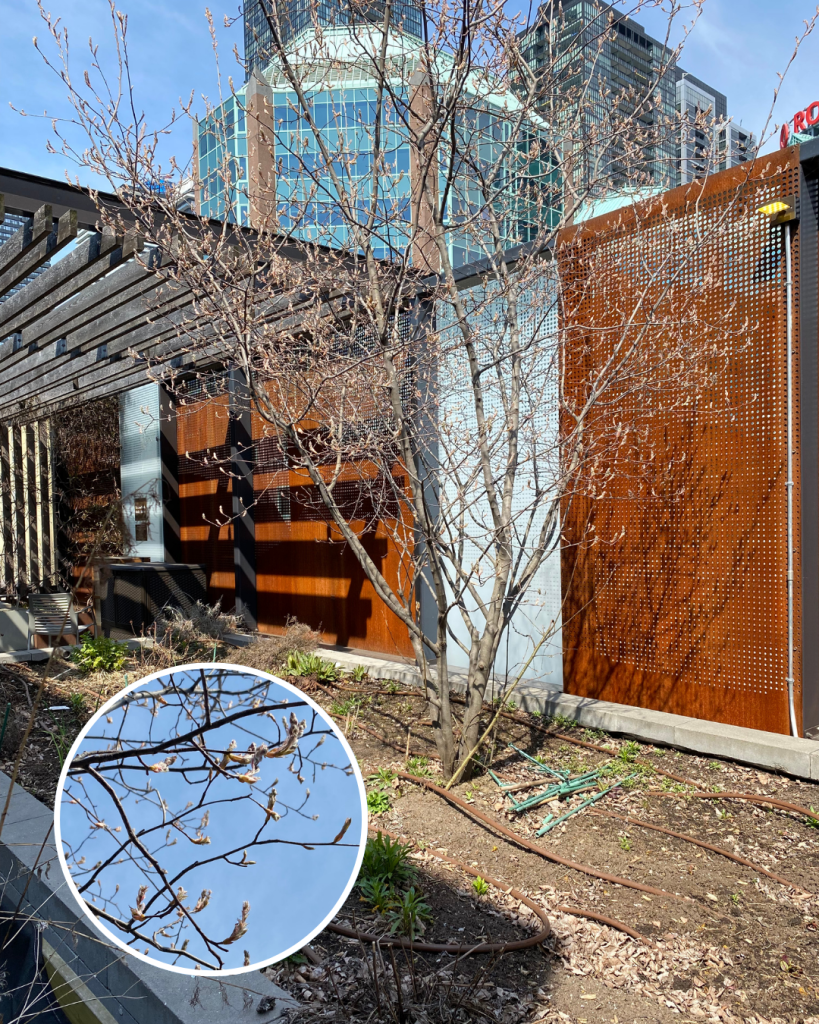
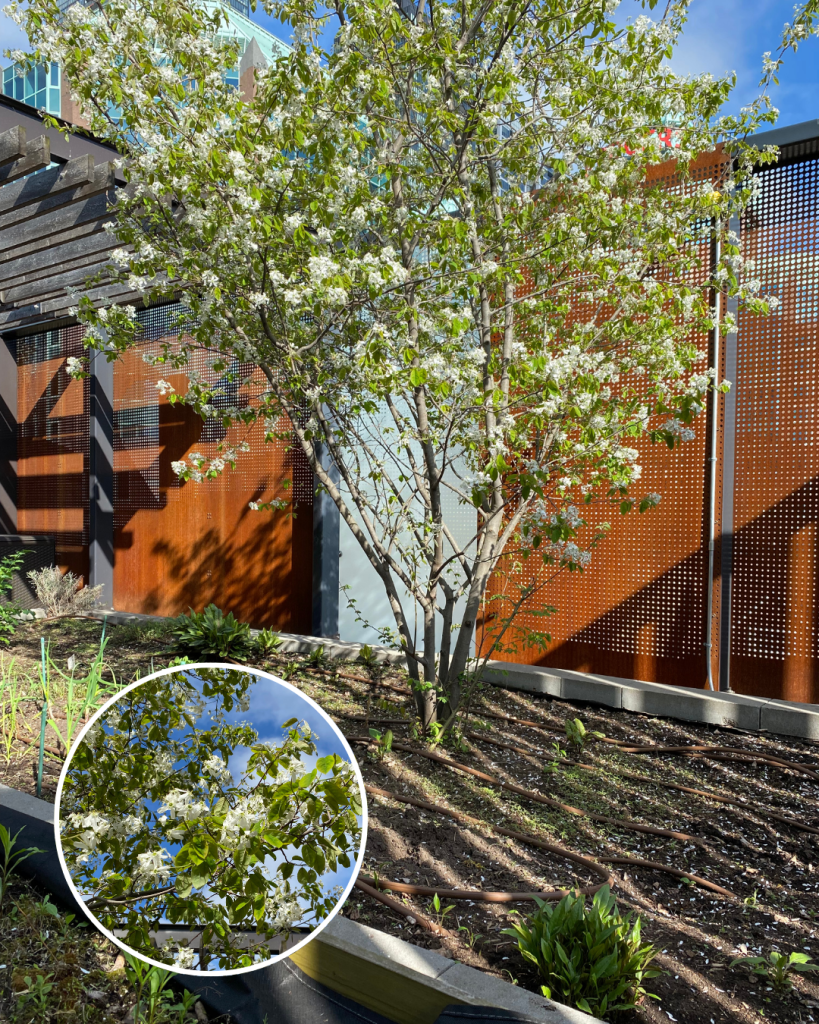
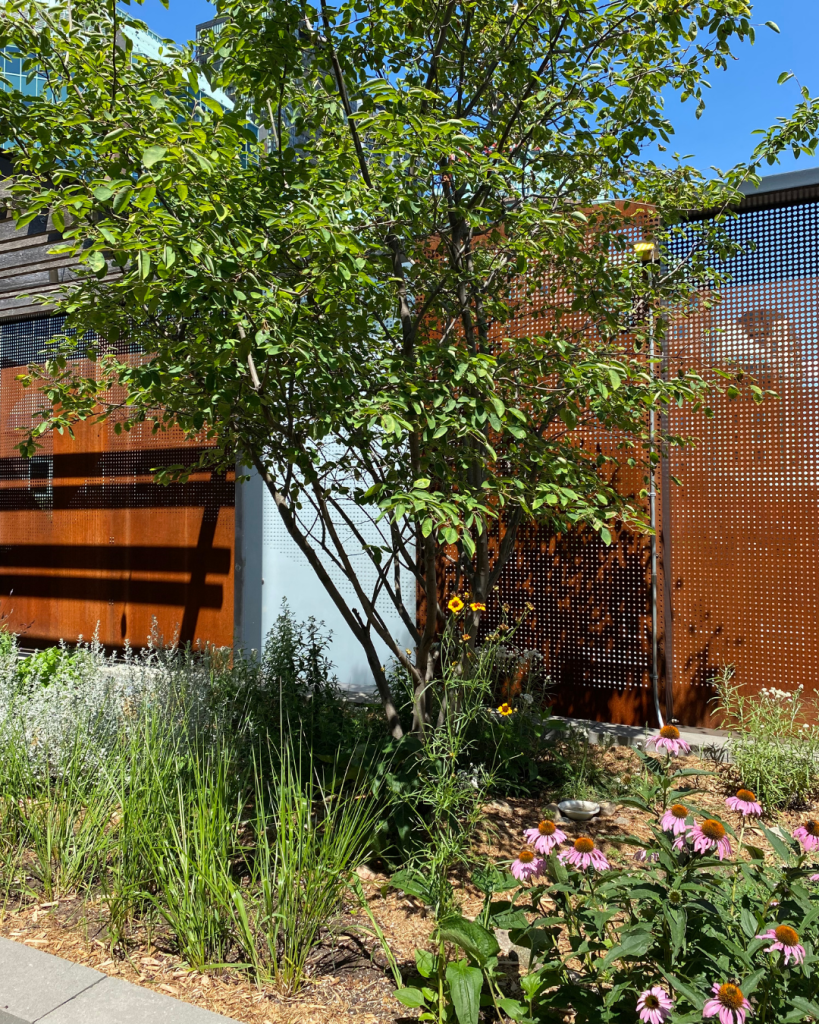
March, April, May, and July 2025
Construction on the garden was completed in 2020 just as COVID lockdowns started and the surrounding world was closed. For the staff and clients who remained onsite, it was an oasis. The new green space provided access to a safe and semi-private connection to nature.
Once outpatient client programming resumed, it didn’t take long before things started to bloom. The gardening program led by our recreational therapists invites clients to care for, harvest, and enjoy a variety of plants, flowers, and vegetables. Accessible gardening space can be rare in downtown Toronto, so we are pleased to share this space with our budding gardeners. Clients enjoy getting their hands dirty while under the sun, whether they are learning new skills or dusting off old ones. Gardening together brings camaraderie, and in more serene moments, opens the floor for casual group discussions on health, life, updates, and other personal musings. Our gardeners develop a sense of belonging and accomplishment from participating in the program.
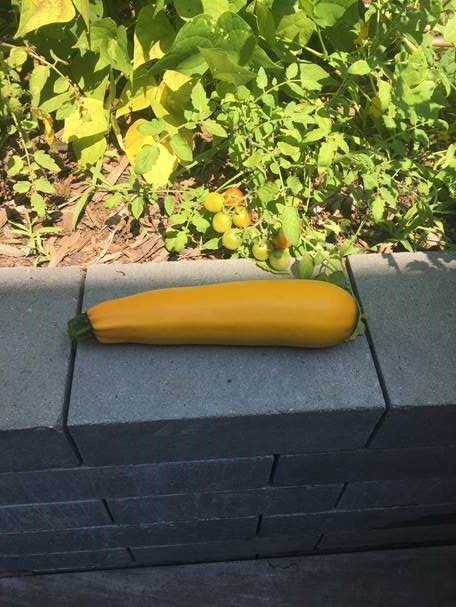
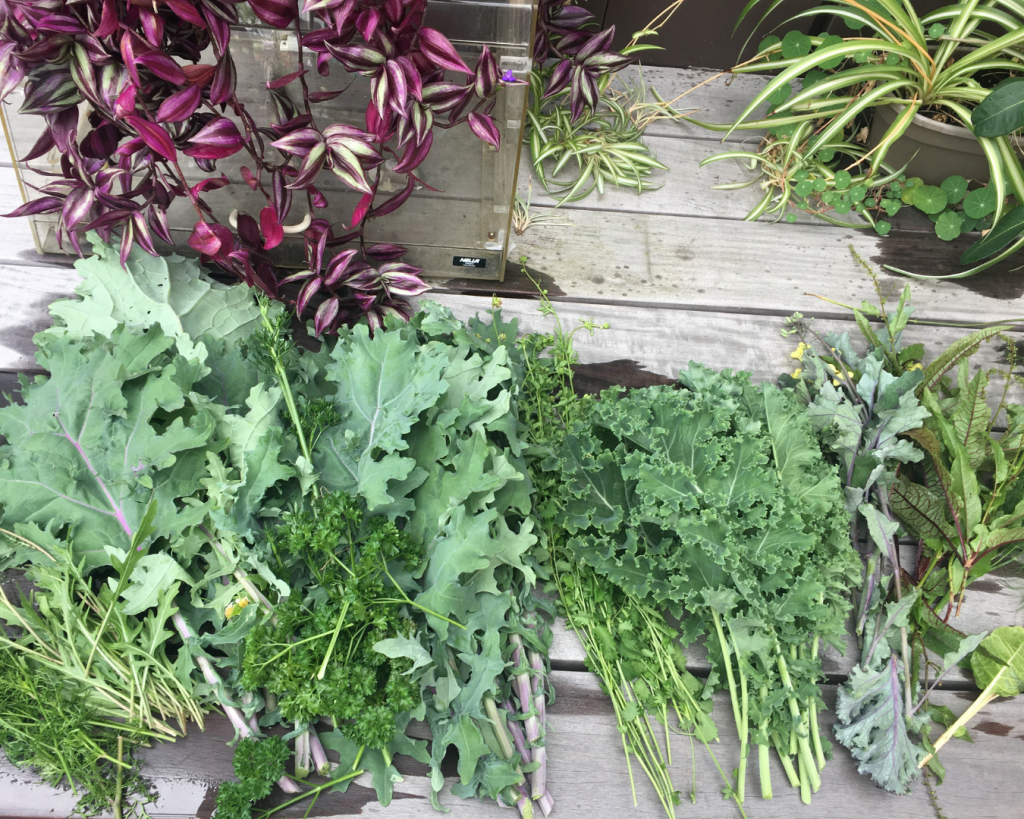
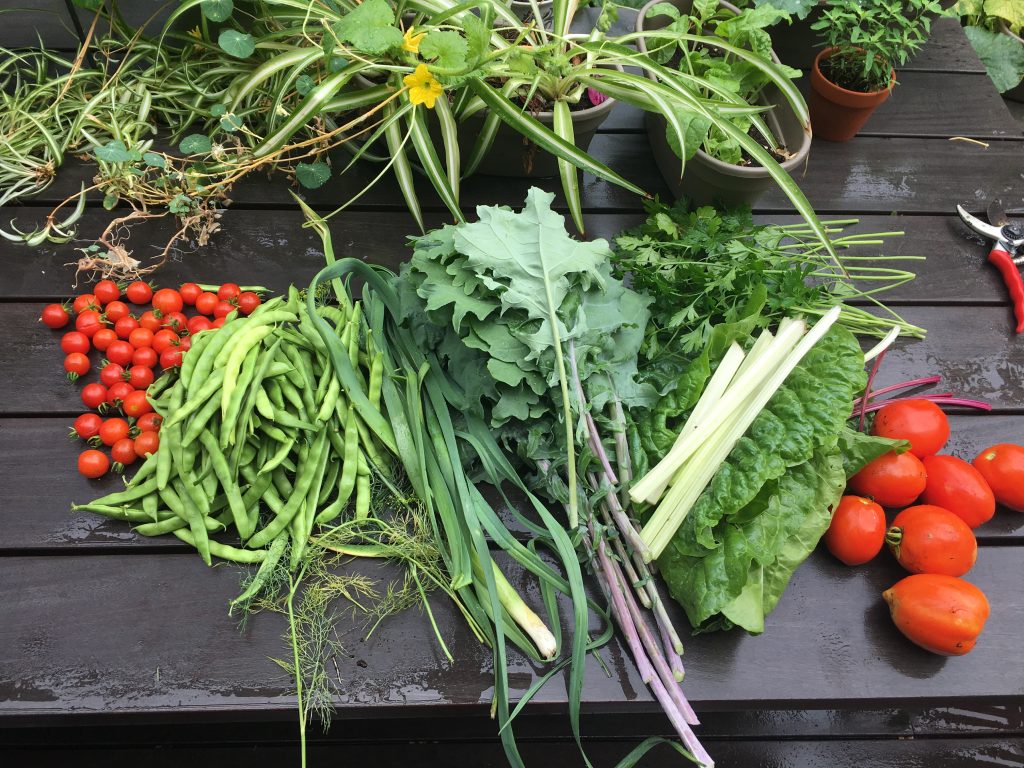
The fruits of their labour make their way from farm to table. Clients are able to witness their dedication and care transforming seedlings into fully grown plants. Flowers are dried into tea or ground into healing topical salves. Edible plants are utilized in group sessions such as Pantry Builders or the Comforts of Home cooking workshops where they are prepared, pickled, and eaten. These include tomatoes, zucchinis, bok choy, radishes, lettuce, calendula, chamomile, and even a whopping pair of 9-foot-tall sunflowers in 2024. This season, the gardening session has expanded its programming to include stretching and socializing in the fresh air.


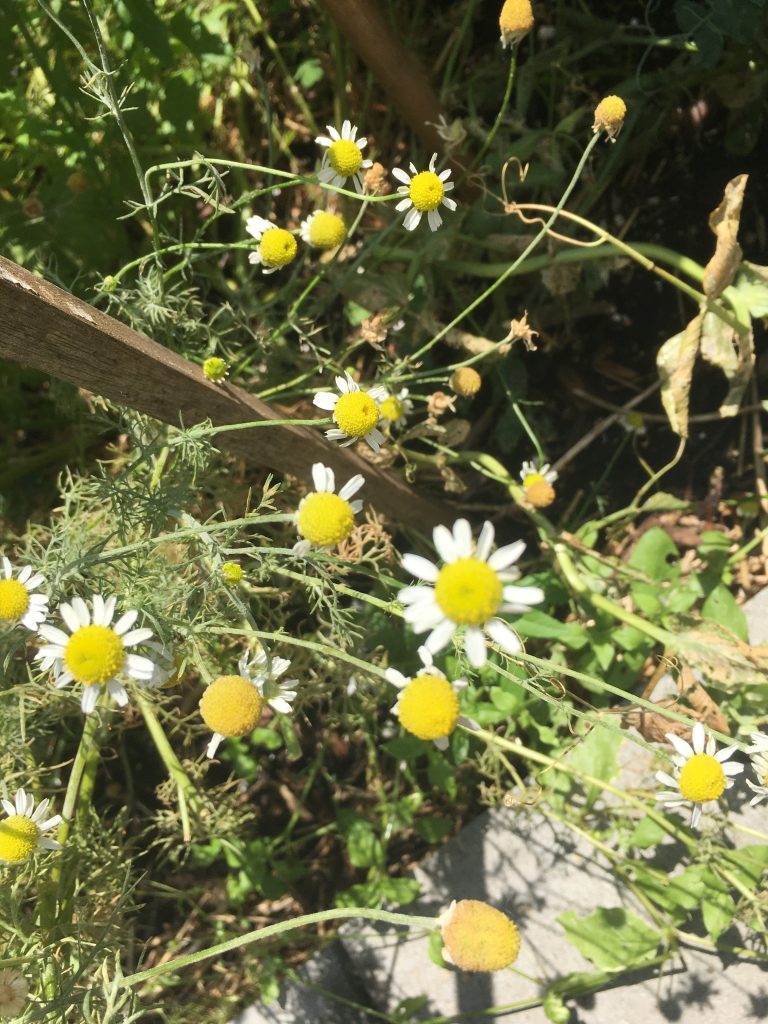

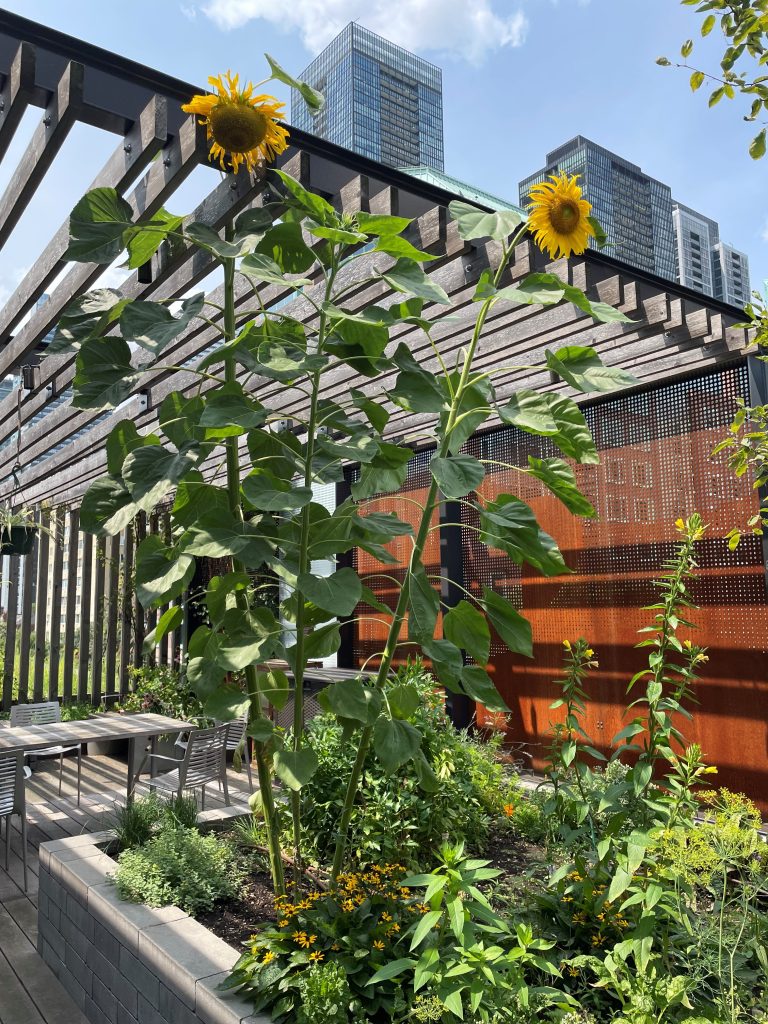
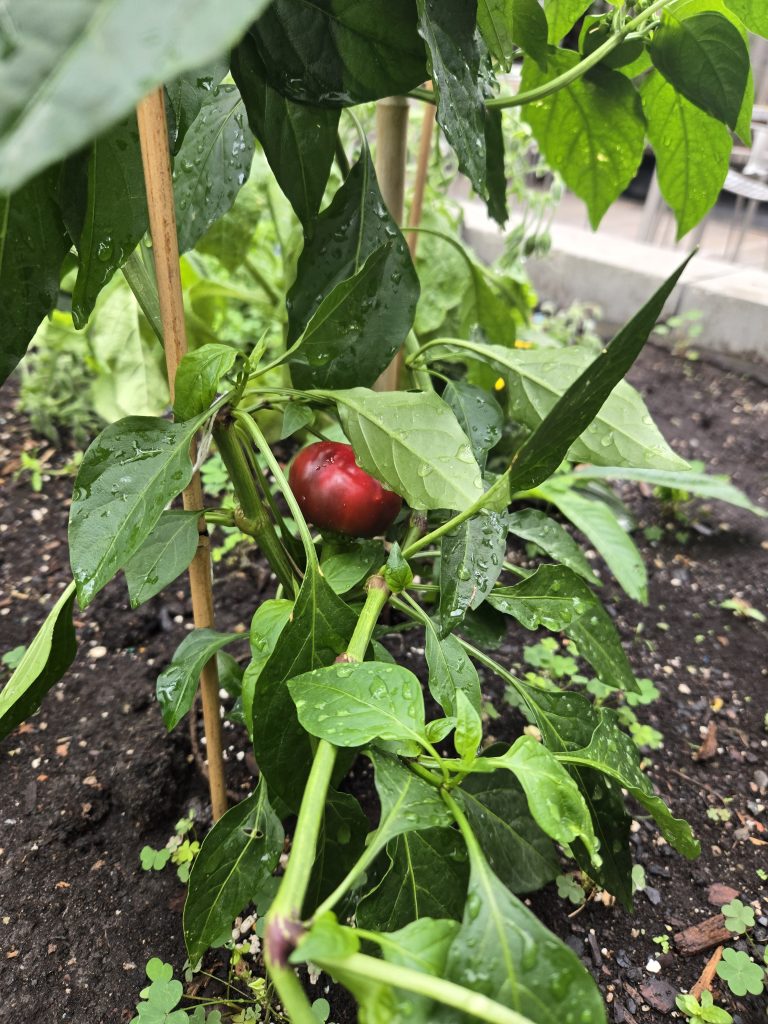
The Love Family Healing Garden is a tender place for growing plants, minds, and hearts. Earlier this year, we collaborated with our Indigenous advisory committee and Miinikaan garden consultants to redesign and replant the garden beds with Indigenous medicines. At the centre of the plot, a new medicine wheel format features sage, tobacco, cedar, and sweet grass; the four medicines featured in the smudge kits which are accessible in client spaces.
The first day of planting began with an inaugural garden gathering to welcome the new growth: a sacred fire and ceremony led by the Indigenous advisory committee. The new plants are thriving, and we look forward to seeing them support clients for years to come.
The Love Family Healing Garden is a tender place for growing plants, minds, and hearts. Earlier this year, we collaborated with our Indigenous advisory committee and Miinikaan garden consultants to redesign and replant the garden beds with Indigenous medicines. At the centre of the plot, a new medicine wheel format features sage, tobacco, cedar, and sweet grass; the four medicines featured in the smudge kits which are accessible in client spaces.
The first day of planting began with an inaugural garden gathering to welcome the new growth: a sacred fire and ceremony led by the Indigenous advisory committee. The new plants are thriving, and we look forward to seeing them support clients for years to come.
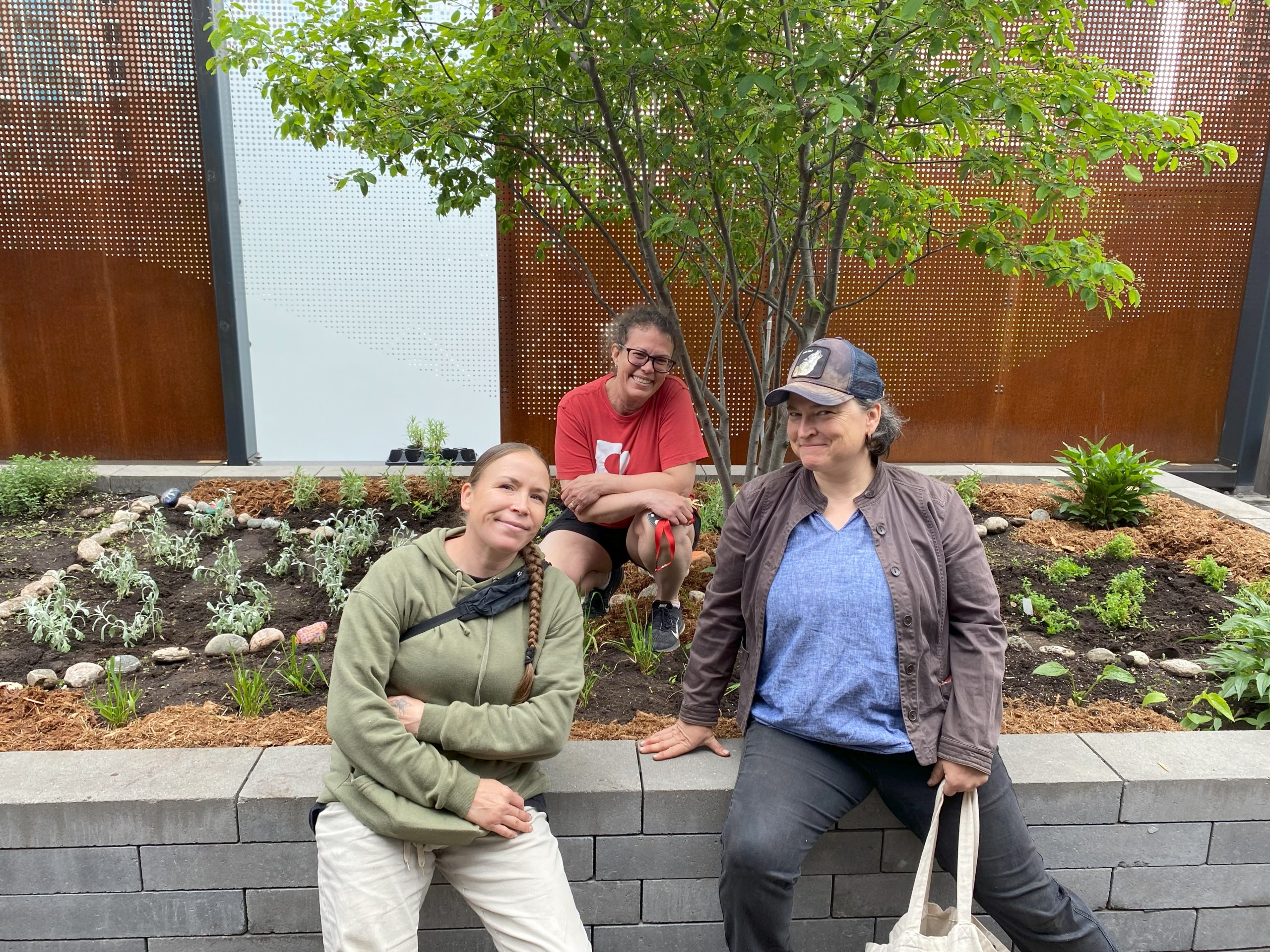
Recreational therapist Kristen with Sara and Lara from Miinikaan
Undoubtedly, there is more growth for our Love Family Healing Garden, but for now we are enjoying the lush beauty of the foliage. The garden has been the setting for many client programs, meetings, tours, lunches, and even the 2024 solar eclipse viewing. Whatever it is, the opportunities are fertile here and the sky’s the limit.
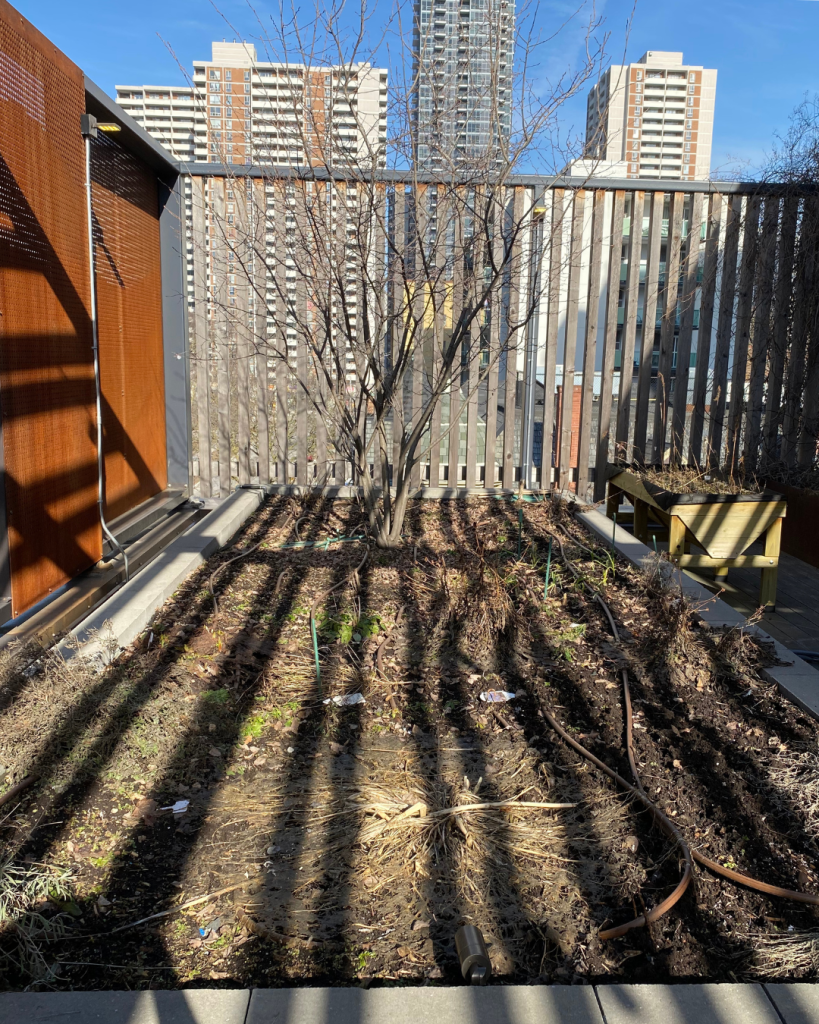
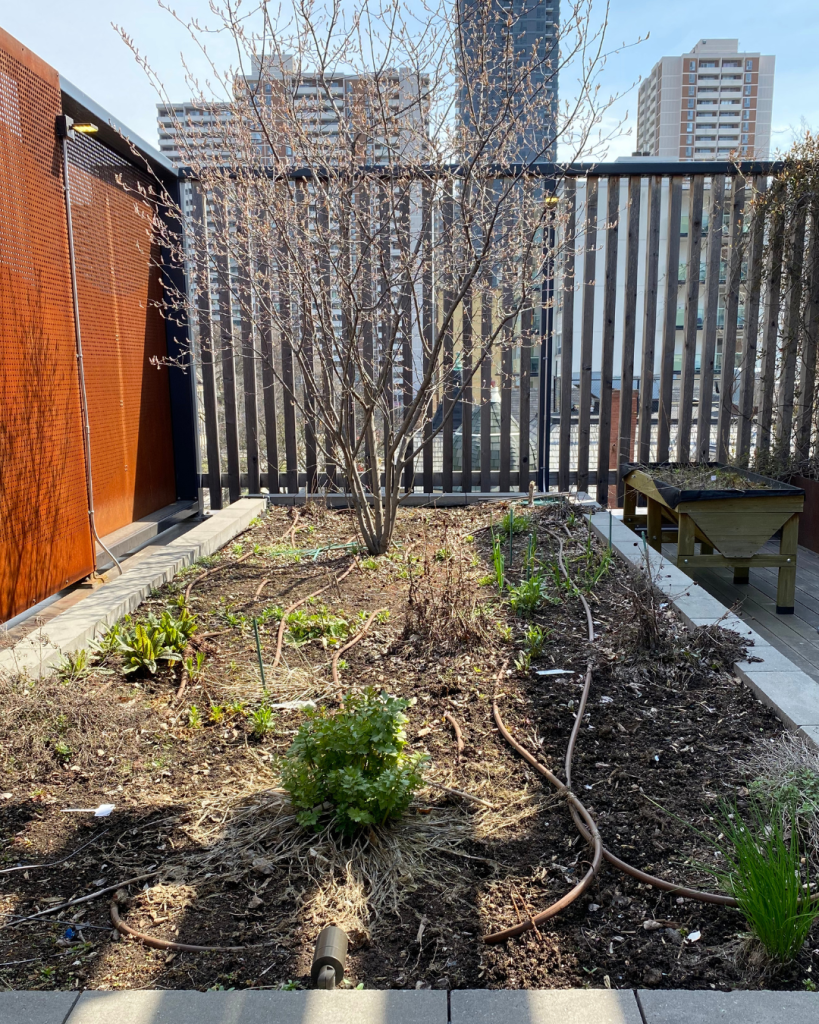
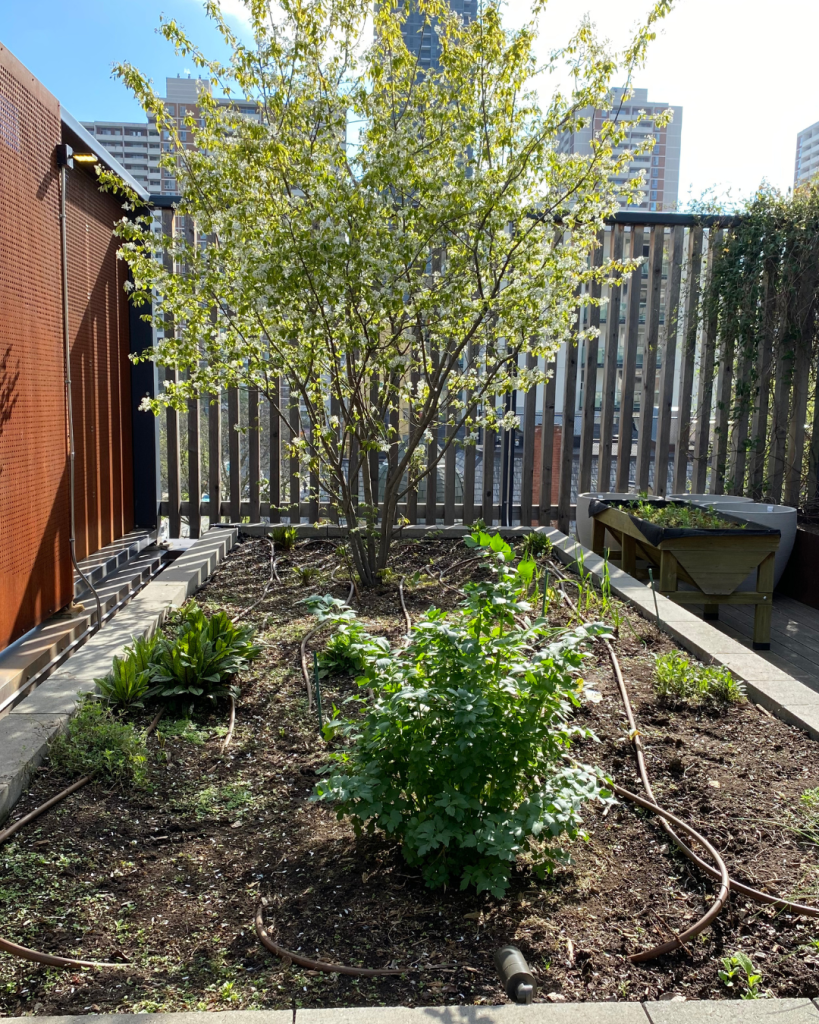
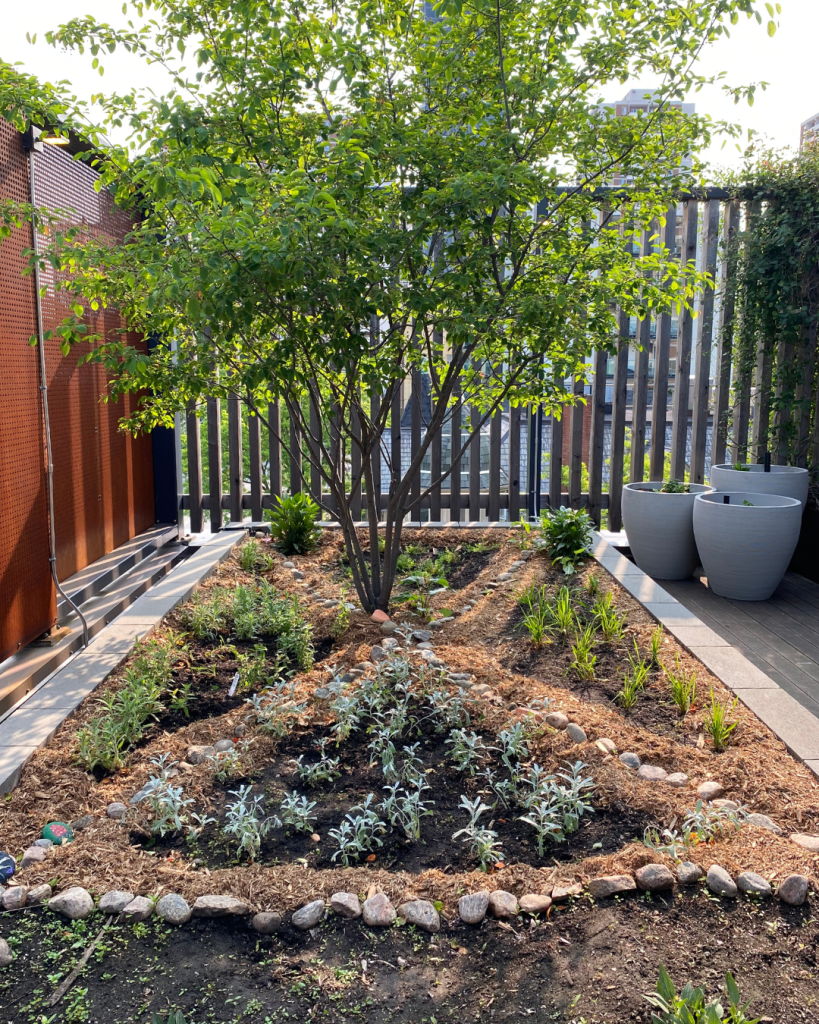
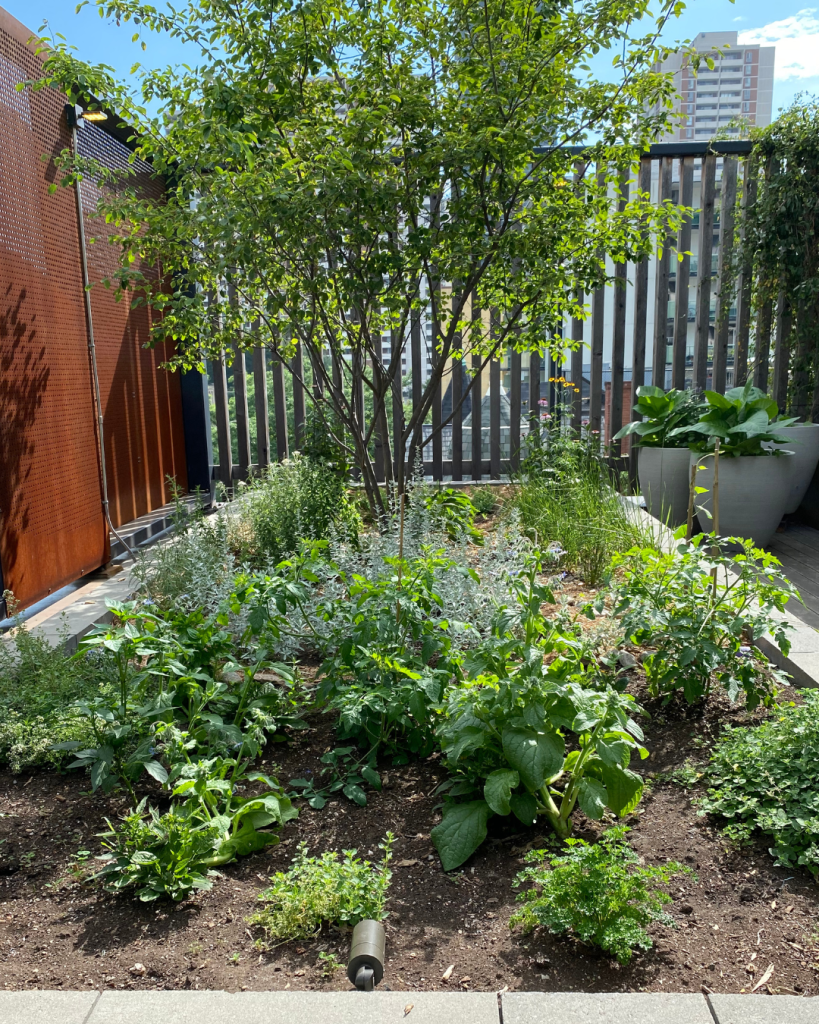
March, April, May, June, July, and August 2025
A morning snack kit
While the outpatient midday lunch program takes centre stage each weekday between noon and 2 p.m., it only spans two hours. For many of our clients, food insecurity is a challenge they experience 24/7. As a result, we provide supplementary snack kits to complement our lunch service and provide food during off-hours. Now, almost a year later, the overwhelming demand for snack kits continues to increase.
Clients and community members can pick-up a morning snack kit before noon or an afternoon kit after 2 p.m. from the client support assistants at reception. Inside the snack kits are easy to eat high calorie foods such as crackers, jams, chocolate-hazelnut spreads, juice, a Jello or pudding cup, and a granola bar. Morning kits may have milk and cereal while afternoon kits may have a vegetable cocktail.
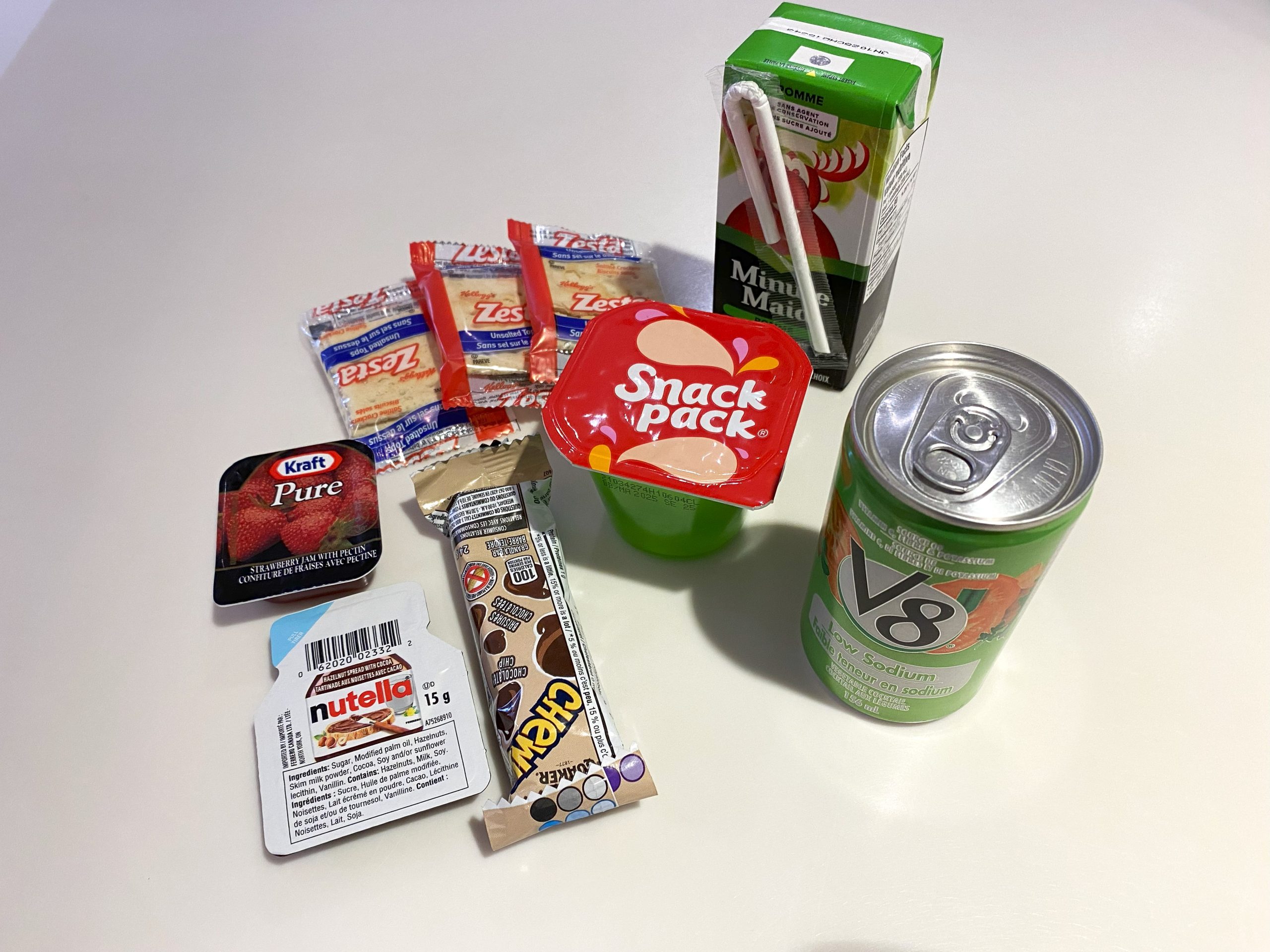
An afternoon snack kit
While we always want to provide nutritious options for our clients, these kits are packed with shelf stability in mind since many folks do not have access to storage spaces or refrigerators. Plus, for people sleeping rough, higher calorie intake is necessary if they cannot consistently eat throughout the day. Clients can enjoy perishable items like fruit during our weekday lunch service.
Snack kits were first distributed in response to the impact of the COVID-19 pandemic, with 20 morning kits and 20 afternoon kits allocated per day. Later, we increased availability to 30 kits each. In 2025, we are now assembling as many as we can in order to try and meet demand. We first began collecting data on snack kits in October 2024, where we distributed 1015 kits. This figure more than doubled in the following month, with 2517 kits given out in November. We saw our highest peak yet in May with 4324 snack kits given to clients and community members – equating to 139 per day. On average, 1 in 4 clients receiving snack kits self-reported experiencing a high or urgent need for food on our multiple resilience assessment tool (MRAT). At Casey House, we continue to make strides toward supporting our community. As food insecurity rates rise in the city, we are pushing food to the forefront as a priority to serve our people and develop meaningful connections founded on trust.
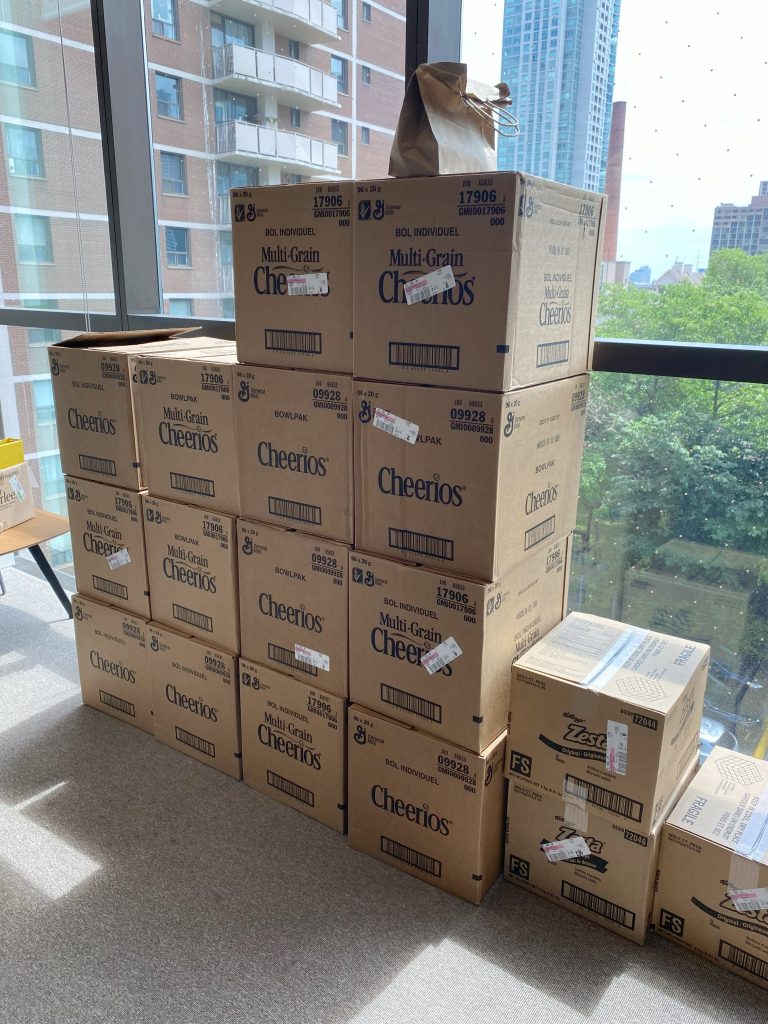
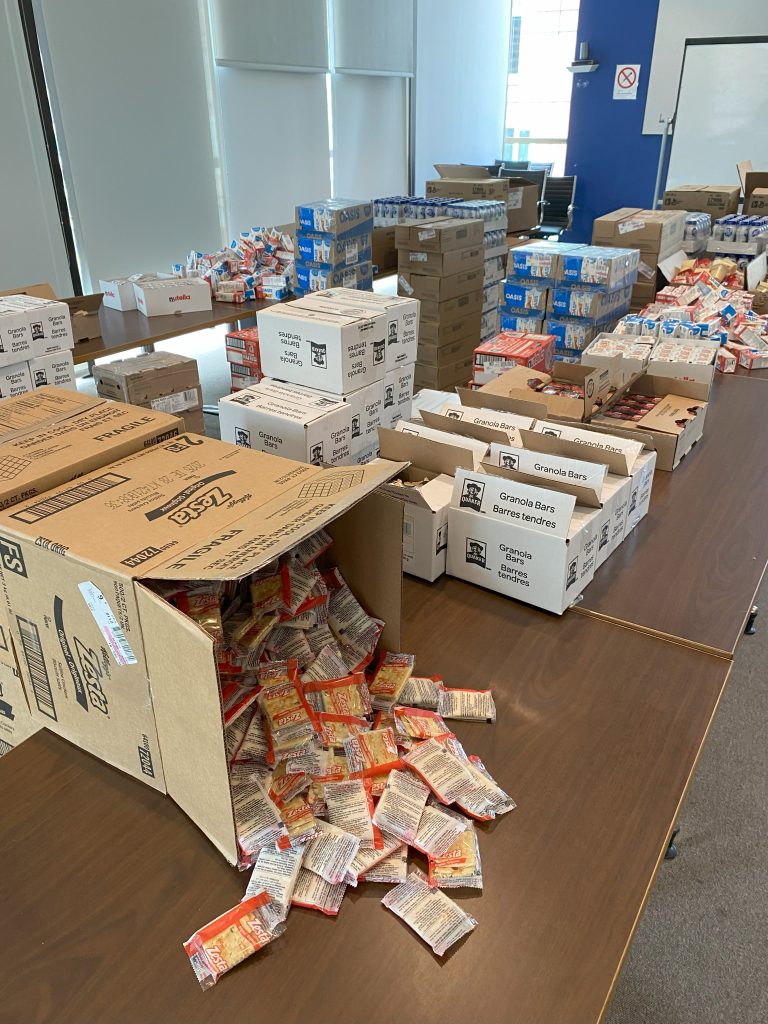
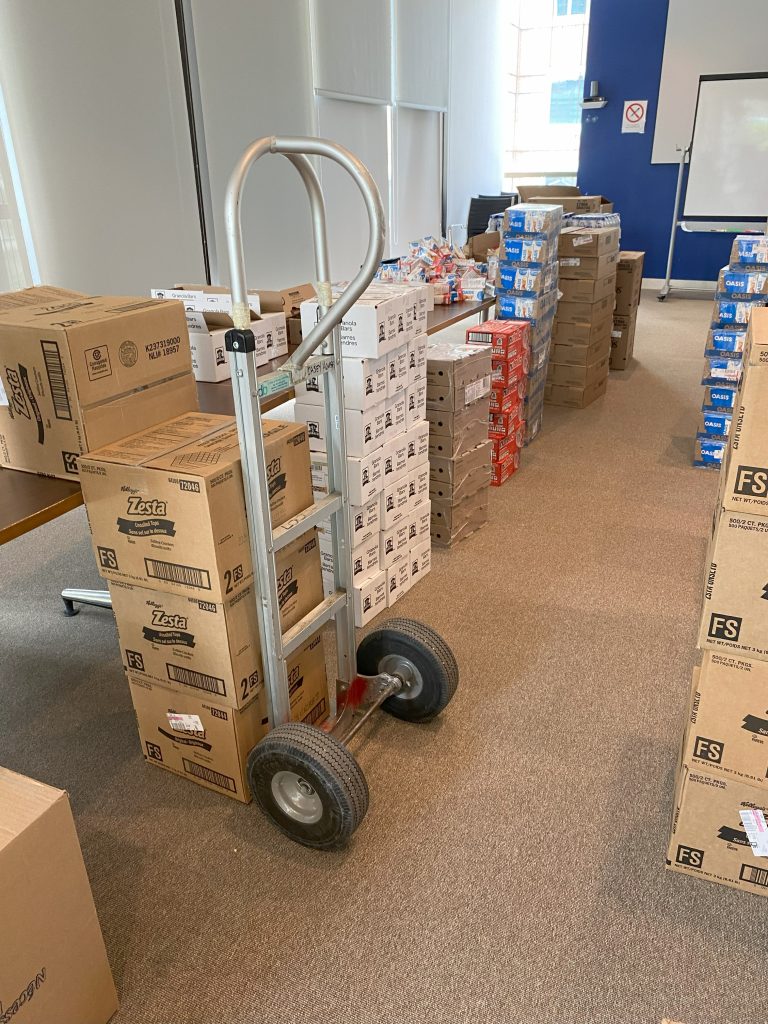
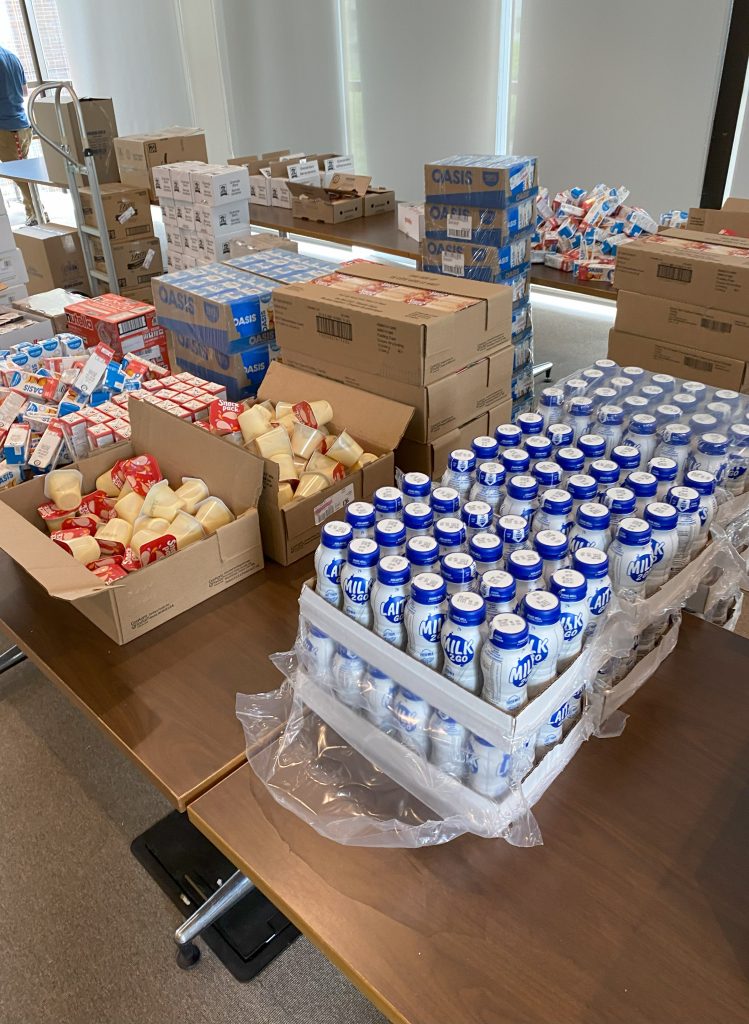
Supplies for an assembly session that produced more than one thousand snack kits
So what does it take to support an average of 2500 kits given out monthly? With about 7-8 items and additional cutlery, it is a massive undertaking to pack. Nevertheless, many hands make for light work, and that’s where we look to some incredible groups of volunteers to help.
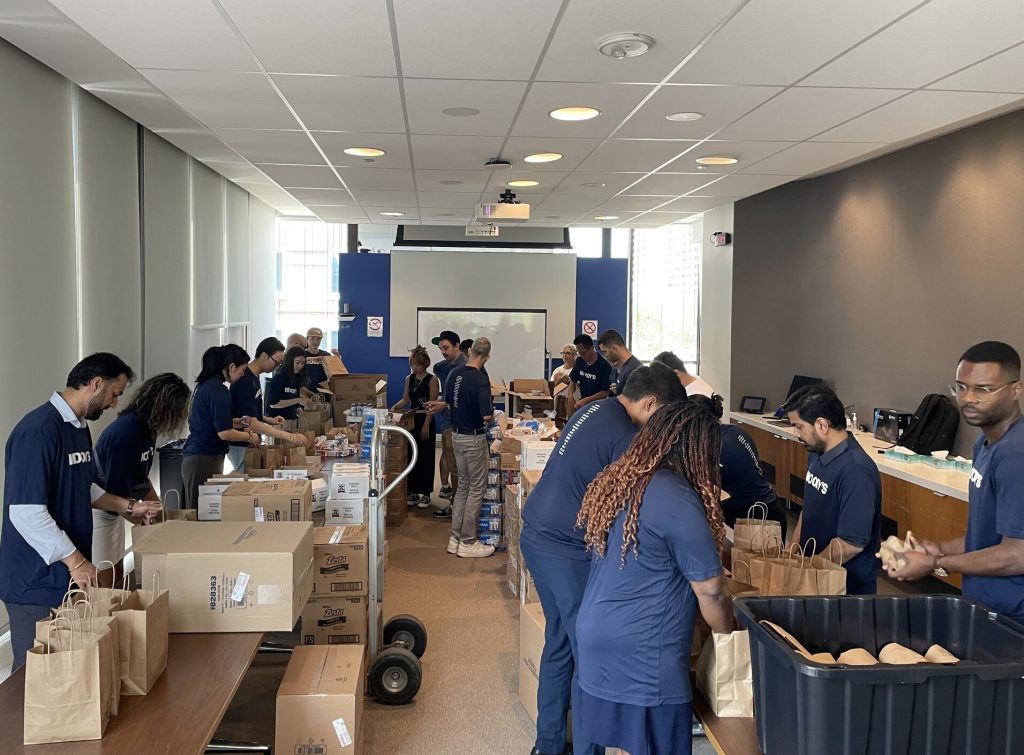
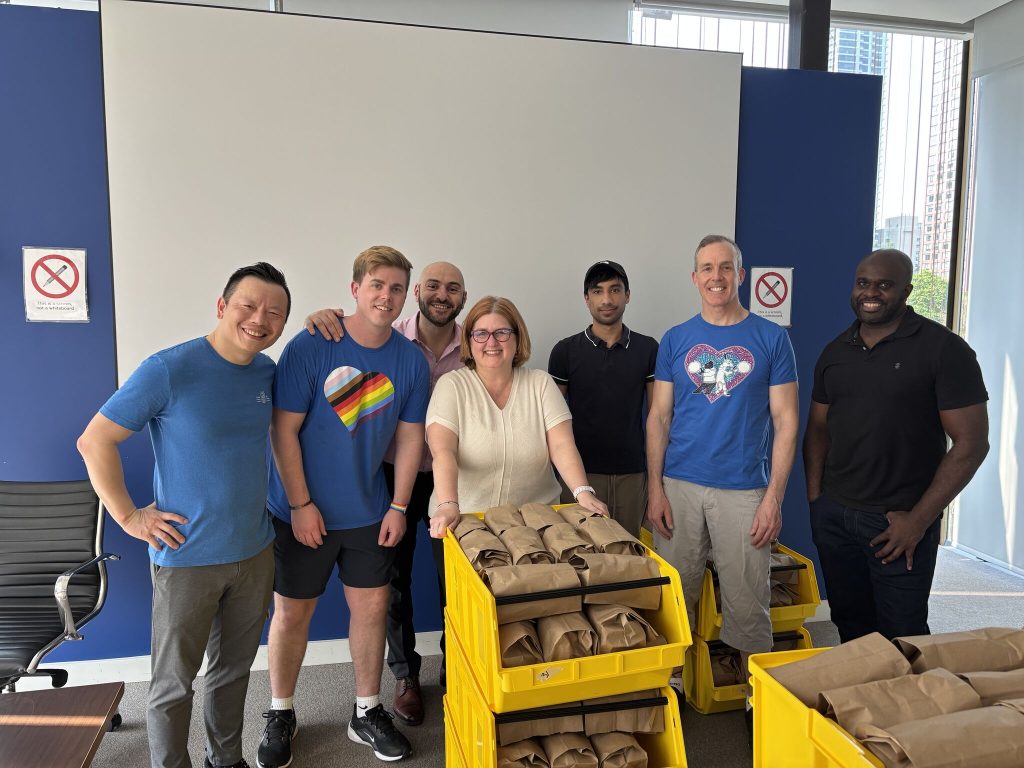
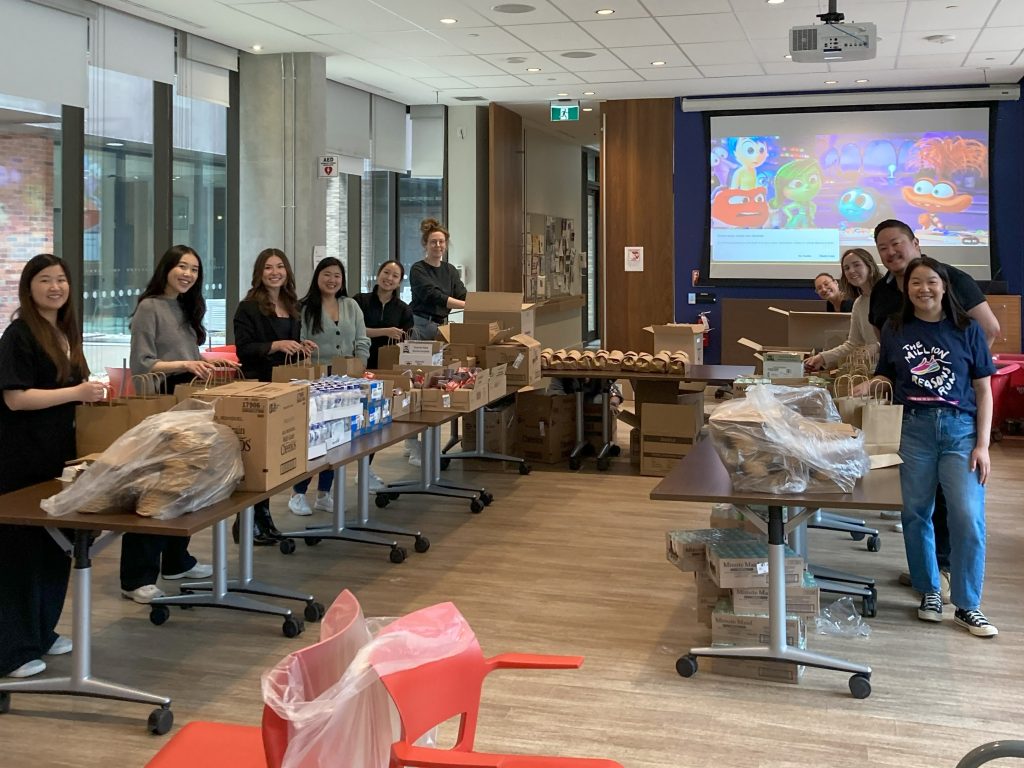
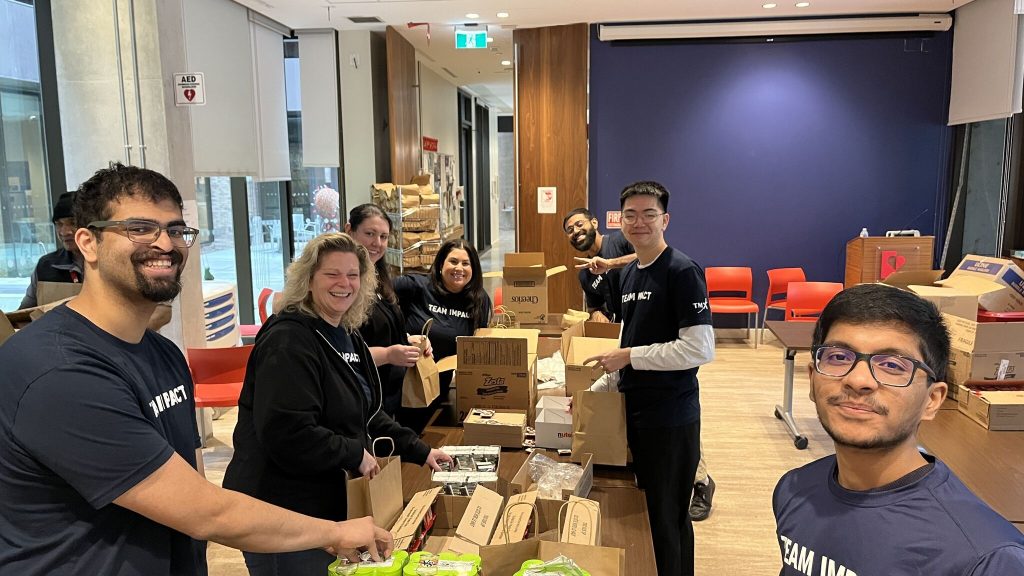
A few of our incredible corporate volunteer groups that have helped us assemble snack kits
Casey House is grateful for the many fantastic volunteer groups who come to spend an afternoon packing snack bags with us. These local champions rally their staff to donate their time to help our clients. While we don’t keep a formal ranking of which groups make the most kits, there have been many impressive showings that have produced thousands of newly packed snack bags in one session. Thank you to our wonderful corporate volunteers for bolstering our supplies!
Our snack bags encourage folks to nourish themselves and to enjoy a treat. When each day includes uncertainty about where your next meal is coming from, we hope that our kits can provide some fuel in their tank and some extra encouragement knowing that it was packed with love.
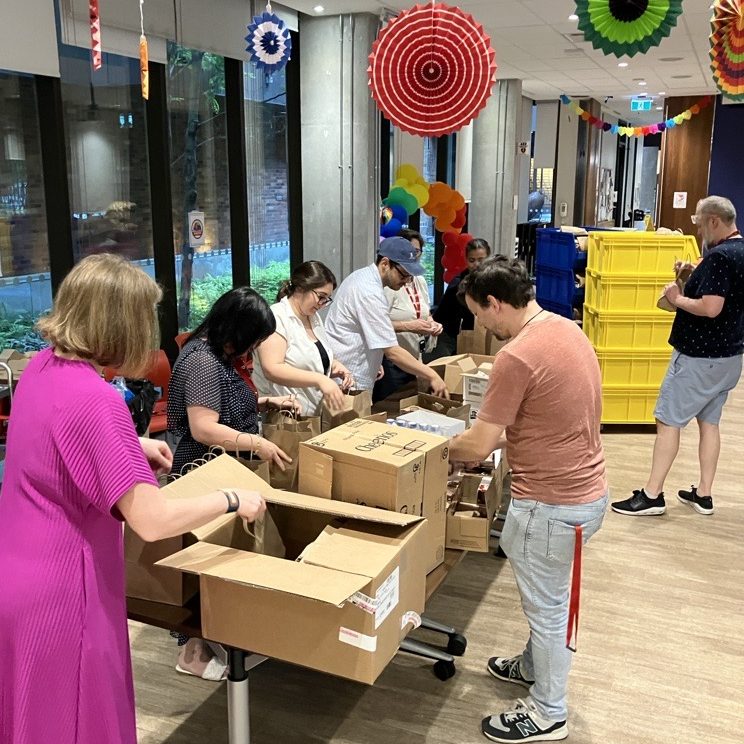
Our leadership team pitching in during a busy Pride season
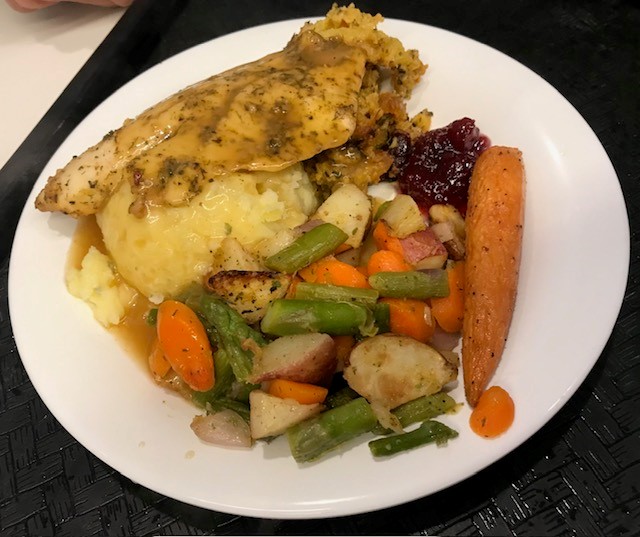
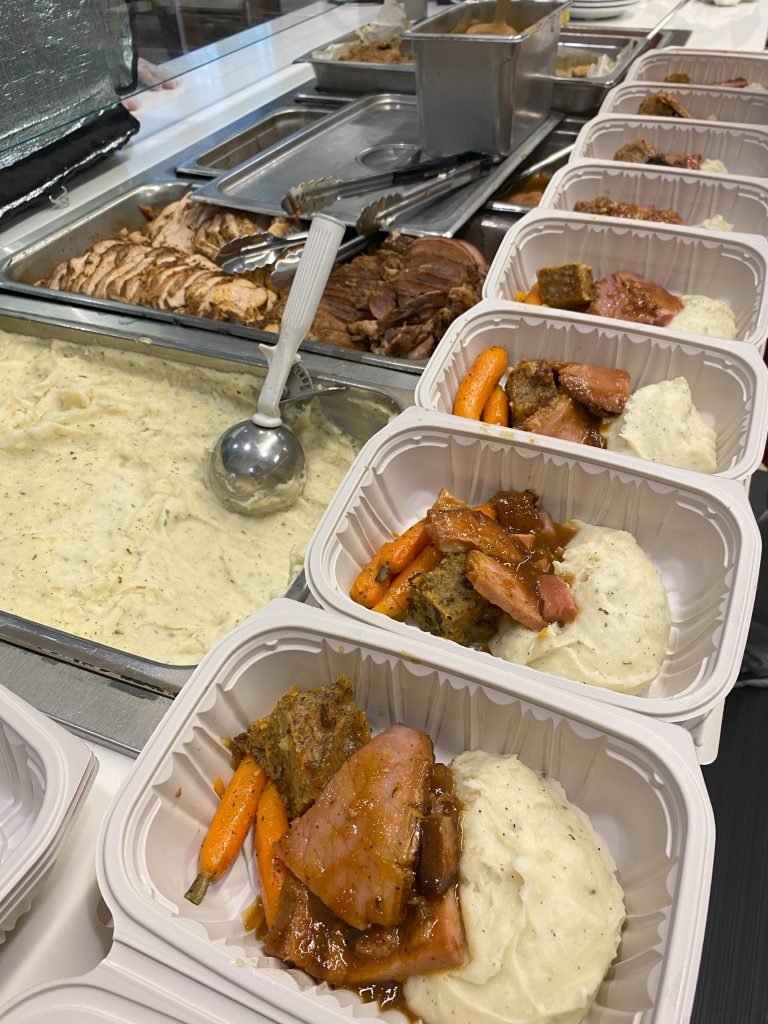
The lunch program is a pillar aspect of Casey House outpatient services that invites clients to enjoy a hot meal each weekday at noon. Each day there are two entrée options with a choice of fruit and juice. Clients can take their meal to-go with pre-packaged options distributed by volunteers or be served by our kitchen staff and eat in the dining room. For many, this will be their only hot meal of the day.
Food insecurity for our clients can manifest in many ways, such as when food was unavailable during the COVID-19 lockdowns, affordable ingredients being inaccessible, or even the inability to store food if their housing is unstable. With a foundational understanding of the tangible importance of a nutritious meal, we were able to expand our horizons and imagine a broader perspective of nourishment in a health care setting.
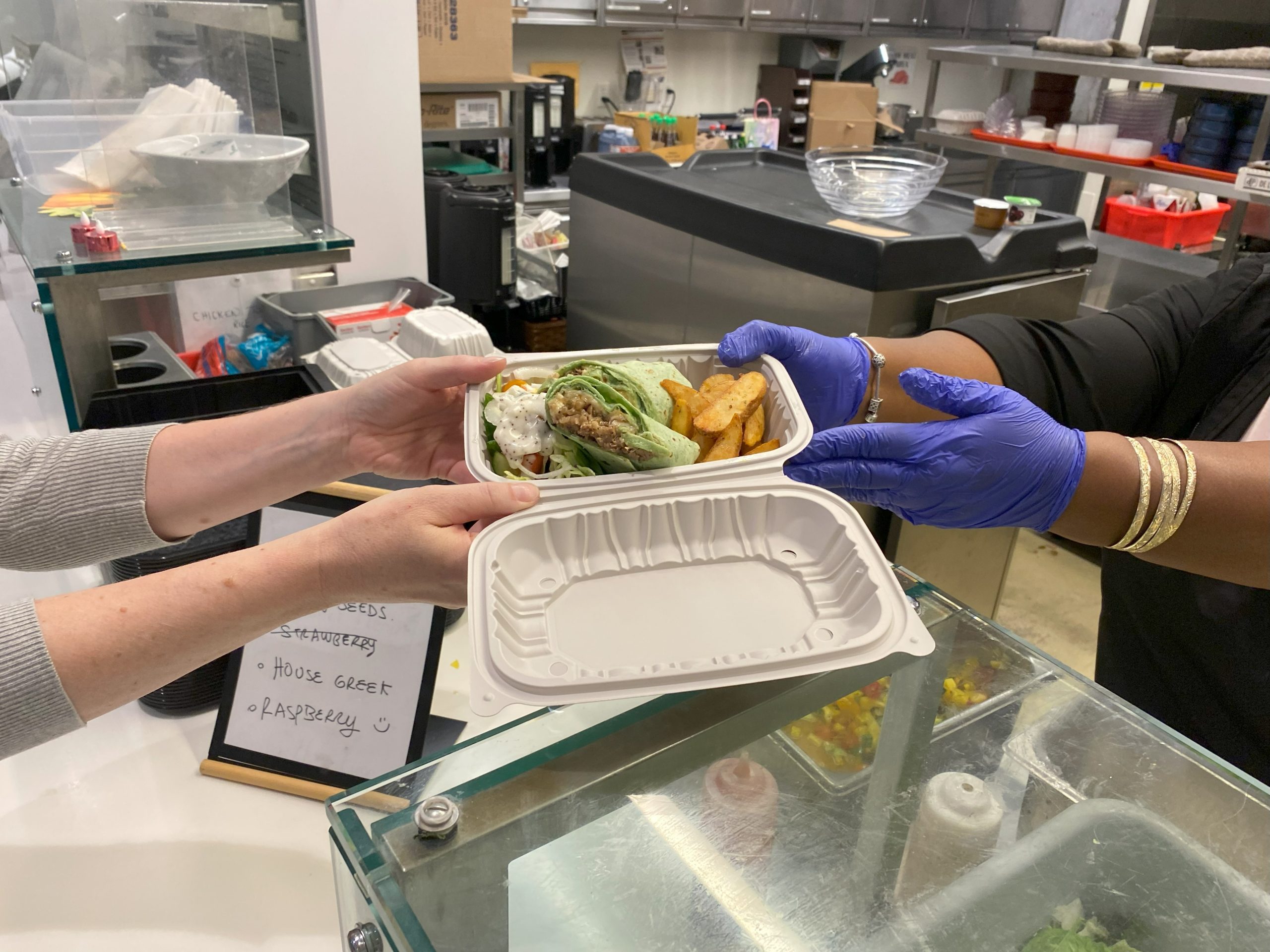
Casey House’s food philosophy
Our food philosophy includes four principles that are woven across our diverse programs and services:
- Food is sustenance.
- Food creates connections.
- Food builds trust.
- Food facilitates engagement
These concepts developed collaboratively by a cross-disciplinary group guided by our data knowledge and strategy team explore the relational threads that connect us through food. While everyone may not need a clinical service every day, they do need to eat. Providing food in a low-barrier environment creates an opportunity to build comfort, trust, and participation. If clients feel safe and supported enough to continually walk in and share a meal here, we wondered, ‘how can we bridge the connection into meaningful engagement with other outpatient services at Casey House so that they can thrive even further?’

Lunch service during holidays
Transforming lunch service
In 2024, with solid attendance for lunch, we sought to create an environment that fostered deeper client connections. First, the community’s need for food access has sharply increased post-pandemic. Even though lockdowns have passed, the impacts of newly acquired health conditions, housing instability, and economic/employment uncertainty are felt deeply by our community. Grounded by our existing principles of providing dignified service and client-centered design, the transformation was rigorously planned out over several months. We expanded our criteria for people eligible to access lunch to include people who are not yet registered as clients. With tremendous effort by our entire team, including the dedicated kitchen services crew, in May 2025 we lengthened our lunch service – extending it from one hour to two. Now, around 300 meals are served each day to registered and prospective clients. At Casey House, we believe that food is for everyone.
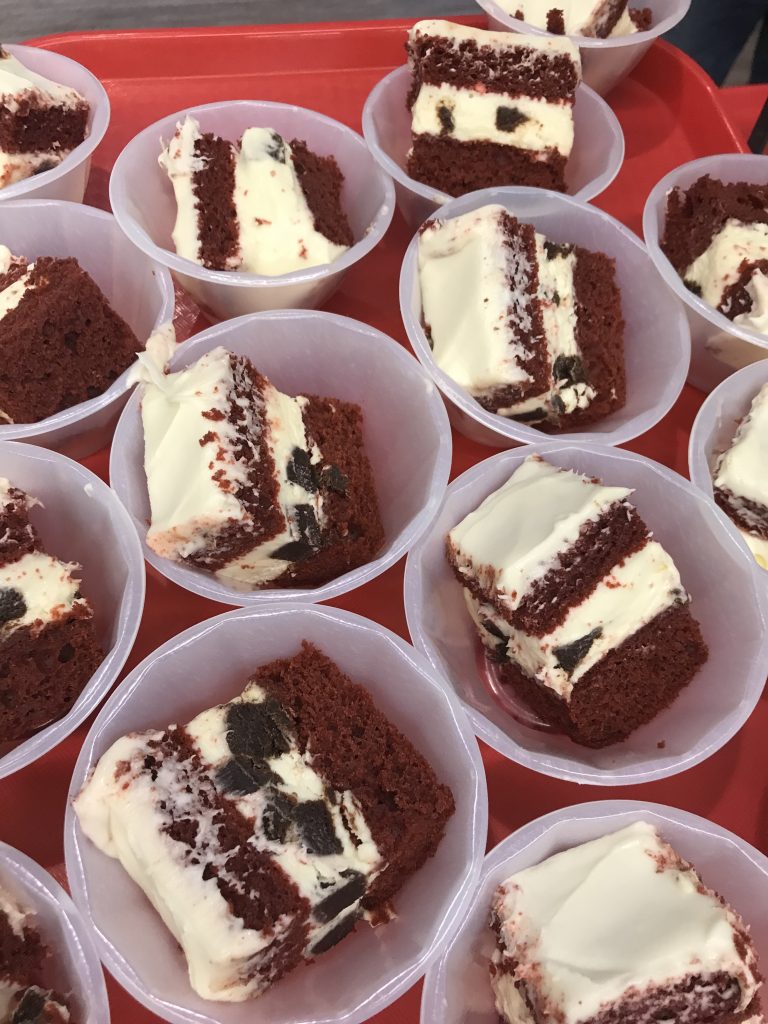
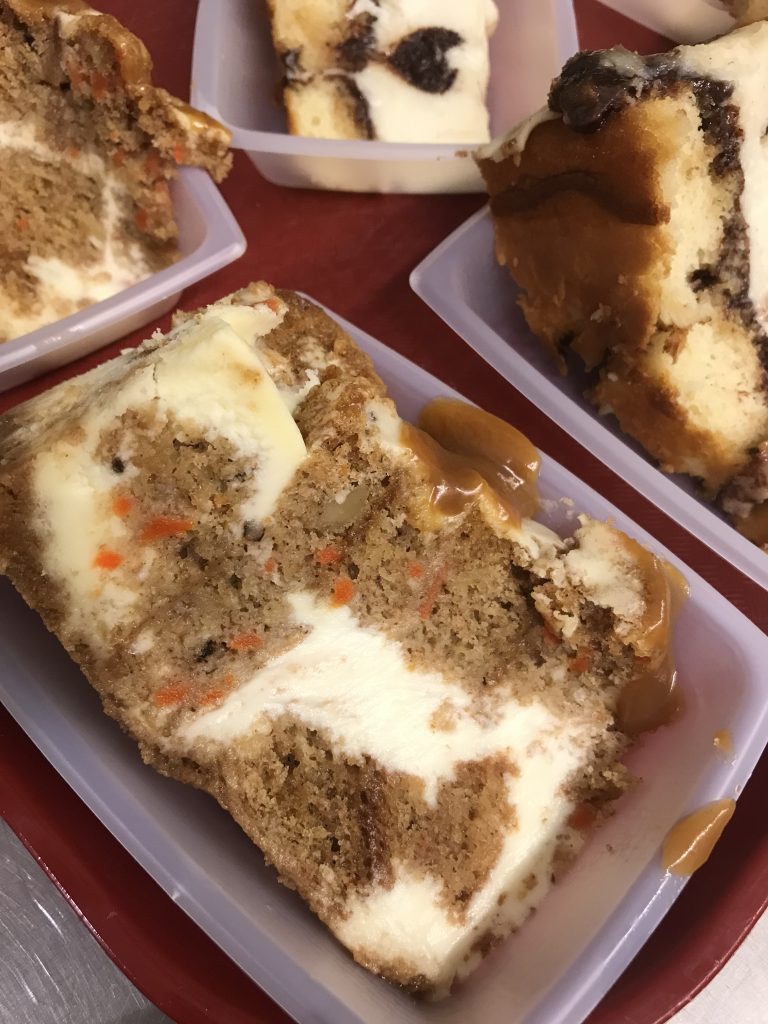
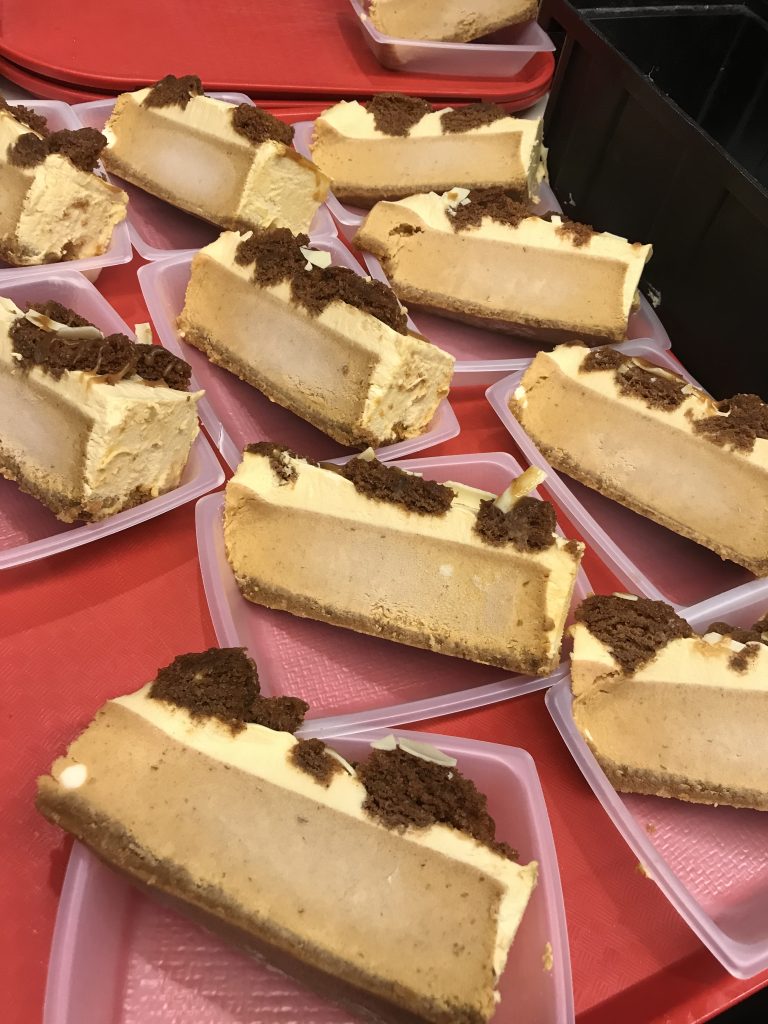
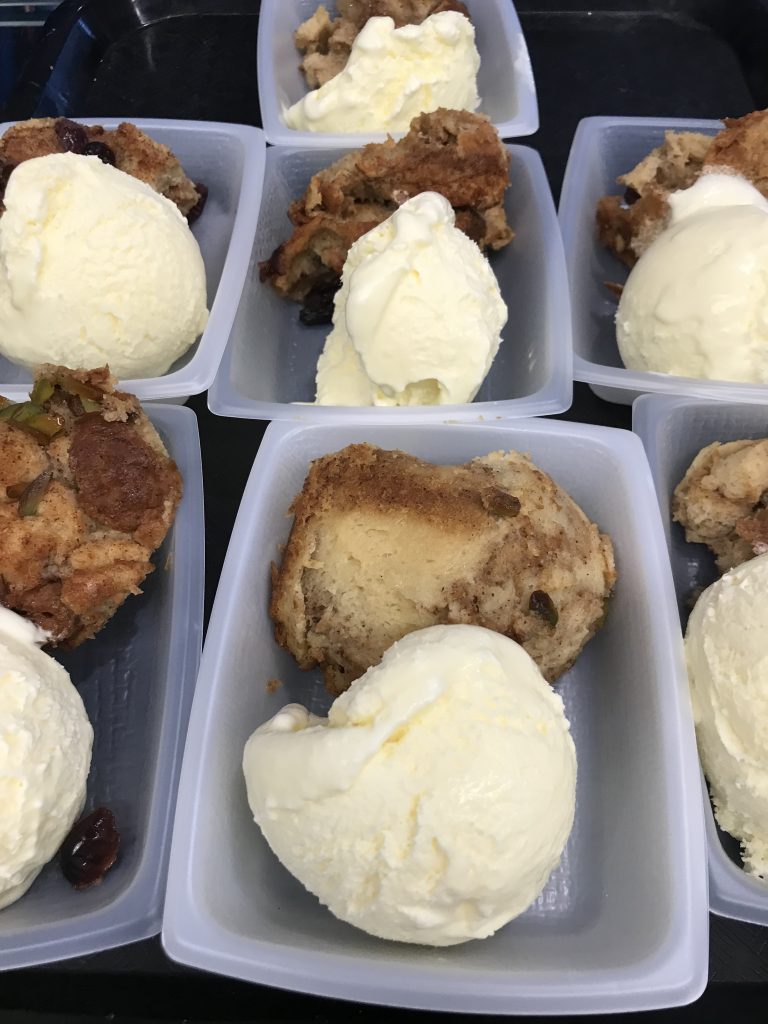
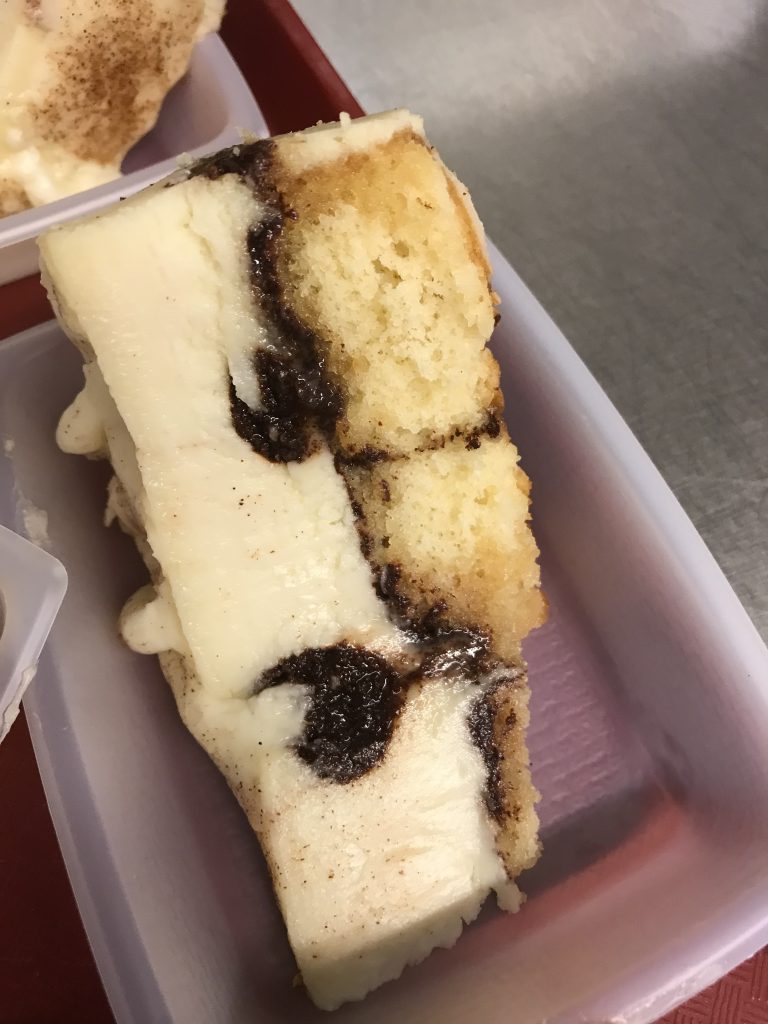
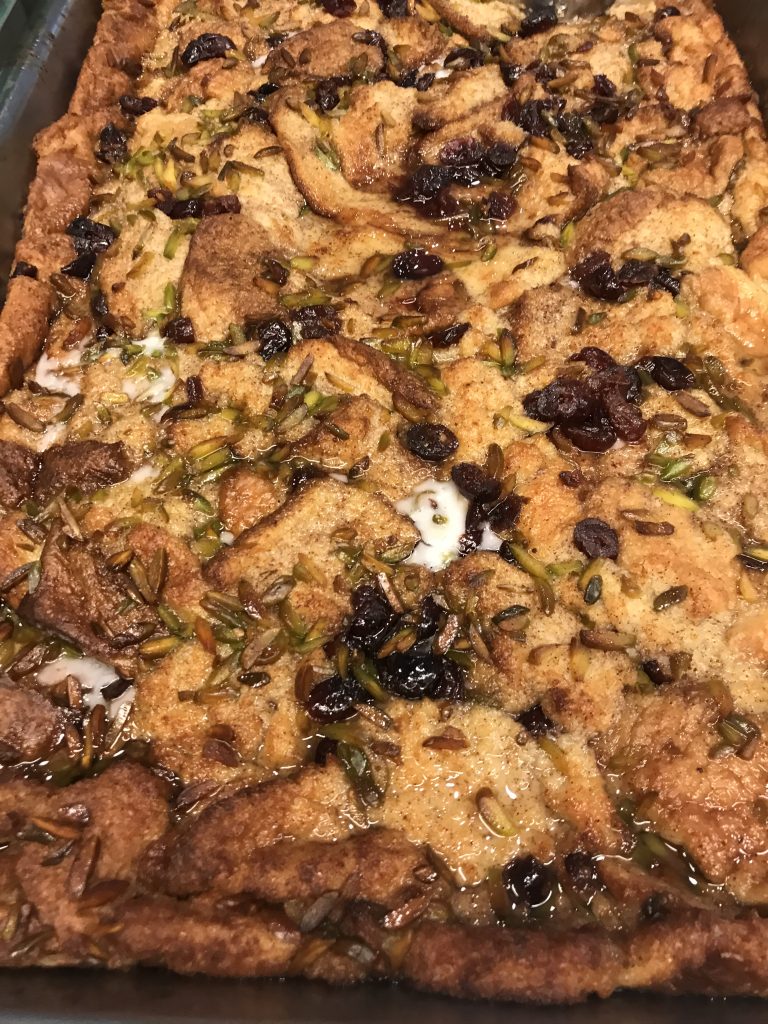
In-house baked desserts for special occasions
Beyond the food aspect of lunch, we want to ensure that folks walking through the doors at Casey House have an opportunity to connect with our amazing care team. Our peers (people with lived experience) play an important role as ambassadors who greet each client alongside our client support assistants. As welcoming hosts, peers are available to explain Casey House’s programs and services. They also host our new lobby refreshment area for anyone seeking more casual and chill conversation.
Our team of interdisciplinary clinicians take turns attending lunch to say hello to clients and make connections while dining alongside them. These are prime opportunities for clients to share updates on their health journeys, personal lives, or for clinicians to suggest booking an appointment with them. Lastly, one of the most notable adjustments with lunch is the recruitment of four new social service workers. These new team members are available each day to facilitate client registration, case management, and support existing and prospective clients at Casey House.
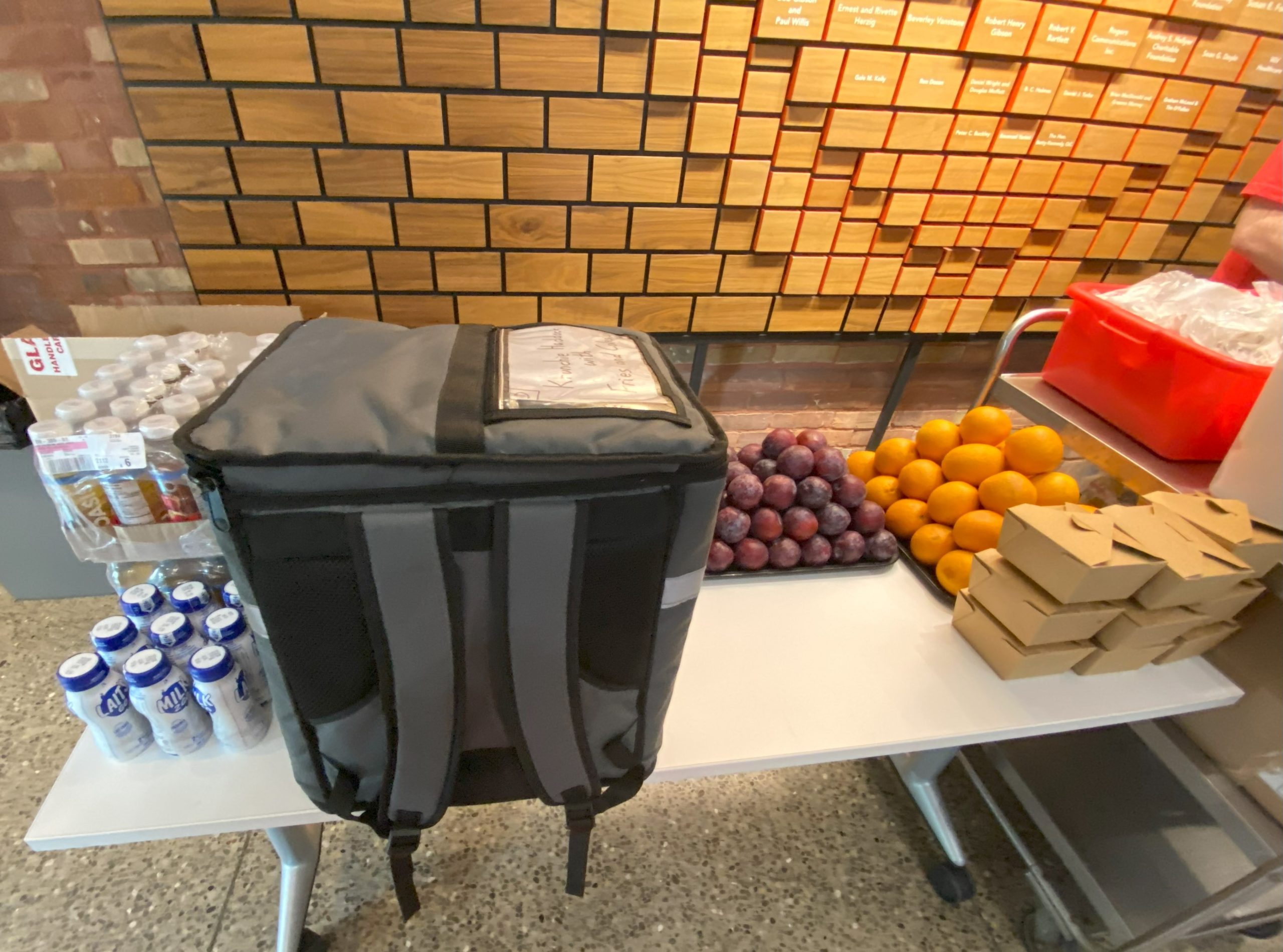
Take out lunch station
The feedback we receive from clients continues to guide us as we fine-tune adjustments to the new lunch service. Many clients have expressed gratitude for being able to access a hot, nutritious meal each day by our food services team.
From clients, we’ve heard:
“I never thought I would see the inside of this place”
“The quality of the lunch throughout the lunch program, literally worked to restore my dignity as a member of the gay community.”
“[Lunch] was lively and happy environment”
and even this 5-star review: “I feel very grateful thank you thank you thank you”
It is an honour and privilege to provide for our community members, and this could not be possible without the tireless work of our Casey House team. By sharing a meal together, we nourish and strengthen our relationships with others.
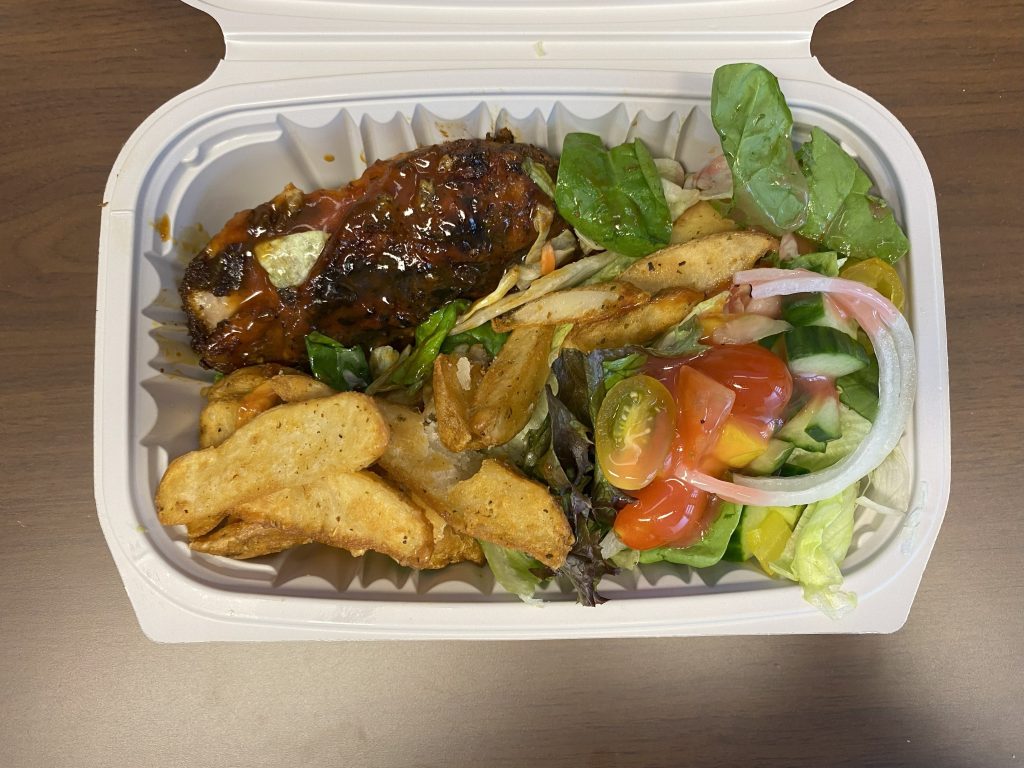
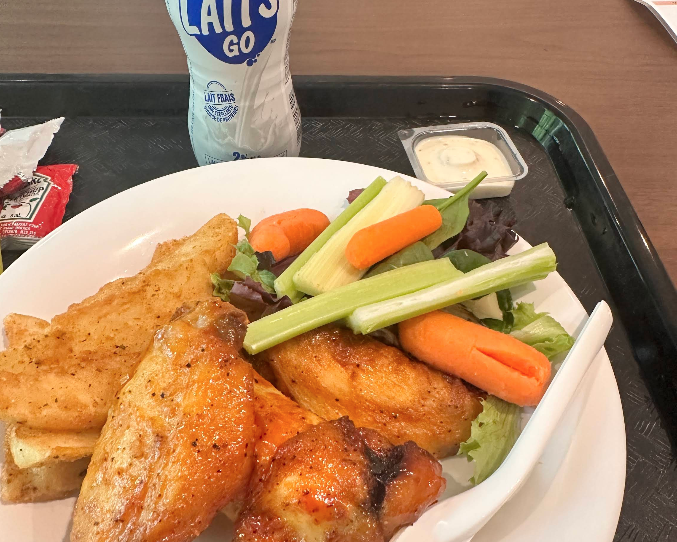
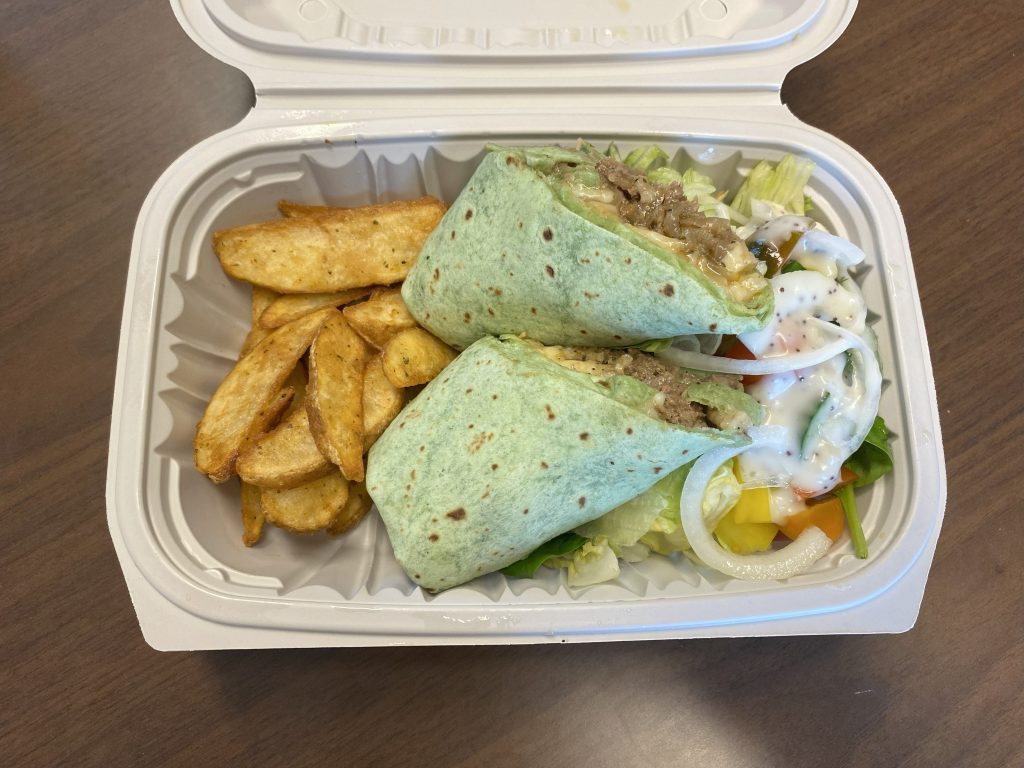

12 Stigmavir pills
Our Casey House Countdown looks back at 12 accomplishments we’re proud to have achieved this year before we spring into 2025. Casey House was delighted to make a splash with our HIV stigma campaign, Stigmavir.
With these 12 little pills and an ‘HIV stigma-free’ toolkit, we provided a glimpse of what it’s like to be a person living with HIV experiencing stigma in medical settings. This PSA was truly a feat only achievable through community, including people with lived experience, the creatives, and of course, and the brilliant minds that brought this idea from paper to reality.
If you haven’t already, visit smashstigma.ca to learn more about Stigmavir.
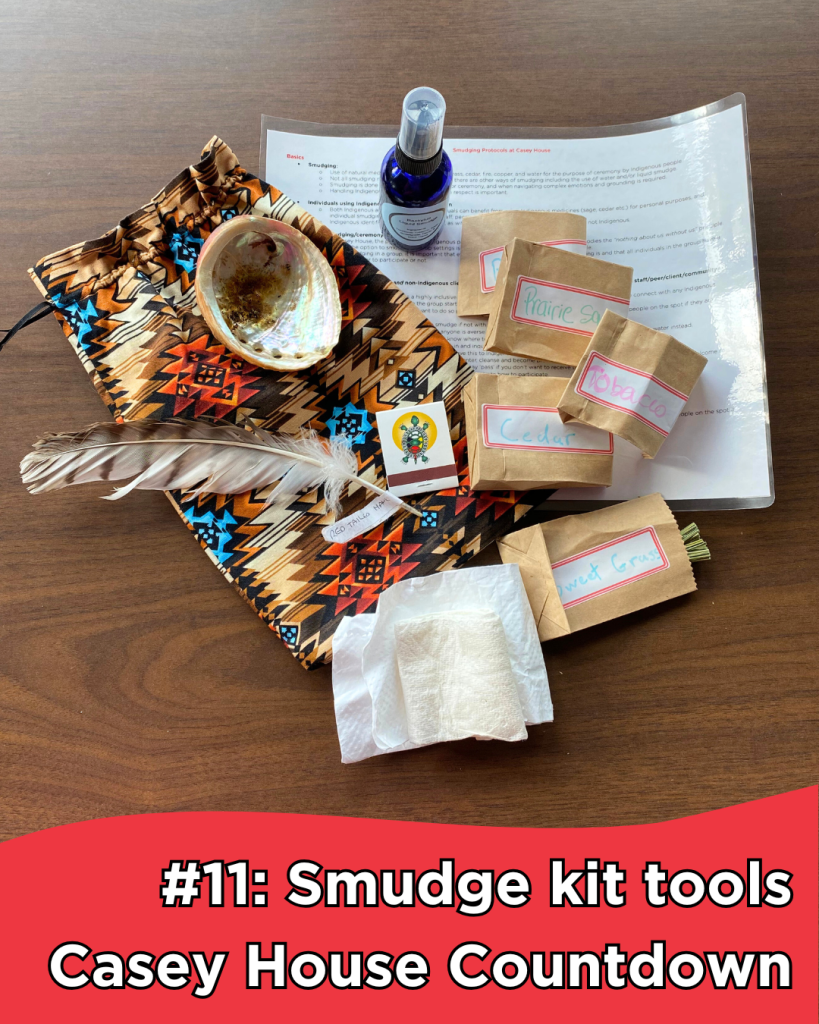
11 items included in the smudge kits
There are eleven components in the smudge kits found across multiple client spaces at Casey House: matches, an eagle feather, an abalone shell, paper towels, liquid smudge, prairie sage, tobacco, cedar, sweet grass, and a copy of instructions with several scenarios on how to facilitate smudging, all enclosed in an attractive cloth drawstring bag.
Providing smudging kits is one step to creating a more culturally affirming setting for health care in partnership with our Indigenous advisory committee. In addition to the instructions with each kit, staff were trained in the personal and cultural significance of smudging and the importance of making it available to everyone in the space. And for any sceptics, we can happily report that there have been no fire alarms set off since launching this initiative.
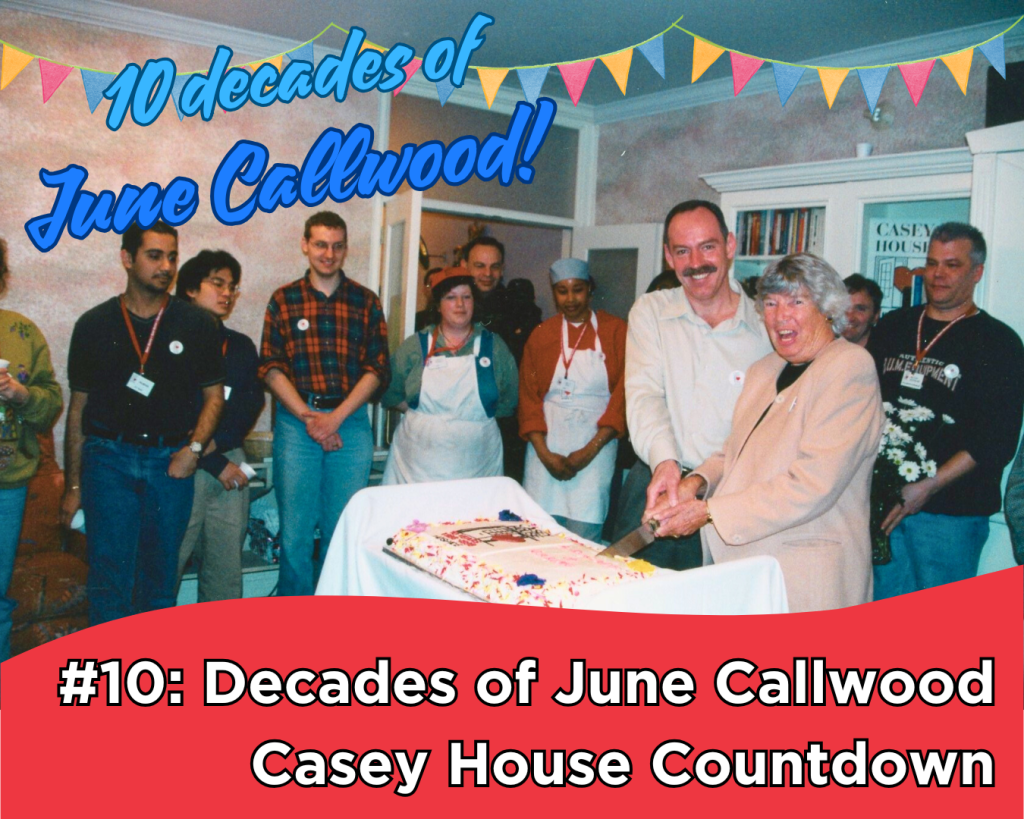
10 decades of June Callwood
Our intrepid lead founder June Callwood would have celebrated her 100th birthday this past June. Casey House began as a dream shared between a group of big-hearted volunteers; a place where everyone would receive the warmth and care that they deserved, no matter what circumstances they lived with. This spirit of love emanated throughout Casey House back then, and still does today through our incredible team of staff, volunteers, peers, and community. We are honoured to carry June Callwood’s torch, and continue her mission to fight against social injustice.
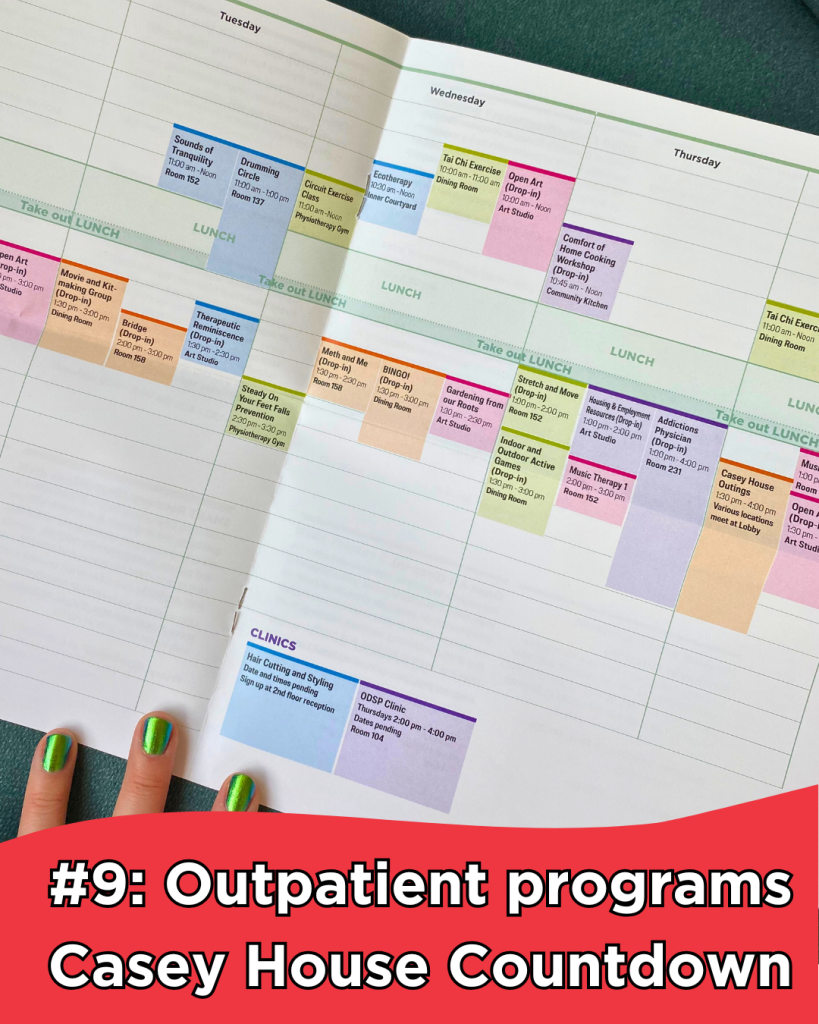
9 outpatient programs on a Wednesday
We’re pleased to offer eight outpatient groups, in addition to our midday lunch, that make Wednesdays a bit brighter! This past fall season, we had tai chi, open art drop-in, ecotherapy, circuit exercise class, then after lunch there was falls prevention, meth and me support group, bingo, and gardening. Our outpatient group programs are full of variety, from physical activities, social support groups, self-care and relaxation groups, life skills workshops, and creative activities. Our dedicated team of interdisciplinary facilitators support growth and connection for our clients every step of the way. Stay tuned for our 2025 winter programs calendar, coming soon!
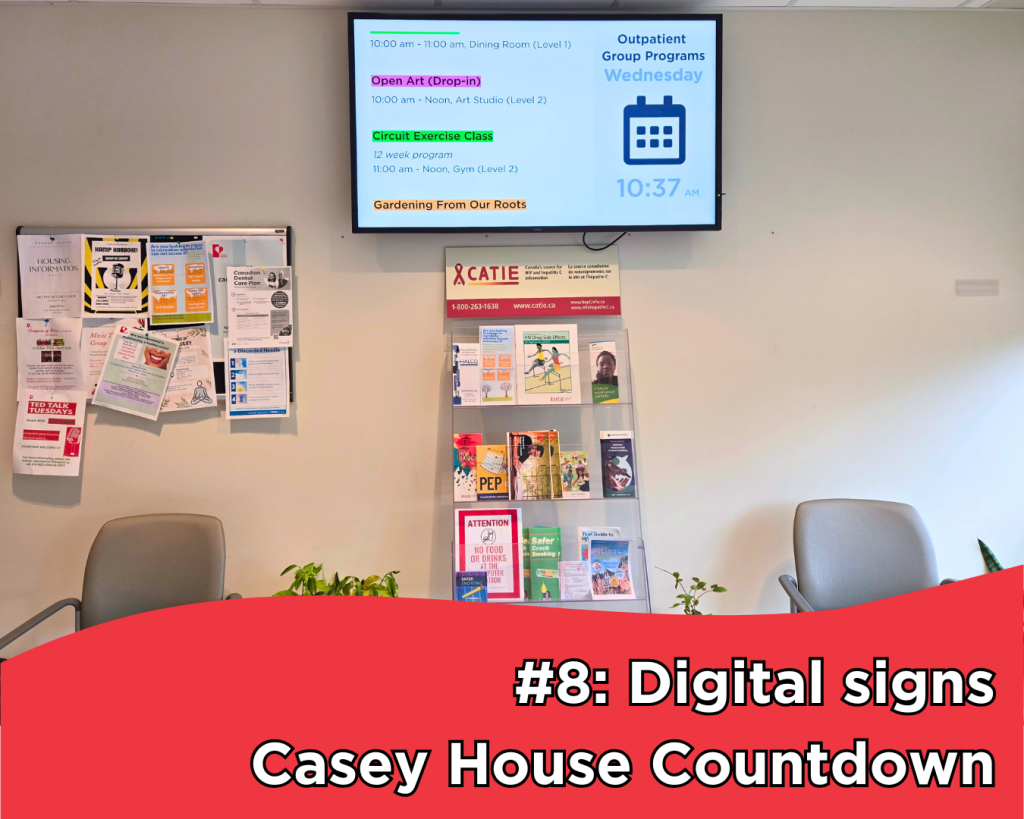
8 digital signs:
We’ve blasted into the 21st century with eight new digital signs located across the hospital. We make use of these revitalized displays to showcase programs, infection, prevention and control messaging, service disruptions, lovely images of the building as well as Casey House throwback photos. Waiting areas have never been so entertaining! We are always proud to share the amazing programs and services offered by our outpatient department, and encourage clients to get involved and drop in.
7 days left to get a tax receipt
Don’t miss out – your generosity can make a difference and provide you with a 2024 tax receipt.
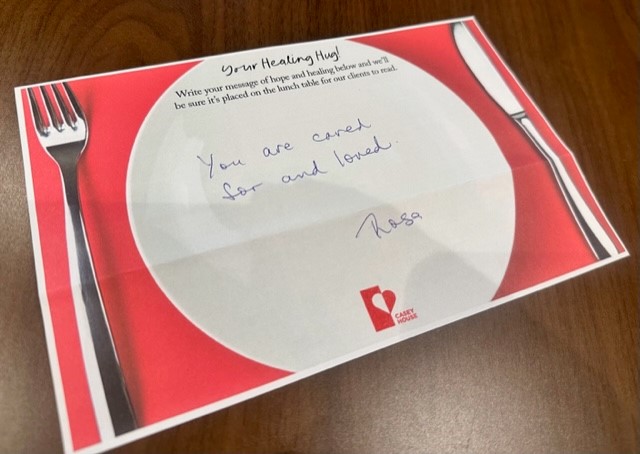
This winter, many people living with HIV will go without necessities. At Casey House, we have set up a special Care and Comfort Fund to provide essentials like warm meals, groceries, winter clothes, toiletries, and assistive devices. We call these gifts Healing Hugs, because they bring true comfort to people in need. Make this year count. Give a Healing Hug today, before the year runs out…
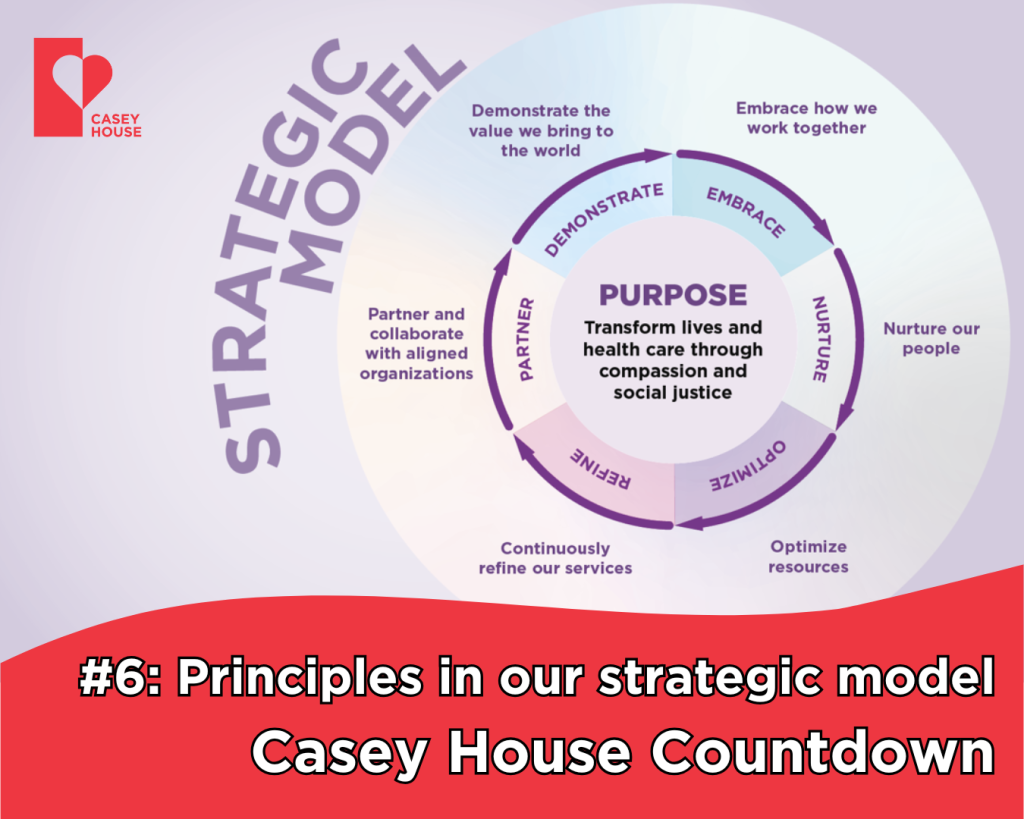
6 spokes on the core values
In the sixth spot, are the six principles in Casey House’s strategic model that guide our approach as a health care provider for people who have been systemically excluded from receiving care.
Embrace how we work together
Nurture our people
Optimize resources
Continuously Refine our services
Partner and collaborate with aligned organizations
Demonstrate the value we bring to the world
Each of these aspects are crucial to propelling us forward towards our core purpose, to transform lives and health care through compassion and social justice. To do this, we build relationships that enable people living with and at risk of HIV to access and engage in stigma-free health care.
5 Casey House Award Winners
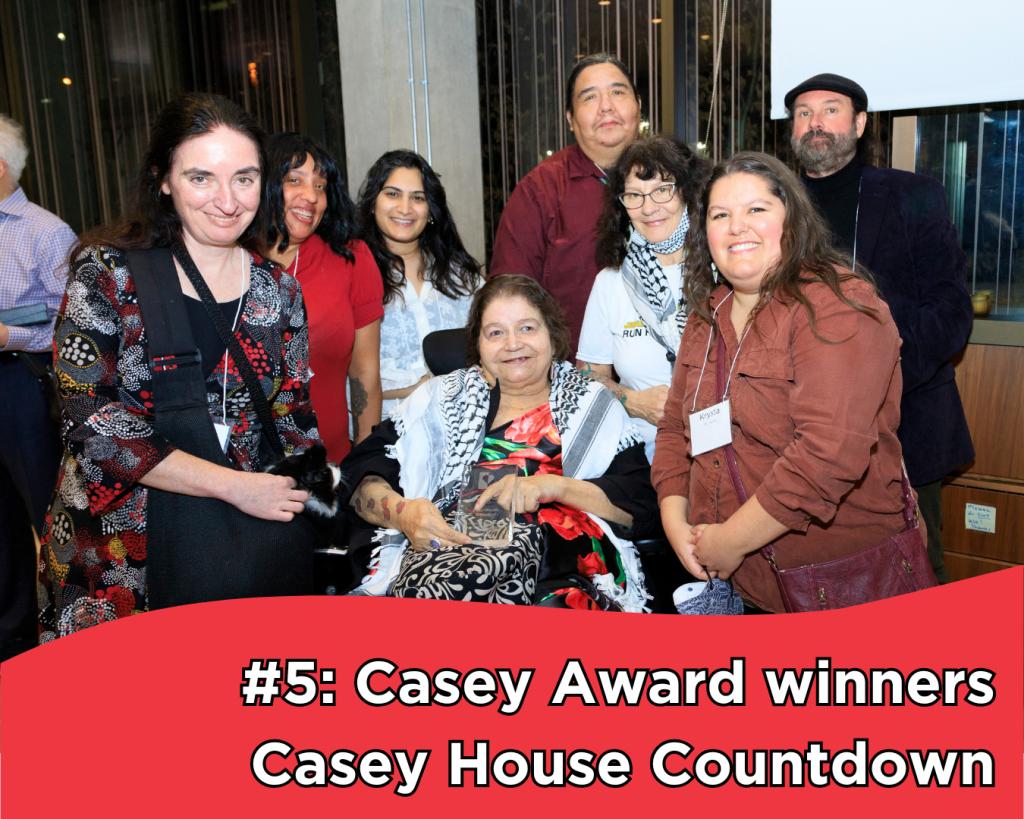
The Casey Awards annually celebrate individuals and organizations across Canada that demonstrate leadership in social justice and commitment to HIV/AIDS. The inaugural recipient, and inspiration, for the awards was June Callwood, one of the founders of Casey House.
In 2023, we honoured five recipients – Elder Wanda Whitebird, Blue Door Clinic. Positive Pregnancy Program (P3 Clinic), Gord Hamilton and TD Bank Group.
We admire and thank each of these recipients for their contribution to social justice for our community. To learn more about their impact, read about it through the link in our bio or on our website The Casey Awards.
4 Purposes of food in the Food Philosophy
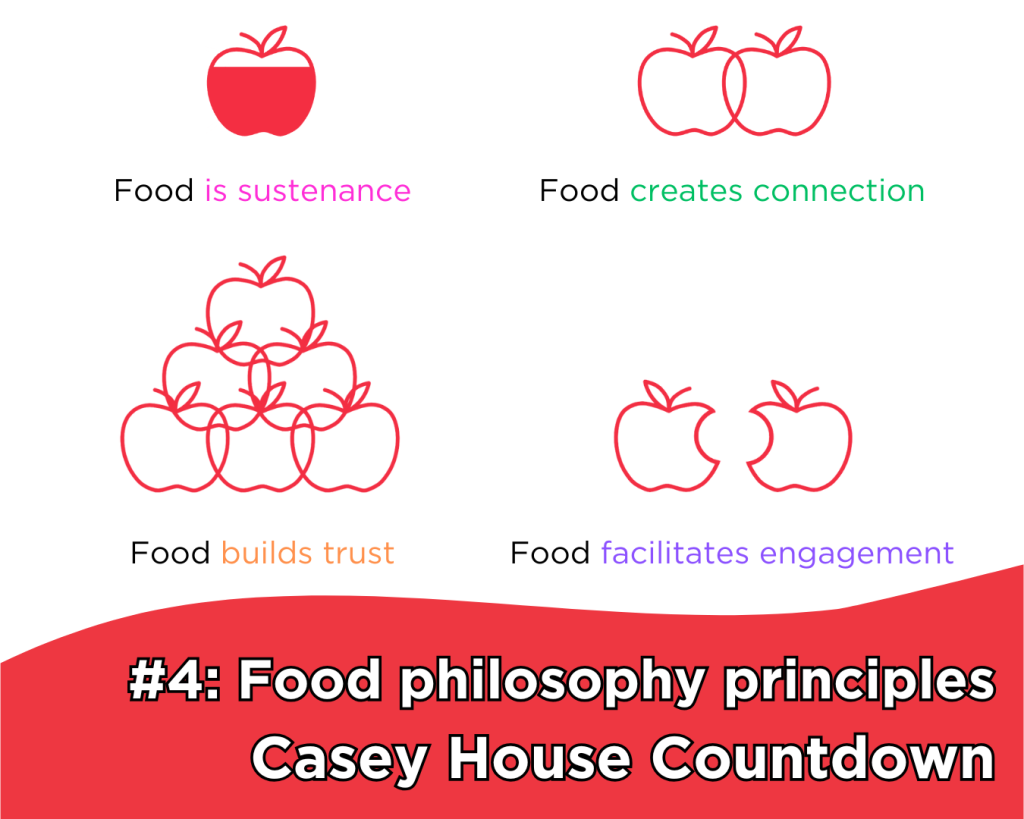
For our fourth spot in the Casey House countdown, is the four principles of our food philosophy.
Food is sustenance.
Food creates connections.
Food builds trust.
Food facilitates engagement.
These tenets expand upon the thought that food—not just nutrition– is part of holistic health. That’s why we’re proud to offer a hot midday lunch as part of our outpatient care. . In outpatient, we offer seasonal cooking workshops, which sometimes use foods grown from our very own rooftop garden, and we are working to add more food-related programs. Our kitchen crew is an essential part of our team here at Casey House. They work around the clock to plan meals for hundreds of clients, including a full day’s menu for our inpatient clients. As an essential vessel for connection, you cannot understate the importance of food. We’re excited to present our new approaches to food for clients in the new year.
3 days a week for Blue Door Clinic
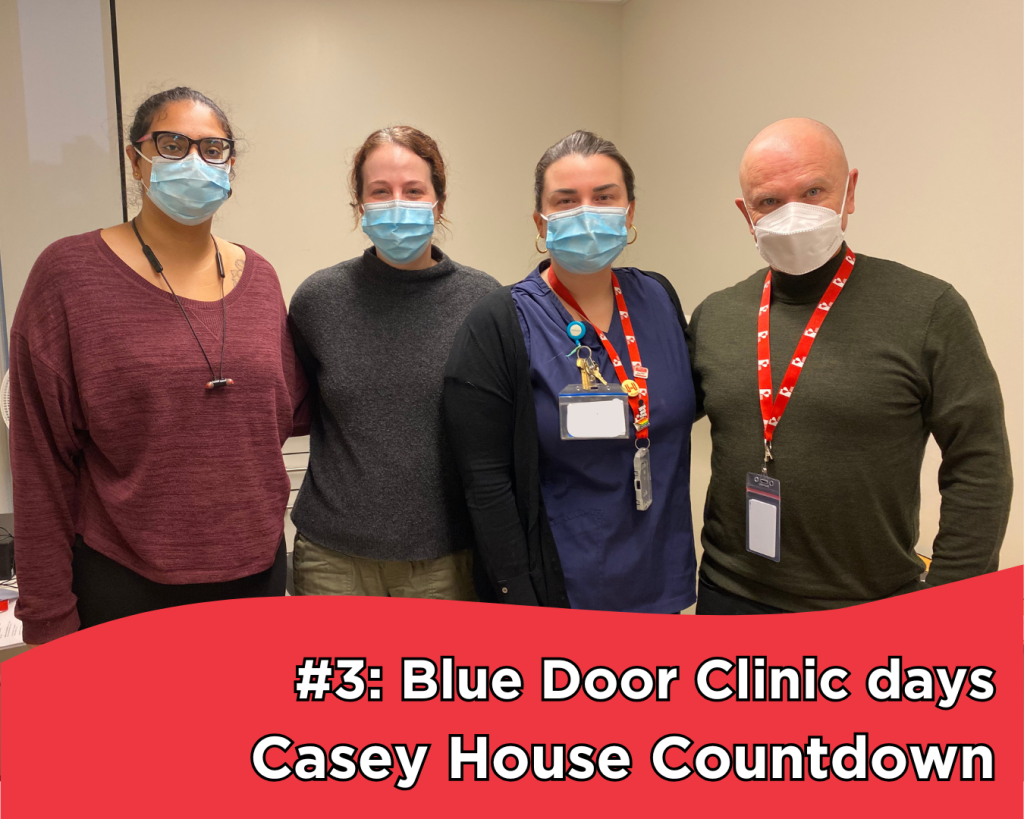
Blue Door Clinic is a program hosted at Casey House provides interim health care and social supports for uninsured/ precariously insured people living with HIV in the greater Toronto area. Care is provided collaboratively by community partners contributing their time and expertise in-kind. Our care team includes physicians, nurse practitioners, nurses, case managers and peer support workers. Blue Door Clinic services can be accessed on Mondays, Wednesdays, and Thursdays.
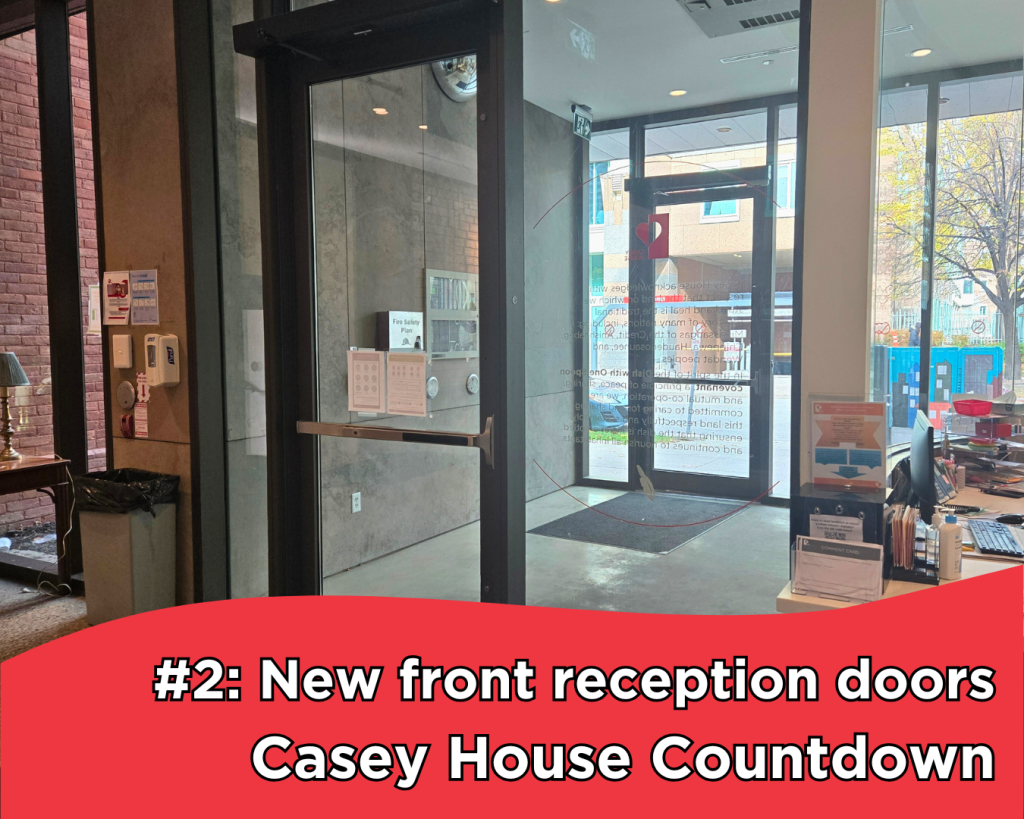
2 new doors
We’re walking 2024 right out the door… two doors actually! We debuted our newly renovated front reception area at our main entrance earlier this year. In addition to providing a more accessible and inviting space for passage, we also included a new land acknowledgement right at the entrance. This message was created in collaboration with our Indigenous advisory committee, and we later celebrated its reveal in a ceremony together with community. We hope that all community members feel welcomed when they set foot through our door(s)!

1 new event, David’s Disco
In March 2024, we kicked off our very first David’s Disco fundraising event, and what a night it was! With your incredible support, we raised over $335,000 to ensure that people living and at risk of HIV receive the care, dignity, and support they deserve.
This event was inspired by the life of David Shannon, a passionate activist, journalist who passed away at Casey House in 2018.He was a fierce advocate for the 2SLGBTQIA+ community and used his powerful voice for change – speaking out against discrimination of those living with HIV.