
David (left) and award accepted by David’s family (right)
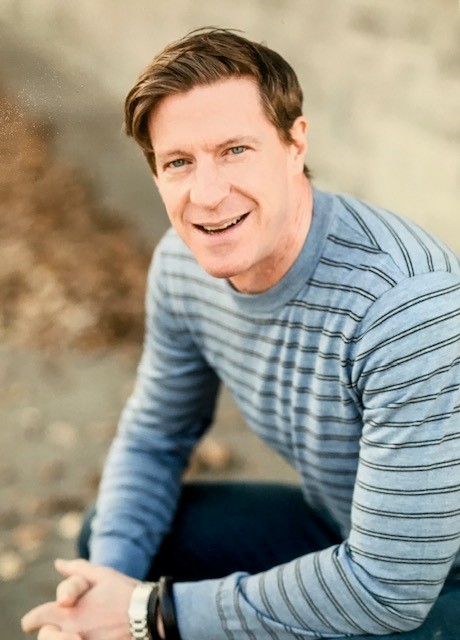
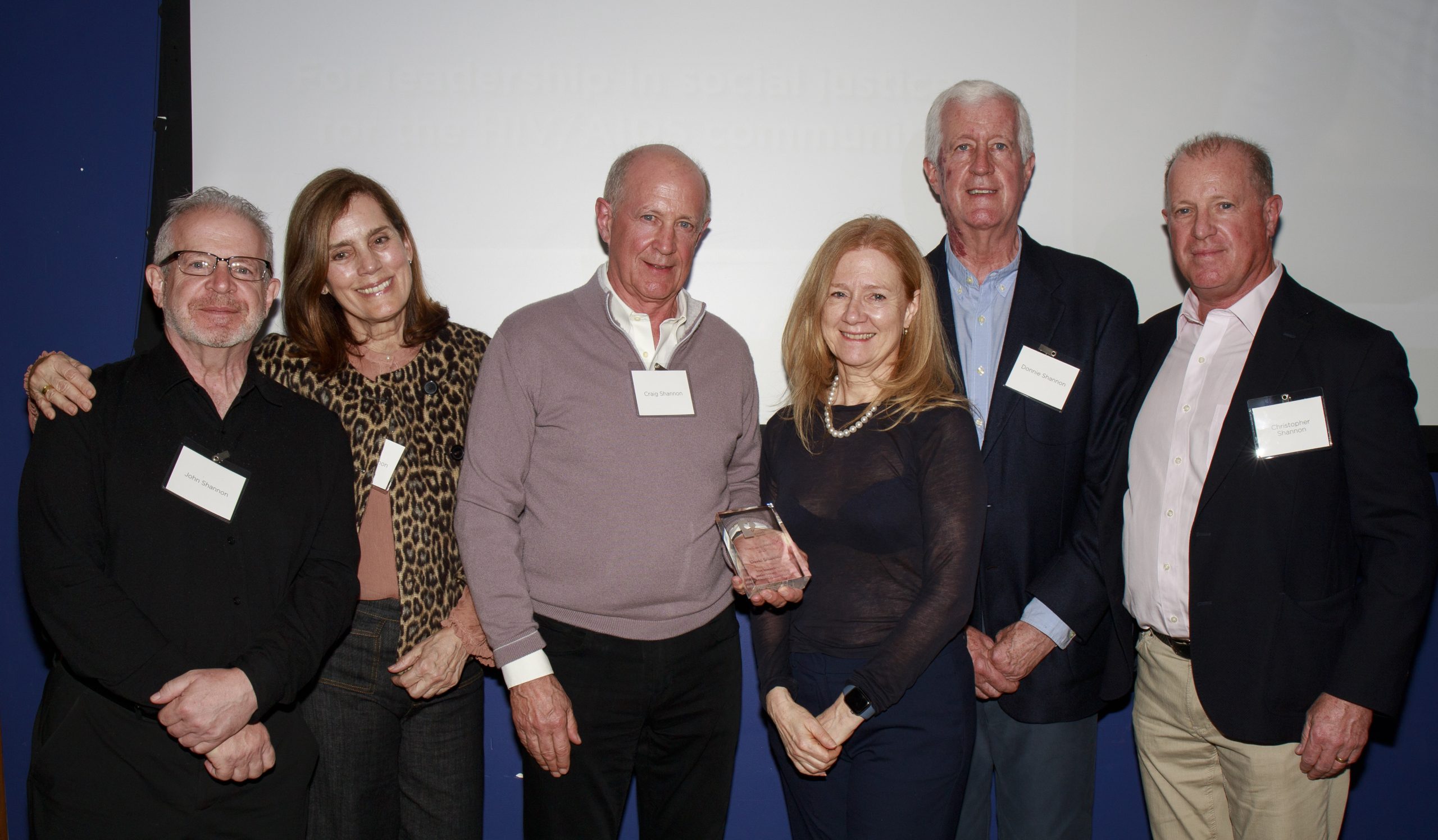
David Shannon honoured with award for leadership in social justice for the HIV/AIDS community
David Shannon is being recognized with a Casey Award posthumously for leadership in social justice for the HIV/AIDS community. An activist and journalist based in Montreal and later Toronto, David lived with HIV and died at the age of 55 in 2018.
His eldest brother Craig describes David as someone who was complex, smart, a person with strong opinions, and someone capable of giving and inspiring joy. In his twenties, David won hearts with his exuberant and witty representation of gay life in his column Out in the city in the Montreal Mirror and the Homo Show on McGill University radio.
As David experienced the terrible losses of the AIDS epidemic, including the death of his best friend, he became an articulate and passionate leader for the gay community. He spoke against the hostility of the police and the seeming indifference of the wider world. David also combatted the loneliness of people living with HIV by co-founding AIDS Community Care Montreal (ACCM) and as an AIDS-buddy comforting strangers facing the end of life.
He joined CBC Radio in 1991, where he covered important HIV/AIDS stories and contributed to the public’s understanding of the pandemic’s social and political dynamics. David Shannon’s impact extended beyond Montreal, as he continued his advocacy work in London, England, and later in Toronto. His dedication to the LGBTQ+ and AIDS communities remained unwavering, and he left an indelible mark on all those who had the privilege of working with him.
While they personally witnessed his skill and compassion providing palliative care for his mother in the late ‘90s, his family only learned after he passed away that he had previously personally cared for over 50 people with AIDS at end-of-life at a time before treatments were available for HIV.
In 2018, his family learned about Casey House when David told them that he wanted to spend his last days in its care. Craig recounts that it gave David enormous peace of mind knowing he could come here to die.
His family were inspired to return to Casey House after his death to discuss ways to give back. They became the founding and lead volunteers for what became David’s Disco, an enormously successful fundraiser that the whole family is part of organizing and supporting.
Says Craig, “David died, but his inspiration hasn’t.” The family and friends David left behind are continuing his legacy and ensuring that the kind of health care he received continues to be available to others, whenever they might need it.
Casey House extends warm congratulations to David Shannon’s family as we celebrate him with a Casey Award.
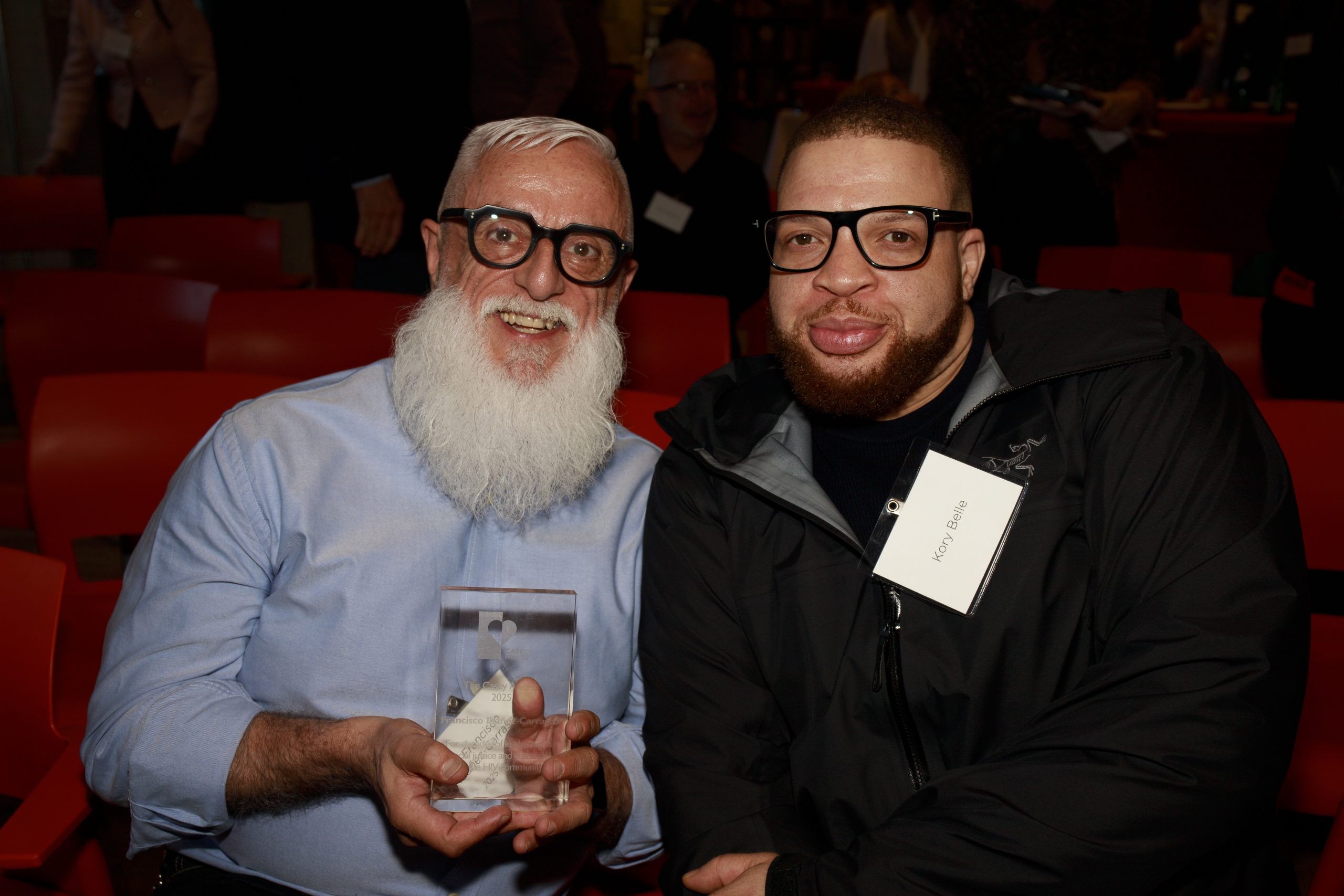
Francisco Ibáñez-Carrasco honoured with award for exceptional leadership for the HIV/AIDS community
Francisco Ibáñez-Carrasco is being recognized for decades of exceptional leadership in the HIV/AIDS community.
As a person living with HIV, Francisco has been a part of the Canadian HIV movement since 1989. His participation as an advocate, community leader, and researcher has spanned across five decades and between two provinces. He adds this Casey Award alongside a King Charles III Coronation Medal, CAHR Red Ribbon Award, and the Elisse Zack Award for his work in HIV research and community health.
Francisco began his public health career in Vancouver shortly after his HIV diagnosis. Here, he completed a PhD in education at Simon Fraser University, worked at Positive Living BC, and served on the board of directors of AIDS Vancouver. Upon moving to Toronto in 2012, he became director of education and training at Ontario HIV Treatment Network and coordinated community-led projects including research, panel discussions, and educational videos. His skills and compassion for others left a lasting impression on his colleagues and community members.
During the COVID-19 pandemic lockdowns, Francisco was invited to join the University of Toronto’s Dalla Lana School of Public Health as a lecturer and later an assistant professor. Subjects of his research include rehabilitation in the context of long-term HIV, how to lead community-led research, supporting peer-integrated research, HIV and cognition, impacts of HIV stigma, and more. Concurrently, he contributed for Universities Without Borders, Realize Canada, the Community-Based Research Centre, the Canadian Association for HIV Research, and worked closely with local agencies to address health inequities.
Across the breadth of his research, Francisco has maintained strong relationships uplifting people with lived HIV experience, 2SLGBTQ+ youth, and fellow academic colleagues. Francisco aims to break down barriers between people with lived experience and the academic institutions. His graciousness in the research process empowers marginalized populations to build agency as subject matter experts with valued experiences.
Presently, Francisco continues to teach at Dalla Lana while mentoring students and leading research projects. Furthermore, he is a member of the CIHR HIV/AIDS and STBBI Research Advisory Committee, which guides CIHR on the implementation of HIV/AIDS and STBBI research in Canada.
Casey House is thankful to have had Francisco as a peer chef during Casey House’s first ever June’s HIV+ Eatery in 2017. His lengthy and ongoing career driven by his dedication with community is admirable. We extend warm congratulations to Francisco Ibáñez-Carrasco as we celebrate him with a Casey Award.
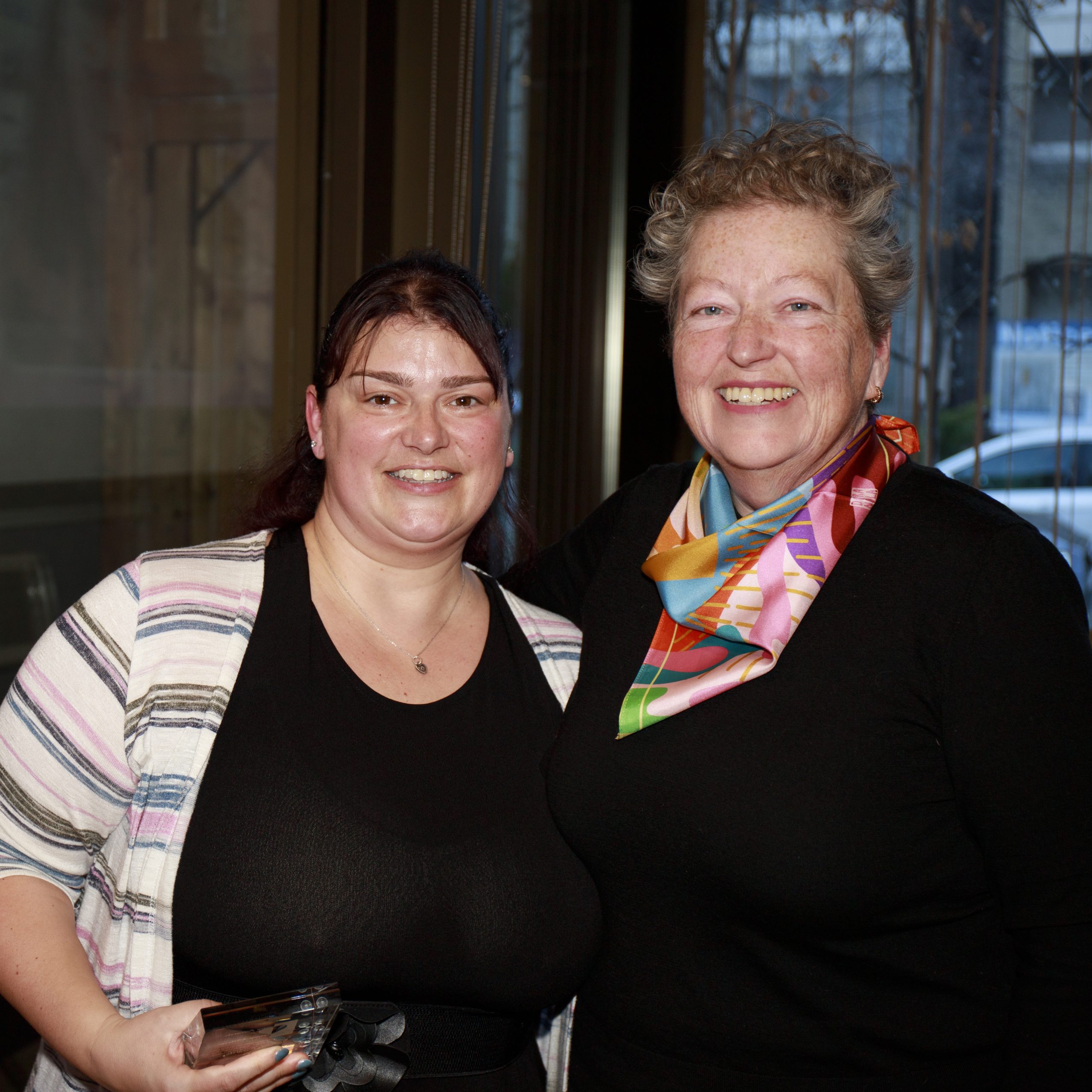
Courtney Milne honoured with award for exceptional service as a volunteer to the HIV/AIDS community
Courtney Milne is being recognized with a Casey Award for exceptional volunteer service to the 2SLGBTQ+ and HIV communities. Courtney inspired her community as director of Camp Rainbow Phoenix, a free summer leadership camp for 2SLGBTQIA+ youth ages 11-17, co-organized by Pflag Durham Region and AIDS Committee of Durham Region.
The first camp took place in 2010 with seven campers. Since then, more than 800 campers have attended Camp Rainbow Phoenix, with registration expanding to teens across Canada. Here, youth are given the opportunity to express themselves authentically, make new friends, and develop skills to foster personal resilience and promote community leadership. All onsite camp staff are volunteers. Courtney began as a cabin mentor for several years before transitioning to camp director in 2025.
In her new position as director, Courtney initiated a significant internal restructure of the program to prominently feature more queer voices during the planning process. She also redeveloped the camp’s learning curriculum to include trauma-informed inclusive sexual health education. Furthermore, she deepened the partnership with AIDS Committee of Durham Region to promote harm reduction and HIV awareness at camp.
In addition to broadening the education, Courtney nurtured a strong sense of community spirit through her guidance of the volunteers and campers. Her colleagues applauded her commitment to equity and inclusion, positive attitude, and empathy, all while physically caring for her newborn twins during the camp season. Feedback from the campers this past year has been overwhelmingly positive following her new program directives.
As an ally to the 2SLGBTQ+ and HIV community, Courtney has consistently made an impact through actions and advocacy. She empowers the next generation of queer youth to become community champions and to live their lives with their truest expression of their identities. Not only that, but she has also strengthened the network of supporters, families, and volunteers who are members or allies through her leadership and compassion.
Casey House extends warm congratulations to Courtney Milne as we celebrate her with a Casey Award.
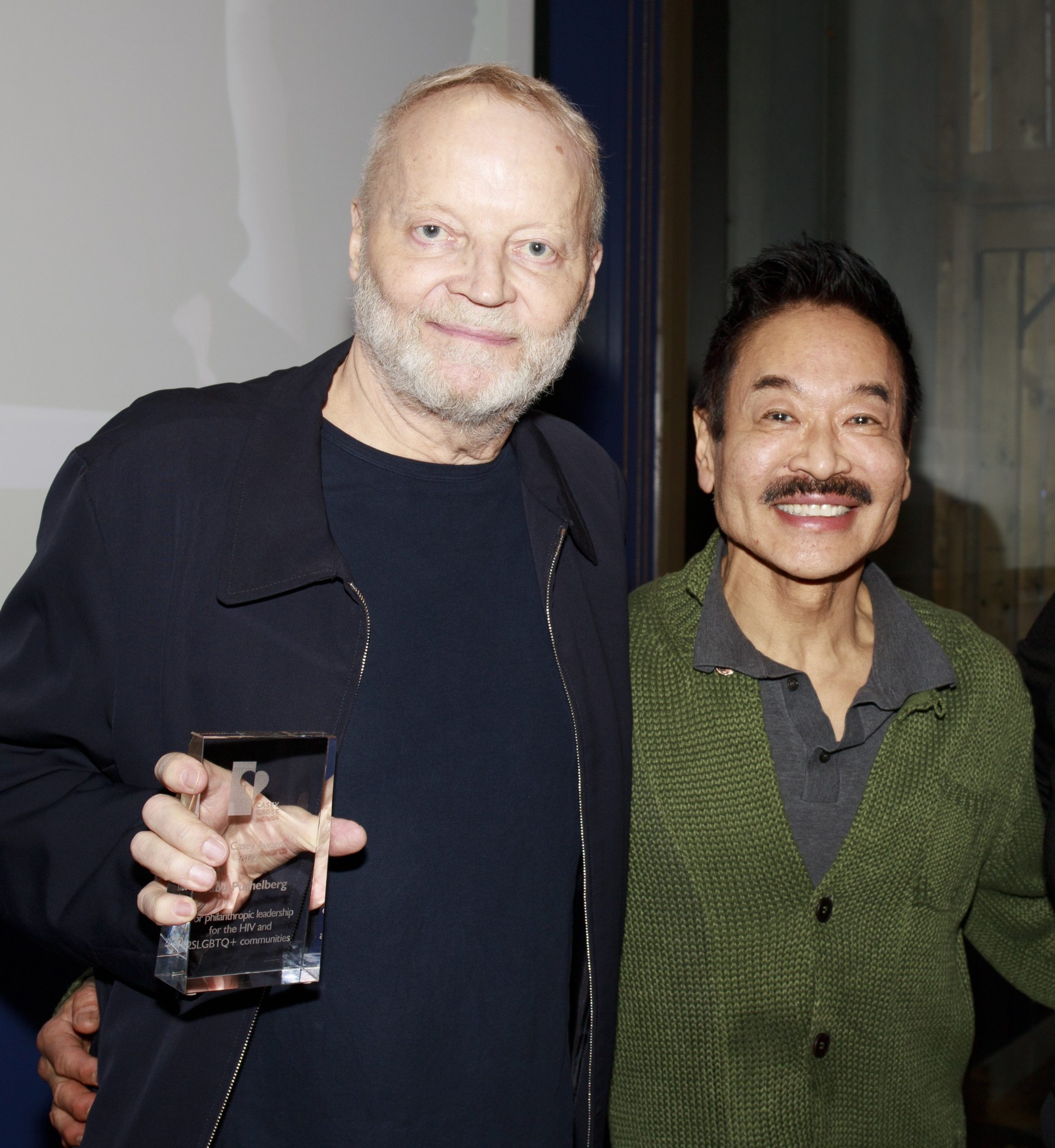
Yabu Pushelberg is honoured with award for outstanding corporate philanthropic leadership for the HIV & 2SLGBTQ+ communities
Editor’s note: During the Casey Awards celebration ceremony April 14, Glenn and George dedicated their award to artist Ooloosie Saila.
Yabu Pushelberg founders Glenn Pushelberg and George Yabu are being recognized with a Casey Award for leadership in corporate philanthropy for the HIV and 2SLGBTQ+ communities.
Partners in life and business, they have been driving change for over 45 years. Yabu Pushelberg, which has offices in New York and Toronto, works on projects around the globe, has had local as well as international impact. With experience designing restaurants, retail stores, hotels, and iconic brands such as W Hotel, Tiffany & Co., The Four Seasons, and Moet & Chandon, they design for maximum effect all over the world.
Closer to home, they have contributed locally, by providing the interior design work for Toronto’s Friends of Ruby drop-in centre for 2SLGBTQIA+ youth, and generously funding AGO photography exhibits.
As busy entrepreneurs, the committee was impressed with their contribution of volunteer time, as well as dollars. Glenn and George were honorary co-chairs of David’s Disco 2025, supporting the event with characteristic zeal and spirit and inspiring their friends and business connections to jump on board as supporters and sponsors. Their friend and nominator Kirk LeMessurier describes how they offer their support, that, “they do so with energy, total commitment and above all, empathy.”
Sharing their love of art, they collaborated on a project at Casey House to install full-scale murals on the walls of inpatient rooms, offering unique and colourful installation to inspire healing and wellness. The first four rooms, where work was installed in 2025, showcase work by Inuit artist Ooloosie Saila.
Most recently, George and Glenn committed $300,000 to Casey House Foundation in support of a capital renovation to expand the outpatient clinical care facilities. The transformational gift enables the hospital to care for additional people living with and at risk of HIV through the creation of six new clinical rooms and washrooms.
They also committed their time, influence, and financial support to UNAIDS this year in response to the withdrawal of support from others, and to continue their commitment to global efforts in HIV/AIDS advocacy and awareness.
Casey House extends warm congratulations to Glenn and George on achieving this recognition of their generosity.

Paul Austin is honoured with award for outstanding philanthropic leadership for the HIV/AIDS community
Paul Austin is being recognized with a Casey Award for leadership in philanthropy for the HIV/AIDS and LGBTQ+ communities. The award commemorates Paul’s pivotal early support for multiple AIDS service organizations (ASOs), and continued dedication to the HIV community through his generous financial contributions. He carries a longstanding history of donations made individually and from the P. Austin Family Foundation, which he runs alongside his wife Pamela.
During the AIDS epidemic in the 1980s, Paul was a keen financial supporter of the AIDS Committee of Toronto (ACT). This critical funding provided vital services to the community during a time of peak discrimination and stigmatization of people with HIV and AIDS. Similarly, many years later he was a key benefactor in the establishment of HQ Toronto, a community health centre that provides sexual, mental, and social health services to MSM, two-spirit, and non-binary people.
Paul has also demonstrated considerable leadership with a landmark donation to Rainbow Railroad and his multi-decade support for the Canadian Foundation for AIDS Research (CANFAR). Paul leveraged his network, time, and resources to help produce innovative projects. This includes direct funding of research, prevention initiatives, and educational resources. Through a pioneering donation from the P. Austin Family Foundation, CANFAR launched the national youth-driven educational platform Sexfluent, which offers topical and accessible sexual health information dedicated to ending the transmission of HIV.
Through his extensive portfolio of philanthropic endeavours, Paul Austin exemplifies unwavering commitment to health care, research, and community development in the HIV sector. His efforts have bolstered ASOs with resources for HIV testing, counselling and health care services, research, and innovative programming. Moreover, the impacts of his support will cascade into a new era, as the next generation of youth will be given additional resources for well-being.
Paul’s dedication and initiative are an inspiring example for emerging philanthropists. His gifts have touched the lives of many across decades, communities, intersectionalities, and borders. Casey House extends warm congratulations to Paul Austin on achieving this recognition of his generosity.

John McCullagh honoured for decades of leadership in social justice and volunteer service for the HIV/AIDS community
John McCullagh is being recognized with a Casey Award for leadership in social justice and volunteer service for the HIV/AIDS community. He has been working as part of the HIV+ and LGBTQ2S+ communities since immigrating to Canada from England in 1975, and his decades of activism and community organizing have made a tremendously positive impact.
In 1981, he co-founded David Kelley Services (formerly known as the Toronto Counselling Centre for Lesbians and Gays), a counselling and support service for the queer community and those living with HIV. This was the start of the AIDS epidemic, and these services were essential for people diagnosed with HIV to find comfort, care, and community. Forty years on, the program continues.
As a social worker with the Children’s Aid Society of Toronto in the early ‘90s, John founded the Out and Proud program, which ensured that youth in child welfare services could be provided inclusive and identity-affirming care. At that time, John carried a lone but adamant voice in advocating for queer youth in the child welfare sector, and his unfaltering determination successfully brought the initiative into reality.
Throughout the years, John continued to participate in HIV-related endeavours. He facilitated groups at the AIDS Committee Toronto (ACT) where he provided social support for people living with HIV, particularly long-term survivors. He would often use these findings to draft strategies for interventions to prevent further HIV transmissions in the population and share them with his networks.
In the 2010s he was the volunteer publisher of the PositiveLite, a Canadian online HIV magazine run by community members who shared their lived experiences with the diagnosis, stigma, and health care system. This platform was an early and vocal supporter of social concepts ‘Undetectable=Untransmittable’, ‘Prevention as Treatment’, and ‘Treatment as Prevention’.
His next landmark project was as co-chair of the gay men’s health hub task group in the Toronto to Zero initiative in 2019. This group of professionals in the health and social services sectors joined together to discuss the creation of an integrated health hub in Toronto for gay, two-spirit, transgender, and nonbinary folks. This led to the opening of HQ Toronto in 2021, which provides mental, social, and sexual health services. As founding co-chair, John remains as a board member for the organization.
He has participated in multiple research projects for the well-being of people living with HIV. Noteworthy highlights include the CHESS Study, designed to address COVID-19 hardships for people living with HIV in Ontario; the CHANGE HIV study, a five-year cohort study on the complexities of aging and HIV; and A Prescription for a Renewed HIV Sector, a series of recommendations to positively transform the sector created alongside fellow advocates Ron Rosenes, Tony Di Pede, and Darien Taylor. The latter served as a contributing resource for the HIV Action Plan of 2030 for the Ontario Advisory Committee on HIV/AIDS.
In case that wasn’t enough, John has also held leadership and board roles with CATIE, ACT, the Ontario AIDS Network, Central Toronto Youth Services, and the Queen West Community Health Centre. He demonstrates incredible leadership, and has undoubtedly inspired many with his decades of commitment to the HIV and LGBTQ2S+ communities. Casey House extends warm congratulations to John McCullagh with a Casey Award.

Deborah Norris honoured with award for leadership in social justice for the HIV/AIDS community
Deborah Norris is being recognized with a Casey Award for leadership in social justice for the HIV/AIDS community. Deborah is an Edmontonian known as a stalwart volunteer, peer, advocate, and leader in the HIV community. With more than three decades of service and advocacy, she has been a fixture in local, national, and international HIV community organizations.
After her HIV diagnosis in 1991, Deborah quickly pivoted into advocacy work. The following year, despite having to navigate the difficult and complex emotions that come with being newly diagnosed with HIV, she publicly announced her positive status. Deborah channeled her energy for a new purpose: advocating for better HIV health care and reducing the public’s stigma of people living with HIV.
She leveraged her lived experiences and bachelor’s degree in psychology in her many roles over the following years, including frontline support worker, outreach worker, peer, and researcher for many HIV-related projects including the Alberta HIV Stigma Index project and the Resiliency in LGBTQ2S+ Seniors project. She is also a contributor, reviewer, and advisory committee member for the Providing Services to Older Adults Living with HIV Online project.
Deborah followed her solo endeavours by leading many group organizations related to HIV. Locally, she was a founding chair of the Alberta Society of Positive Women, chairperson of HIV Edmonton, and is a caucus member and former chair of the United Voices of HIV Alberta. Nationally, she is co-chair of the independent Canadian Positive People Network and director of the western region for CATIE.
Deborah is especially passionate about the well-being of sexually exploited youth and women living with HIV. Her work identifies the unique experiences of women with HIV, and how intersectionalities of race and gender expression further contribute to the health disparities they face. Deborah offers a powerful voice in furthering progression and representation for the greater HIV community.
Her commitment to advocacy for the HIV/AIDS community has made waves across the country. During a time where she initially considered her diagnosis to be a death sentence, Deborah demonstrated immense courage to pursue a career guided by empathy and care. Casey House extends warm congratulations to Deborah Norris on achieving this recognition.

HYPE Program honoured with award for innovative leadership for the HIV/AIDS community
The HIV+ Youth Peer Engagement (HYPE) Program, a service led by the AIDS Committee of Durham Region (ACDR), is being recognized for innovative leadership for the HIV/AIDS community. HYPE supports HIV+ youth as they transition from pediatric care into the adult HIV health care system through peer support and programming.
HYPE was established in 2011 after the ACDR identified the unique challenges of HIV+ youth. Kids were aging out of pediatric care without a social support network, systems navigation knowledge, or an understanding of services and resources. A minor may receive warm, holistic, and subsidized health care that is entirely facilitated by the adults in their family; however, the HIV care system is considerably more fragmented and daunting for a young person to navigate in early adulthood. These difficulties are compounded with the fundamental changes in cognitive development and emotional needs during the transition from teenage years to adulthood. To address these needs, HYPE builds emotional capacity and reduces social isolation by connecting HIV+ youth with each other and with older peers that have lived experience in HIV care systems.
Through these social connections, youth are empowered to advocate for their own health while being coached by peers. With these networking and mentoring opportunities, individuals are empowered to become new leaders for the next up-and-coming generation of HIV+ adults continuing the cycle of community-led care. Furthermore, the program collaborates with HIV health professionals on how they can better support young clients as they are transitioning between care streams.
HYPE facilitates peer relationships with youth, organizes education and social events, and hosts yearly retreats. Its first youth retreat took place in 2018 in Orillia, where participants could engage in fun activities and connect with a group of companions with shared lived experience. These experiences are especially valuable for this population, who is particularly susceptible to internalize HIV-related discrimination if they become isolated. HYPE’s programming circumvents this by fundamentally honouring the two shared identities of being a young person and living with HIV. With ongoing participation, young people living with HIV feel seen, supported, and empowered.
Building community capacity is a necessary step to ensure that youth do not fall into clinical gaps of care that could impact their futures. The HYPE program is a commendable grassroots initiative that has increased accessibility and awareness of resources for young people living with HIV. Casey House extends warm congratulations to the HYPE program and AIDS Committee of Durham Region with a Casey Award.

Shirley Young honoured with award for exceptional service as a volunteer to the HIV/AIDS community
Shirley Young is being recognized with a Casey Award posthumously for exceptional volunteer service to the HIV/AIDS community. Shirley was a renowned volunteer at the Dr. Peter Centre in Vancouver, British Columbia, who passed away in August, 2024 after over three decades of service for people living with HIV.
During the AIDS epidemic in the 1980s, Shirley’s son Dr. Peter Jepson-Young was diagnosed with HIV. A CBC-TV documentary series, The Dr. Peter Diaries, later publicized his experience as a young gay physician living with HIV to a national audience. Shirley stood firmly by his side amidst the social discrimination associated with the disease, while expanding her own perspectives on HIV stigma. This is how she became a fierce advocate for the HIV community. Ultimately Peter died in 1992, which motivated Shirley to lead the development of the Dr. Peter Centre, where individuals living with HIV could receive dignified stigma-free health care, meals, and recreational programming.
When the Dr. Peter Centre first opened its doors in 1997, Shirley volunteered in a variety of roles and served as the head matriarch of the organization—with many clients simply calling her “mom”. Her warm presence was felt by all those who entered the space. She deeply understood the myriad and complex challenges that impacted the community: mental health struggles, addiction, homelessness, and poverty, in addition to HIV. No matter their circumstances, Shirley treated every person who entered Dr. Peter Centre with love and care. Her signature greeting says it all, “Are you a hugger? Well, never mind, I am.”
Over the course of the next 27 years at the Dr. Peter Centre, Shirley served meals to clients alongside other volunteers. Her high-touch and compassionate attitude was a guiding star for the Dr. Peter Centre staff to follow. She was celebrated by the Indigenous community through the creation of a totem pole erected in the Dr. Peter Centre lobby, where she is commemorated as the “Mother Bear”. And at her celebration of life, she was honoured in a blanketing ceremony by Indigenous Elders.
Shirley Young will be remembered for her decades of compassion and dedication to the HIV/AIDS community. Her unfaltering love for her son evolved and expanded into a sincere love for all those who may have been excluded from society. Casey House extends warm congratulations to Shirley Young’s family and the Dr. Peter Centre community as we celebrate her with a Casey Award.